Saltar para o conteúdo principal
Y-DNA · Paterno linaje

I2A1B1A2A1

Y-DNA Haplogroup I2A1B1A2A1

Um perfil de referência de um ramo de linhagem. Compartilhar haplogrupos não demonstra uma relação familiar ou uma identidade cultural.

Perfil de Referência

Contexto do ramo

Contexto histórico de la rama de linaje Y-DNA I2A1B1A2A1

Origins and Evolution

Y-DNA haplogroup I2a1b1a2a1 is a relatively downstream subclade within the broader I2 paternal lineage, one of the major indigenous European Y-chromosome branches. Its deeper ancestry is associated with postglacial European hunter-gatherer populations, and its more recent diversification is most plausibly centered in southeastern Europe, especially the Balkan peninsula, where many I2 subclades show strong historical continuity.

Because this lineage sits well below the ancient basal I2 root, its age is expected to be much younger than the Mesolithic origin of the parent clade. A reasonable estimate for the formation of I2a1b1a2a1 is around 8 kya, consistent with early Holocene diversification in southeastern Europe during the transition from Mesolithic foraging societies into Neolithic and later Bronze Age population networks.

Subclades

As an intermediate downstream clade, I2a1b1a2a1 serves as a connecting branch between its parent lineage I2a1b1a2a and more derived terminal lines. In phylogenetic terms, this type of clade often reflects a localized founder event followed by regional persistence and subsequent spread.

Key implications of its placement include:

  • Deep European continuity inherited from ancestral I2 lineages
  • Regional Balkan diversification likely tied to long-term population structure
  • Later diffusion north and west via Slavic, Balkan, and Central European demographic processes

Geographical Distribution

This haplogroup is most strongly associated with Balkan populations, particularly in southeastern Europe, where I2-derived lineages can reach notable frequencies. It is also present in East Slavic populations, Central European populations, and Baltic populations, reflecting historical migrations and admixture across eastern and central Europe.

Secondary presence in Scandinavian, German and Austrian, and British and Irish populations is best interpreted as the result of later gene flow, including medieval-era movements, population mixing, and the broad dispersal of European paternal lineages over time. Outside Europe, it may be encountered in diaspora populations in the Americas and Australia.

Historical and Cultural Significance

While Y-DNA haplogroups cannot be assigned to a single archaeological culture with certainty, the broader I2 landscape is often linked to European Mesolithic hunter-gatherers, Balkan Neolithic continuity, and later Slavic-associated expansions. For I2a1b1a2a1 specifically, the strongest historical context is likely tied to the complex demographic history of the Balkans, where indigenous paternal lines survived and diversified through repeated episodes of cultural change.

This lineage may also overlap broadly with populations shaped by:

  • Neolithic expansion and local continuity in southeastern Europe
  • Bronze Age and Iron Age regional turnover and persistence
  • Medieval Slavic movements into the Balkans and eastern Europe

It should not be equated with a single ethnicity or historical people, but rather understood as a marker of deep paternal ancestry whose modern distribution reflects both ancient continuity and later regional expansions.

Conclusion

I2a1b1a2a1 is an intermediate subclade of the ancient European haplogroup I2, likely originating in southeastern Europe during the early Holocene. Its present-day distribution across the Balkans, Slavic-speaking regions, and parts of Central and Northern Europe highlights a long history of regional persistence, founder effects, and repeated demographic dispersal.

Pontos- Chave

  • Origins and Evolution
  • Subclades
  • Geographical Distribution
  • Historical and Cultural Significance
  • Conclusion
Perfil de Referência

Árvore e relações

Contexto filogenético e subclasse

Trajectória evolutiva

Sigue las ramas superiores registradas hasta I2A1B1A2A1. Las fechas son estimaciones y pueden cambiar al revisarse los datos de referencia.

Passos Haplogrupo Antiguidade estimada Época arqueológica Tempo decorrido Subclasses imediatas Portadores modernos analisados Referências antigas
1 I2A1B1A2A1 Actual ~8,000 years ago Neolithic 8,000 years 2 0 0
2 I2A1B1A2A ~12,000 years ago Neolithic 12,000 years 2 9 0
3 I2A1B1A2 ~12,000 years ago Neolithic 12,000 years 2 95 0
4 I2A1B1A ~12,000 years ago Neolithic 12,000 years 2 109 5
5 I2A1B1 ~12,000 years ago Neolithic 12,000 years 2 118 0
6 I2A1B ~14,000 years ago Mesolithic 14,000 years 2 213 22
7 I2A1 ~16,000 years ago Mesolithic 16,000 years 2 933 0
8 I2A ~18,000 years ago Mesolithic 18,000 years 2 1,551 24
9 I2 ~20,000 years ago Mesolithic 20,000 years 2 1,785 10
10 I ~25,000 years ago Paleolithic 25,000 years 4 3,486 79

Ramas hermanas (1)

Outros ramos do mesmo haplogrupo superior

Perfil de Referência

No mundo

Distribuição geográfica e presença moderna

Origem registada

Southeastern Europe

Distribuição moderna

The populations where Y-DNA haplogroup I2a1b1a2a1 is found include:

  1. Balkan populations
  2. East Slavic populations
  3. Central European populations
  4. Scandinavian populations
  5. German and Austrian populations
  6. British and Irish populations
  7. Baltic populations
  8. Recent diaspora populations in the Americas and Australia

Presença regional

Southeastern Europe (Balkans) High
Central Europe (borderlands) Moderate
Southern Europe (Mediterranean islands) Low
Western Europe Low
Northern Europe Low
Southeastern Europe High
Eastern Europe Moderate
Contexto Histórico

Uma ramificação através do tempo

Formação estimada em uma cronologia histórica ampla. Os marcadores temporais contribuem contexto e não implicam relação com culturas concretas.

  1. ~10k años de antigüedad

    Revolução neolítica

    Início da agricultura e formação de comunidades sedentárias

  2. ~8k años de antigüedad

    Haplogrupo I2A1B1A2A1

    Formação estimada deste ramo Y-DNA; as datas e localizações são estimativas de referência.

    Este ramo
  3. ~5k años de antigüedad

    Idade do Bronze

    Metalurgia, escrita e primeiras civilizações

  4. ~3k años de antigüedad

    Idade do Ferro

    Ferramentas de ferro e ampliação de redes comerciais

  5. ~2.5k años de antigüedad

    Antiguidades clássicas

    Desenvolvimento das civilizações grega e romana

  6. Actualidad

    Actualidad

    Idade moderna

Perfil de Referência

Contexto arqueológico

Asociaciones arqueológicas registradas para la rama Y-DNA I2A1B1A2A1

Associações registradas

Esses rótulos descrevem os contextos arqueológicos registrados para as amostras de referência vinculadas a I2A1B1A2A1. Uma associação não demonstra que todos os portadores pertenceram a uma cultura ou seguiram uma rota migratória específica.

Austria_Avar Beli Breyag Hellenistic Anatolia Italy_Sicily_IA_b_IA_c_Punic Medieval Bosnian Shekshovo Culture Tiszadob Group Ukrainian Neolithic
As atribuições culturais baseiam-se no contexto arqueológico das amostras de DNA antigo e podem representar associações regionais de períodos concretos.
Perfil de Referência

Catálogo de amostras

1 portador directo del haplogrupo I2A1B1A2A1

1 mostradas 1 amostras correspondentes

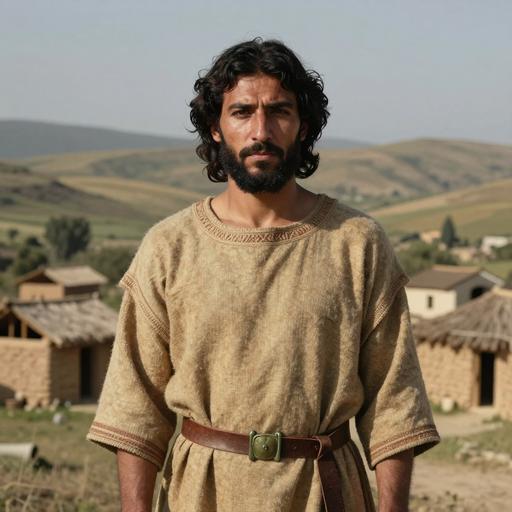
Os retratos são ilustrações geradas com IA. As etiquetas de amostra e os identificadores de acesso identificam os registros de referência.

Retrato Mostrar País Época Data Cultura Y-DNA Corresponder
Retrato ilustrativo de MBA individual, Yassıtepe (Aegean. Izmir), Turkey (2,035-1,900 BCE) gerado com IA
Identificador de amostra: I5737
Turkey Turkey MBA 2035-1900 calBCE (3620±20 BP, PSUAMS-2803) Middle Bronze Age Anatolia I2a1b1a2a1 Direct
PATERNAL LINHAGEM · DNA ANTIGO

Mapa de testes de linhagems antigos

Siga os clados superiores até este ramo e explora onde se encontraram portadores antigos.

A carregar as observações antigas...

Os marcadores são locais de achados arqueológicos. Uma linha de descontínua representa uma transição geográfica proposta e incerta entre ramos consecutivos, apoiada em várias observações fechadas; não é uma rota de viagem exata, um local de nascimento ou um teste de descendência direta. As amostras do clado parental podem pertencer a outros ramos descendentes. As datas das amostras são distintas das datas de formação dos haplogrupos são mantidas.

Perfil de Referência

Mapa de distribuição de portadores

Distribuição geográfica das amostras de DNA antigo (1), portadores directos ou de subclasses de I2A1B1A2A1

Portador directo
Filtro de Período Temporária
Todos os períodos
Mostrar todas as amostras
Perfil de Referência

Distribuição temporária

Distribuição de portadores por períodos arqueológicos

Perfil de Referência

Distribuição geográfica

Recuentos por país registrado das amostras. Reflejam a seleção de referência disponível, não frequências de população.

Perfil de Referência

Distribuição por país e época

Compare as contagens de amostras registadas por países e períodos arqueológicos. Selecione uma célula com dados para examinar uma amostra.

Dados

Dados e proveniência

Informações sobre fontes e qualidade dos dados

Última actualização 2026-06-17
Pontuação de confiança 50/100
Cobertura Low

Fonte de Dados

A classificação, as datas estimadas e o contexto geográfico refletem os dados de referência registrados e podem mudar ao revisar os testes. A cobertura de amostras é desigual; os locais registrados e as associações arqueológicas não estabelecem a origem pessoal nem a identidade cultural.