Saltar para o conteúdo principal
Cultura de destaque

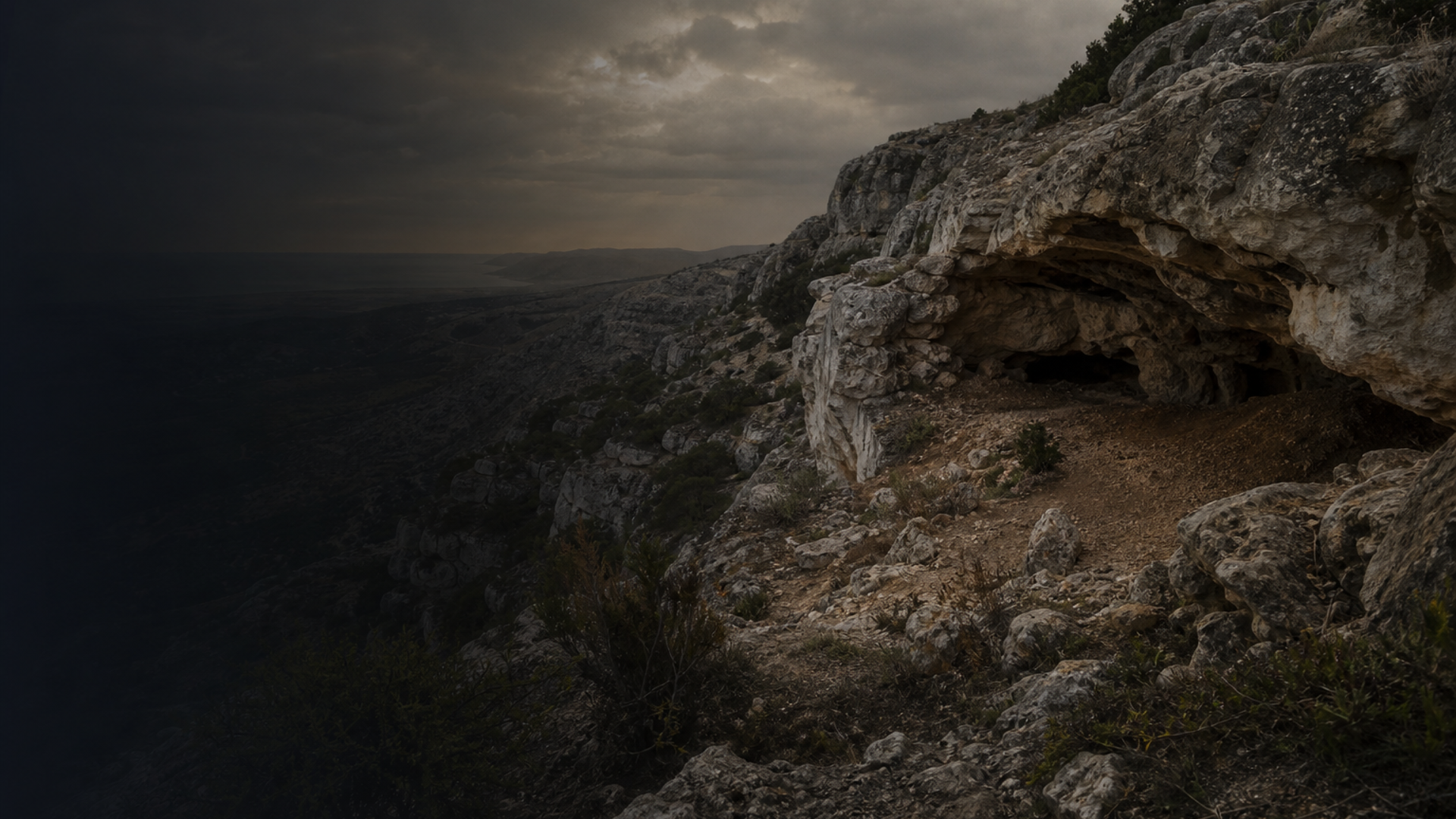
La Clape: Voices from the Grotte des Tortues

Fragments of Late Neolithic–Early Bronze Age life on the French Mediterranean shore

3261 CE - 1825 BCE
La Clape, Hérault, France

A História

Archaeological and genetic glimpses from four individuals at La Clape's Grotte des Tortues (3261–1825 BCE) link Veraza-era coastal lifeways to broader European ancestries. Limited samples mean conclusions are preliminary but suggest farmer maternal lines and a local I paternal signal.

Time Period

3261–1825 BCE

Region

La Clape, Hérault, France

Common Y-DNA

I (observed)

Common mtDNA

K, H (dominant)

Cronologia

2500 BCE

Late Neolithic–Early Bronze transition at La Clape

Local material and skeletal data indicate continued coastal occupation and cultural links across the Neolithic–Bronze transition; genetic samples provide preliminary glimpses of mixed farmer and local ancestries.

Origins & Emergence

The rocky headlands of La Clape overlook a braided Mediterranean coastline where human stories accumulate in caves and terraces. At Grotte des Tortues, stratified deposits and recovered human remains span the Late Neolithic into the Early Bronze Age (broadly 3261–1825 BCE). Archaeological data indicates occupation or repeated use across centuries by communities archaeologists group with the regional Veraza tradition — a coastal expression bridging inland farming zones and maritime resources.

Material traces in the region (ceramics, lithics and midden deposits in nearby sites) suggest a mixed economy and cultural ties along the Languedoc shore. Genetically, the tiny assemblage from Grotte des Tortues captures part of that story: maternal lineages dominated by haplogroup K and a single observed Y-haplogroup I point to a mosaic of ancestries. Because the sample count is only four, these genomic hints are preliminary. They nonetheless offer a cinematic snapshot — a few individuals whose bones whisper of farmers, foragers and long-distance connections during a time when European populations were transforming through migration, trade and technological change.

  • Site: Grotte des Tortues, La Clape (Hérault), France
  • Date range: 3261–1825 BCE (Late Neolithic to Early Bronze Age)
  • Evidence links to regional Veraza cultural horizon

Daily Life & Society

Life on the La Clape headland would have unfolded between sea and scrubby hills: fields of cereal, grazing flocks, harvested shellfish and coastal hunting. Archaeological data from the broader La Clape area indicates mixed subsistence — domesticated grains and animals alongside wild resources — consistent with Veraza-era economies elsewhere in southern France. Settlement traces and cave deposits suggest seasonal rounds: shelter and ritual use of coastal caves like Grotte des Tortues, perhaps linked to funerary or communal activities.

Socially, these communities likely organized around small kin groups or extended families. Material culture — pottery styles and toolkits recorded regionally — imply networks of exchange along the Mediterranean littoral. The presence of maternal haplogroups typically associated with early farmers (mtDNA K and H) supports a strong Neolithic farming ancestry in daily life, while a Y-haplogroup I hints at persistence of older European paternal lines. However, with only four genetic samples, interpretations about social structure, kinship systems, or mobility remain provisional and should be treated as working hypotheses rather than firm conclusions.

  • Economy: mixed farming, herding, coastal foraging
  • Social units likely small kin groups with regional exchange

Genetic Profile

The genetic dataset from La Clape is small — four individuals recovered from Grotte des Tortues — so every inference must be cautious. Maternal lineages are dominated by mtDNA K (three individuals) with one individual carrying mtDNA H. Haplogroup K is frequently observed among Neolithic farmer-associated populations in Europe, while H is widespread in later prehistoric and modern Europeans. On the paternal side, a single observed Y-chromosome falls within haplogroup I, a lineage with deep roots in pre-Neolithic and Mesolithic Europe as well as persistence into later periods.

Taken together, these markers paint a picture of mixed ancestry: substantial farmer-derived maternal lineages alongside at least one paternal lineage tied to long-standing European substrata. This pattern is compatible with regional scenarios in which Early Neolithic farmers mixed with enduring local hunter-gatherer groups and, later, with incoming Bronze Age influences. Critics must note that these four genomes cannot capture population diversity through 1,400 years; larger sample sizes and genomic autosomal data are needed to confirm levels of Steppe-related admixture, sex-biased migration, and continuity versus replacement. For now, La Clape offers a compelling, if tentative, genetic snapshot of Veraza-era coastal inhabitants.

  • mtDNA: K (3), H (1) — suggests strong Neolithic farmer maternal ancestry
  • Y-DNA: I (1) — indicates persistence of European hunter-gatherer paternal lineages

Legacy & Modern Connections

The human echoes from Grotte des Tortues resonate into the present in subtle ways. Maternal lineages like mtDNA K and H persist across Europe today, and haplogroup I survives among modern populations, meaning the genetic threads seen at La Clape are part of a long continental tapestry. Archaeologically, the Veraza cultural horizon contributes to regional patterns that feed into Bronze Age developments across southern France and the western Mediterranean.

Yet the connection is not simple ancestry-by-name. Centuries of migration, demographic change and cultural transformation have reshaped genetics and identities since 1825 BCE. With only four samples, La Clape cannot claim direct descent lines to any modern community. Instead, it provides a cinematic, evidence-based fragment: a local chapter in the deep story of how farming communities, lingering hunter-gatherer populations and later long-distance interactions braided together to form the genetic and cultural geography of Europe.

  • Modern mtDNA and Y-DNA lineages echo those seen at La Clape
  • Conclusions about direct descent are limited by small sample size

Assistente de IA

Assistente de IA por DNAGENICS

Desbloquear esta função
Pregunta sobre la cultura La Clape: Voices from the Grotte des Tortues. El asistente con IA puede explicar hallazgos genéticos, contexto histórico, pruebas arqueológicas y conexiones modernas, con sus límites de interpretación.
Exemplo de análise com IA

La cultura La Clape: Voices from the Grotte des Tortues representa un capítulo de la historia humana...

A análise genética permite estudar semelhanças com populações anteriores e possíveis adaptações. As amostras de DNA antigo fornecem informações para investigar padrões migratórios e relações entre populações, com limites que dependem do estudo e do contexto arqueológico.

Esta é uma antevisão da análise com IA. Aceder ao assistente completo para explorar informações sobre:

  • Composição e similaridade genética
  • Padrões migratórios e origens
  • Vida cotidiana e práticas culturais
  • Contexto genético moderno