Saltar para o conteúdo principal
Cultura de destaque

Moraes, 5,800 BP — Early Holocene Brazil

A lone ancient genome from Moraes hints at deep coastal–riverine lifeways in prehistoric Brazil.

3960 CE - 37145800 BCE
Moraes, Brazil (South America)

A História

Single-sample ancient DNA from the Moraes site (c. 3960–3714 BCE) provides a preliminary glimpse into Early Holocene people of Brazil. Archaeological context and mtDNA haplogroup D suggest continuity with Native American founding lineages, though conclusions remain tentative.

Time Period

c. 3960–3714 BCE (≈5,800 BP)

Region

Moraes, Brazil (South America)

Common Y-DNA

Unknown (no Y-DNA reported)

Common mtDNA

Haplogroup D (1 sample)

Cronologia

3960 BCE

Radiocarbon-dated occupation at Moraes

A human presence at Moraes is dated to approximately 3960–3714 BCE, providing a key Early Holocene genomic snapshot for the region.

Origins & Emergence

The Moraes individual dates to roughly 3960–3714 BCE, placing this single genome in the later part of the Early Holocene — a time when human groups across much of lowland South America adapted to shifting riverine, coastal, and forest landscapes. Archaeological data from the Moraes site are limited but indicate human presence during a period of environmental transformation after the end of the last Ice Age.

Limited evidence suggests inhabitants exploited diverse local resources and maintained mobility strategies keyed to seasonal availability of fish, shellfish, tubers, and game. The broader cultural horizon sometimes labeled "Moraes Site, Brazil 5,800 Years Ago" sits within a mosaic of contemporaneous Holocene occupations across eastern and central Brazil.

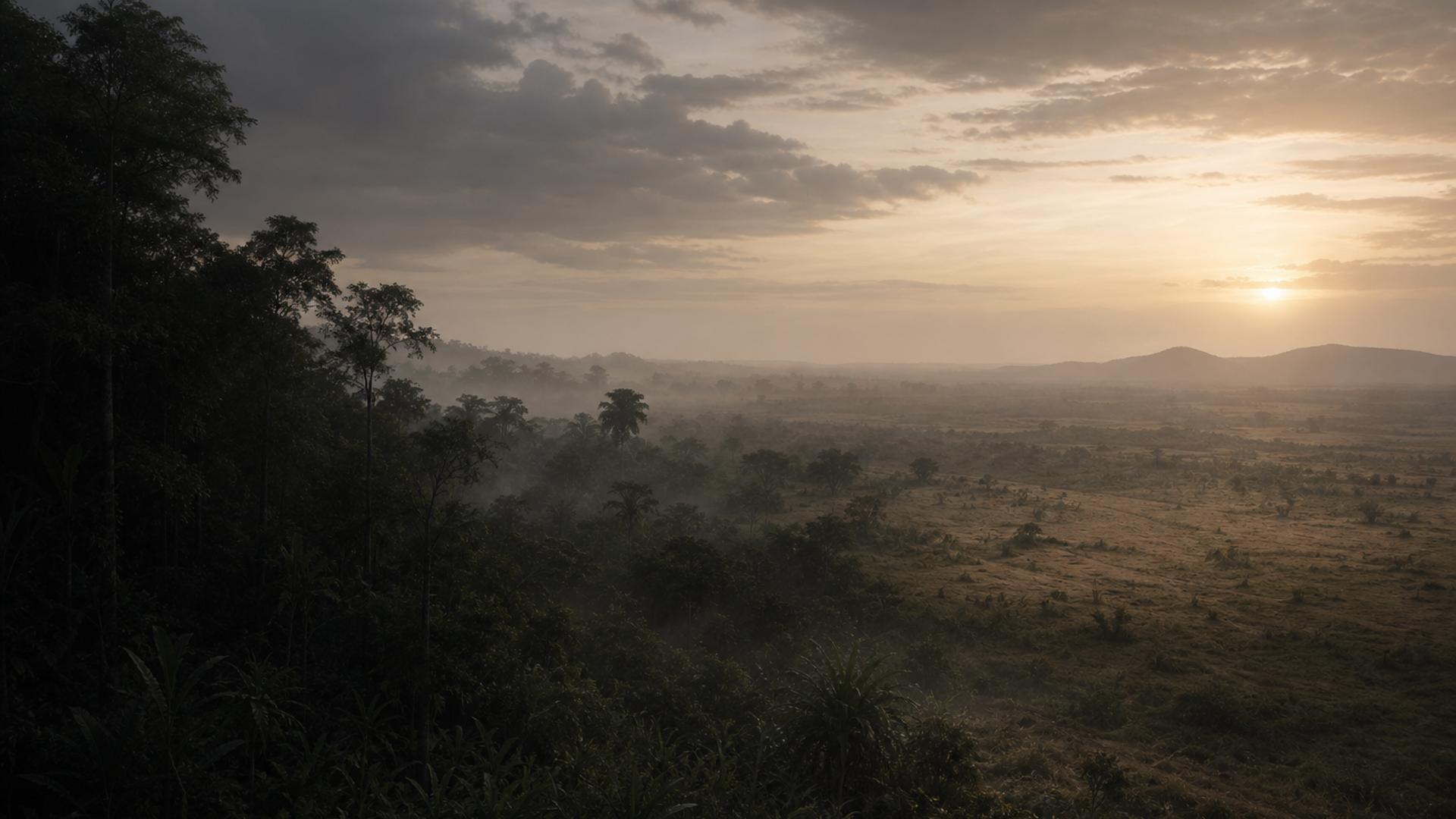
From a landscape perspective, the Moraes individual likely lived in a world of braided rivers, estuaries, and savanna–forest ecotones. Archaeological interpretations emphasize flexibility rather than large, permanent settlements. Because the dataset for Moraes is a single sampled individual, any reconstruction of cultural emergence must remain provisional: the genome is a powerful probe, but not yet a panorama.

  • Dated to c. 3960–3714 BCE (≈5,800 BP)
  • Occupation during Early Holocene environmental shifts
  • Archaeological record at Moraes is sparse — interpretations are tentative

Daily Life & Society

Archaeological indicators from comparable Early Holocene sites in Brazil suggest lifeways organized around diverse foraging and small-scale food production strategies. At Moraes, material traces are limited, so reconstruction leans on regional analogies: seasonal fishing and shellfish gathering, hunting of small to medium terrestrial mammals, and plant processing in riverine and floodplain settings.

Social groups were likely small, flexible bands with knowledge systems tuned to water cycles and resource patchiness. Mobility patterns may have included regular movement along river corridors and periodic aggregation for exchange and social interaction. Craft production in this period often involved expedient stone tools, woodworking, and organic technologies that rarely preserve well; this poor preservation contributes to our patchy view of everyday life.

Funerary practice at Moraes cannot be robustly described from a single genome. If the individual was recovered in situ, the burial context might reflect local mortuary choices, but more fieldwork and additional burials are required to characterize social structure, ritual behavior, or inequality.

  • Likely mobile, riverine-focused subsistence
  • Small, flexible social groups with seasonal movements

Genetic Profile

The genetic information from Moraes comes from a single ancient individual whose mitochondrial DNA falls within haplogroup D. Haplogroup D is one of the principal maternal lineages associated with the initial peopling of the Americas and is commonly observed across Native American populations. This mtDNA signal supports archaeological expectations of deep continuity between Early Holocene inhabitants of South America and later indigenous groups.

Crucially, no Y-chromosome (paternal) haplogroup has been reported for this sample, and the overall sample count is one — well below thresholds for population-level inference. As a result, genomic conclusions must be cautious: while mtDNA D aligns the Moraes individual with broader Native American maternal ancestry, it cannot alone specify precise migration routes, degrees of continuity, or local population structure.

Ancient autosomal DNA, if available and of sufficient coverage, would help place Moraes in relation to other ancient South American genomes (for example, assessing affinity to Andean, Amazonian, or coastal clusters). Until more samples from Moraes and neighboring sites are analyzed, the genetic profile remains a suggestive but preliminary datapoint.

  • mtDNA haplogroup D links to Native American maternal lineages
  • Single-sample nature makes population conclusions preliminary

Legacy & Modern Connections

The mtDNA signal from Moraes offers a cinematic thread through deep time: a maternal lineage traceable in broad strokes from early Holocene peoples to many present-day indigenous groups across the Americas. This continuity, hinted at by haplogroup D, evokes long-term persistence of human presence and adaptation in Brazilian landscapes.

However, scientific caution is essential. With only one ancient genome, we cannot claim direct ancestry links between the Moraes individual and any specific modern community. Instead, the finding underscores the potential for ancient DNA to illuminate regional histories — provided larger, well-contextualized datasets. Future sampling at Moraes and nearby sites, coupled with careful archaeological excavation, will be required to move from evocative possibility to robust narrative about cultural inheritance and biological continuity in Brazil.

  • mtDNA D may reflect deep maternal continuity in the Americas
  • More ancient genomes and context needed to confirm local continuity

Assistente de IA

Assistente de IA por DNAGENICS

Desbloquear esta função
Pregunta sobre la cultura Moraes, 5,800 BP — Early Holocene Brazil. El asistente con IA puede explicar hallazgos genéticos, contexto histórico, pruebas arqueológicas y conexiones modernas, con sus límites de interpretación.
Exemplo de análise com IA

La cultura Moraes, 5,800 BP — Early Holocene Brazil representa un capítulo de la historia humana...

A análise genética permite estudar semelhanças com populações anteriores e possíveis adaptações. As amostras de DNA antigo fornecem informações para investigar padrões migratórios e relações entre populações, com limites que dependem do estudo e do contexto arqueológico.

Esta é uma antevisão da análise com IA. Aceder ao assistente completo para explorar informações sobre:

  • Composição e similaridade genética
  • Padrões migratórios e origens
  • Vida cotidiana e práticas culturais
  • Contexto genético moderno