Saltar para o conteúdo principal
Cultura de destaque

Shamakhi: Voices of a Late‑Antique Plain

Late‑Antique Shamakhi (205–346 CE): archaeology meets a single ancient genome

205 CE - 346 CE
Shamakhi, Shirvan plain, Azerbaijan

A História

Archaeological evidence from Shamakhi, Azerbaijan (205–346 CE) paints a picture of a Late Antique community. One ancient genome (Y‑J, mt‑K) suggests links with Near Eastern and Caucasus networks; conclusions are preliminary given the single sample.

Time Period

205–346 CE (Late Antiquity)

Region

Shamakhi, Shirvan plain, Azerbaijan

Common Y-DNA

J (observed in 1 sample)

Common mtDNA

K (observed in 1 sample)

Cronologia

2500 BCE

Early Bronze Age occupation of the Shirvan plain

Archaeological traces indicate human presence in the Shirvan plain from the Bronze Age (c. 2500 BCE), providing deep-time context for later Shamakhi settlements.

Origins & Emergence

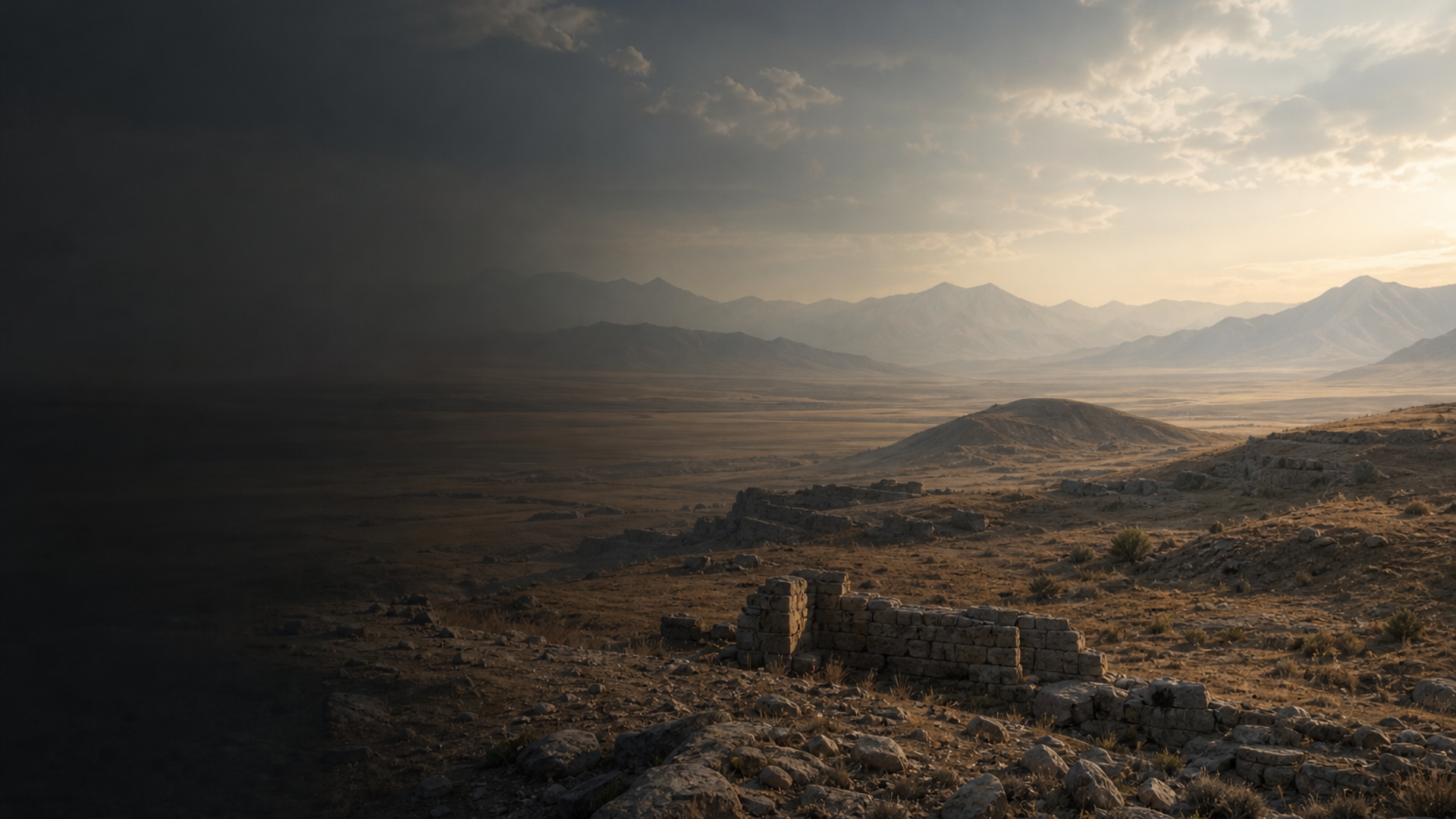
On the windswept terraces above the Caspian, the Shamakhi population of the 3rd–4th centuries CE emerges in the archaeological record as a Late Antique presence rooted in the Shirvan plain. Excavations and surface surveys in and around Shamakhi reveal continuity of settlement on a landscape long occupied since the Bronze Age. Pottery fabrics, metalworking debris and burial orientations indicate local craft traditions interacting with wider regional fashions. Archaeological data indicates trade links along the Caspian littoral and routes that connected the Caucasus to the Iranian plateau and Black Sea worlds.

Material culture shows a blend of local Caucasus traditions and external influences consistent with mobility and exchange during Late Antiquity. Limited evidence suggests that communities were organized around small settlements and seasonal pastures rather than large urban cores at this precise location during 205–346 CE. The term “Shamakhi Culture” aggregates these signals but should be treated cautiously: the label summarizes a regional pattern of artifacts and practices, not a single monolithic polity. Excavators note heterogeneity in burial treatments and artefact assemblages, pointing to a patchwork of identities, economic strategies, and external contacts. In short, archaeological evidence frames Shamakhi as a node in a dynamic Late Antique landscape—familiar materials refracted through local choices and long‑standing regional networks.

  • Site: Shamakhi, Shirvan plain (Azerbaijan); Late Antiquity: 205–346 CE
  • Material culture shows local traditions with external trade influences
  • Evidence points to small settlements and mixed economic lifeways

Daily Life & Society

Life in the Shamakhi plain would have been shaped by a dramatic interplay of land and water: grain cultivation on irrigated terraces, herding on nearby slopes, and fishing and trade along the Caspian littoral. Archaeological indicators—residual hearths, pottery sherds, and metalworking slag—suggest households engaged in mixed farming and craft production. Clothing and personal items recovered regionally point to everyday lives animated by local styles and imported luxuries, implying both self‑sufficiency and participation in broader exchange networks.

Social organization appears archaeologically diffuse rather than highly centralized. Burials show variability in grave goods and treatment; some individuals were interred with utilitarian objects, others with finer adornments, indicating economic and possibly status differences. Limited architectural remains hint at simple domestic structures supplemented by seasonal pastoral encampments. Religious practice in the region during Late Antiquity was diverse—archaeological traces include local cultic behaviors alongside evidence of wider imperial and regional religious influences, though direct ritual attributions in Shamakhi itself remain tentative.

These scenes are painted from fragmentary evidence: careful interpretation is required, and new excavations could substantially alter reconstructions of daily life.

  • Mixed economy: irrigated agriculture, herding, craft production
  • Burial variability suggests social differentiation without clear centralization

Genetic Profile

Genetic insight for the Azerbaijan_Shamakhi_Antiquity identifier rests on a single ancient genome dated between 205 and 346 CE from a burial in Shamakhi. The male individual carries Y‑chromosome haplogroup J and maternal lineage mtDNA K. Haplogroup J has strong representation in the Near East and the Caucasus and is frequently encountered in ancient and modern populations across these regions; mtDNA K is widespread across Eurasia with deep Palaeolithic and later dispersal signals.

Because only one sample is available, any population‑level inference must be provisional. Limited evidence suggests that the genetic profile of this individual aligns with broader Late Antique Caucasus and Near Eastern genetic landscapes, consistent with archaeological indications of connectivity. However, a single Y‑J / mt‑K pairing cannot reveal internal diversity, migration pulses, or admixture proportions that shaped the wider community. Comparisons with published regional aDNA datasets (from neighboring Caucasus and Iranian samples) often show mixtures of local Caucasus‑related ancestry and gene flow from both southern (Iranian) and northern (steppe) sources during the first millennium CE; the Shamakhi genome is compatible with such regional complexity but does not uniquely resolve it.

In summary: the genetic data is evocative but preliminary. Expanding the sample set from Shamakhi and nearby sites is essential to move from an individual biography to robust statements about population history, continuity, and change.

  • Single genome (n=1): Y‑haplogroup J; mtDNA K — suggest Near Eastern/Caucasus affinities
  • Conclusions are preliminary; one sample cannot capture community diversity

Legacy & Modern Connections

The Shamakhi record—archaeological traces and one ancient genome—touches a continuous human tapestry in the Shirvan plain that reaches into the present. Modern populations of Azerbaijan and the broader Caucasus inherit layers of cultural and biological ancestry formed through millennia of mobility, trade, and local adaptation. Genetic markers observed in the Shamakhi individual (Y‑J, mt‑K) persist among many populations of the region today, but their presence alone does not prove direct, unbroken descent; gene flow and demographic shifts in the centuries since Late Antiquity have reshaped ancestry profiles.

Archaeologically, material continuities and discontinuities reflect changing political and economic horizons—Sasanian, later medieval, and regional powers all left their imprint. For museum audiences and descendant communities, Shamakhi offers a cinematic window into lives lived at a crossroads: recognizable patterns of craft and subsistence, intimate personal histories, and evidence of movement across the ancient world. Further archaeological and genetic work will clarify how much of that past is continuous and how much was transformed by later migrations and cultural shifts.

  • Genetic markers echo in modern Caucasus populations but do not prove direct continuity
  • Shamakhi exemplifies a regional crossroads—archaeology and aDNA together reveal mobility and connectivity

Assistente de IA

Assistente de IA por DNAGENICS

Desbloquear esta função
Pregunta sobre la cultura Shamakhi: Voices of a Late‑Antique Plain. El asistente con IA puede explicar hallazgos genéticos, contexto histórico, pruebas arqueológicas y conexiones modernas, con sus límites de interpretación.
Exemplo de análise com IA

La cultura Shamakhi: Voices of a Late‑Antique Plain representa un capítulo de la historia humana...

A análise genética permite estudar semelhanças com populações anteriores e possíveis adaptações. As amostras de DNA antigo fornecem informações para investigar padrões migratórios e relações entre populações, com limites que dependem do estudo e do contexto arqueológico.

Esta é uma antevisão da análise com IA. Aceder ao assistente completo para explorar informações sobre:

  • Composição e similaridade genética
  • Padrões migratórios e origens
  • Vida cotidiana e práticas culturais
  • Contexto genético moderno