跳转到主内容
mtDNA · 母亲 lineage

C1B11

mtDNA Haplogroup C1B11

一个家族分支的参考简介 。 共享haplogroups 无法建立家庭关系或文化认同 。

参考简介

部门背景

mtDNA 谱系分支 C1B11 的历史背景

Origins and Evolution

mtDNA haplogroup C1B11 is a downstream branch of C1B1, itself a descendant of the broader C1b lineage. C1B1 likely formed around the time of the Beringian/Northeast Asian entry into the Americas (~13 kya). C1B11 is best interpreted as a microclade that arose soon after initial peopling events — plausibly during the Early Holocene as founder populations spread and diversified within the Americas. Due to its position beneath C1B1 in the phylogeny, C1B11 carries the defining C1b/C1B1 mutations plus additional private mutations that mark its distinct maternal lineage.

Genetic and ancient DNA evidence indicate that small, regional founder effects and subsequent drift shaped the distribution of many Native American mtDNA microclades like C1B11. The available data are limited, but C1B11's age estimate (on the order of ~10–12 kya) fits a scenario of post-entry diversification and regional establishment in parts of South America.

Subclades (if applicable)

At present C1B11 appears to be a relatively shallow, low-diversity subclade with few or no well-differentiated downstream branches reported in public datasets. Its characterization relies on a handful of defining mutations observed in modern and ancient samples. If more sequences are obtained from under-sampled regions (for example, understudied South American populations or archaeological remains), additional substructure could be revealed.

Geographical Distribution

C1B11 shows its strongest and most consistent representation in South American Indigenous populations, particularly in Andean and some Amazonian groups. Outside South America it is rare but detectable at low frequencies in parts of North America (including Alaska and sub-Arctic regions) and has occasional occurrences in Arctic and northeastern Siberian/Beringian contexts, reflecting either retention of ancestral diversity or later gene flow. Ancient DNA evidence (including three archaeological samples in the referenced database) confirms C1B11 was present in precontact populations, supporting a long-standing local presence rather than a very recent introduction.

Historical and Cultural Significance

C1B11 should be viewed within the broader context of Native American maternal lineages that trace back to the initial peopling of the Americas. While not a major pan-American haplogroup, its presence in precontact South American populations suggests participation in regional demographic expansions and local continuity through the Holocene. C1B11 may therefore serve as a useful marker in studies of population structure, migration routes into South America, and the genetic landscape of early Andean and Amazonian groups. Because this lineage is relatively rare, its detection can be particularly informative in reconstructing maternal ancestries of archaeological individuals and in fine-scale population genetic studies.

Conclusion

mtDNA haplogroup C1B11 is a small, regionally focused maternal lineage that descended from the Beringian-associated C1B1 branch. Its likely Early Holocene origin and strongest presence in South America make it part of the mosaic of founder lineages that shaped precontact Native American diversity. Continued sampling of modern Indigenous populations and ancient remains — especially from undersampled parts of South America and the Arctic/Beringian interface — will clarify its internal structure, frequency, and historical movements.

关键点

  • Origins and Evolution
  • Subclades (if applicable)
  • Geographical Distribution
  • Historical and Cultural Significance
  • Conclusion
参考简介

树形关系( N)

phylgenetic 上下文和子拼写

进化路径

沿已记录的上级分支追溯至 C1B11。年代为估计值,可能随参考数据更新而调整。

步骤 单倍群 年龄估计 考古时代 时间流逝 直系后裔 被测试的现代后裔 古代连接
1 C1B11 当前 ~11,000 years ago Neolithic 11,000 years 0 0 0
2 C1B ~15,000 years ago Mesolithic 15,000 years 11 132 198
3 C1 ~18,000 years ago Mesolithic 18,000 years 6 606 5
4 C ~35,000 years ago Paleolithic 35,000 years 5 806 75
5 CZ ~40,000 years ago Paleolithic 40,000 years 2 856 4
6 M8 ~42,000 years ago Paleolithic 42,000 years 2 873 5
7 M ~60,000 years ago Paleolithic 60,000 years 42 2,671 41
8 L3 ~70,000 years ago Paleolithic 70,000 years 7 30,162 6
9 L3'4 - - - 2 30,212 0
10 L3'4'6 - - - 2 30,216 0
11 L2'3'4'6 - - - 2 31,333 0
12 L2'3'4'5'6'7 - - - 2 31,349 0
13 L1'2'3'4'5'6'7 - - - 2 31,852 0
14 L ~160,000 years ago Paleolithic 160,000 years 2 32,236 5

Subclades (0)

终端分支 -没有记录的子密钥

Siblings (10)

来自同一父分支的分支( oplogroup)

参考简介

哪里是这个世界

地理分布和现代存在

记录来源

Northeast Asia / Beringia (early arrival into the Americas), probable diversification in South America

现代发行

The populations where mtDNA haplogroup C1B11 is found include:

  1. Indigenous peoples of South America (notably Andean and some Amazonian groups)
  2. Select Native North American groups (including Alaska and parts of western North America)
  3. Arctic and sub-Arctic populations (Inuit, Yupik — low frequency and sporadic)
  4. Precontact archaeological populations across the Americas (ancient DNA contexts)
  5. Northeastern Siberian and Beringian groups (rare occurrences, likely reflecting early connections)
  6. Modern admixed populations in the Americas with Indigenous maternal ancestry
历史背景

分枝穿越时间

大致历史时间范围内的估计形成情况:周期标志提供了背景,并不意味着与特定文化的联系。

  1. ~11k 年前

    Haplogroup C1B11

    此 mtDNA 分支的形成时间为推定值,日期和地点仅作参考。

    这个分支
  2. ~10k 年前

    新石器革命

    农业开始,定居社区形成

  3. ~5k 年前

    青铜时代

    金属加工、书写和早期文明

  4. ~3k 年前

    铁器时代

    铁工具,扩大贸易网络

  5. ~2.5k 年前

    古典时代

    希腊和罗马文明蓬勃发展

  6. 现

    现日

    现代时代

参考简介

考古学背景

已记录的 mtDNA 分支 C1B11 考古关联

有记录的协会

这些标签描述与 C1B11 相关的参考样本所处的考古背景。仅凭这种关联,无法判断所有携带者都属于某种文化或沿同一路线迁徙。

Ancient Beringian Arroyo Seco Lagoa de Encantada Laguna Chica Late Paleoindian Belize Los Rieles Pericues Pre-Columbian Mexican Selknam Trincheras Yamana
文化任务基于古代DNA样本的考古背景,可能代表特定时期的区域协会.
参考简介

样本目录

单倍群 C1B11 的直接携带者 3 名

3 显示 ^ 3 匹配样本

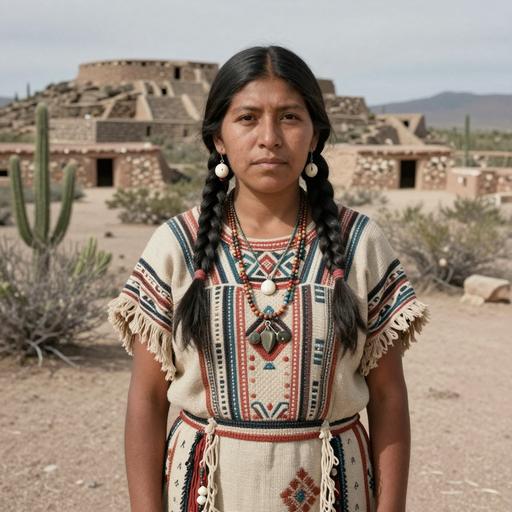
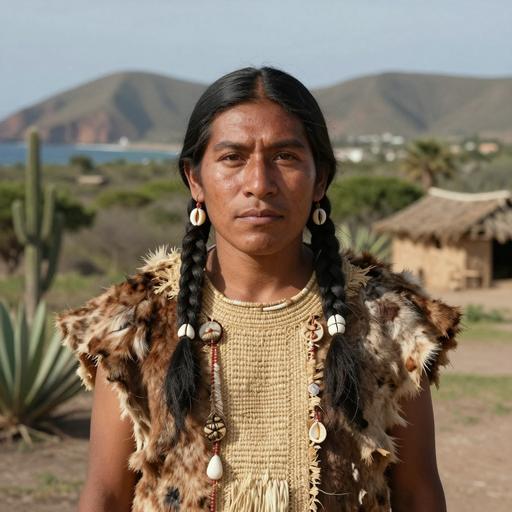
Portraits是AI生成的插图,样本标签和加入ID识别参考记录.

纵向 样本 国家 大纪元 日期 文化 mtDNA 匹配
AI生成的示例性肖像 Tradicion Trincheras individual, La Playa (Sonora, Cerro Trincheras, Terraza B6), Mexico (1,300-1,450 CE)
Sample ID: I23708
Mexico Trincheras Culture La Playa 1100 Before Present 1300-1450 CE Trincheras C1b11 Direct
AI生成的示例性肖像 Mesoamerican Civilizations individual, LC-218. Baja, Mexico (3,000 BCE-1,500 CE)
Sample ID: B-03
Mexico Pericues Culture, Mexico 3000 BCE - 1500 CE Pericues C1b11 Direct
AI生成的示例性肖像 America North Ancient individual, LC-218. Baja, Mexico (3,000 BCE-1,500 CE)
Sample ID: B-03
Mexico The First Peoples of North America 3000 BCE - 1500 CE C1b11 Direct
MATERNAL LINEAGE · ANCIENT DNA

古代世系证据地图

跟随母舰飞向这个分支 探索古代载体的发现地点

正在装入古老的观测...

标记是考古发现地点。一个破碎的连接器是连续分支之间一种不确定的、拟议中的地理过渡,辅以多个日期的观察;它不是一个准确的旅行路线、出生地或直接血统的证明。父系样本可能属于其他后代分支。在证据不足的地方,差距依然存在。样本日期与随机群形成日期不同。

参考简介

载体分布图

3 个古代 DNA 样本的地理分布,涵盖 C1B11 及其下游分支的携带者

直接承运人
时间段过滤器
所有时间段
显示全部样本
参考简介

时间分布

载体在考古时期的分布

参考简介

地理分布

按有记录的抽样国家计算,反映的是现有的参考选择,而不是人口频率。

参考简介

国家 × 大纪元发行

比较各国和考古时期记录的样本数量。选择一个人口密集的细胞来检查样本。

数据

数据证明( P)

来源信息和数据质量

上次更新 2026-02-16
信心分数 50/100
覆盖范围 Low

数据来源

分类、估计日期和地理背景反映了所记录的参考数据,随着证据的修订而可能发生变化,样本覆盖范围不均匀;所记录的地点和考古协会没有确定个人出身或文化特征。

一个单倍群反映一条母系或父系谱系。能够预测到哪个分支,取决于 DNA 文件中包含哪些遗传标记。 了解我们的分析方法