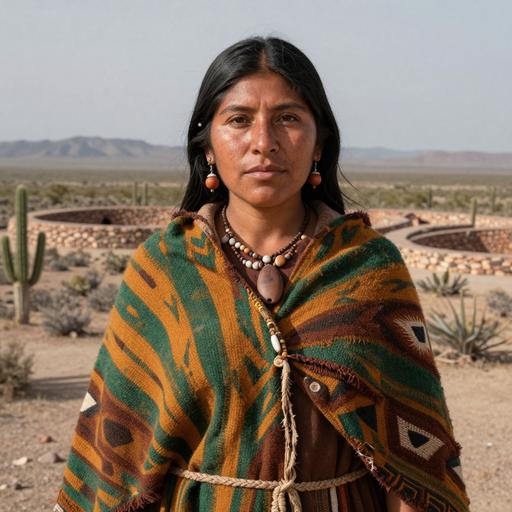
部门背景
mtDNA 谱系分支 C1B7 的历史背景
Origins and Evolution
mtDNA haplogroup C1B7 sits as a derived subclade under C1BA → C1B within the broader haplogroup C1 lineage. Haplogroup C1 is one of the maternal lineages associated with the initial peopling of the Americas via Beringia during the Late Pleistocene. By phylogenetic position, C1B7 is best interpreted as a post‑founder diversification that occurred after the main C1 sublineages became established in the Americas. Given the established chronology for C1b diversification and the geographic patterning of many C1b subclades, a South American origin (Amazonian or Andean regions) with an estimated time to most recent common ancestor in the early to mid-Holocene (roughly ~9 kya, with substantial uncertainty) is a reasonable working hypothesis, pending more complete mitogenome sampling.
Subclades
C1B7 is an intermediate/terminal branch beneath C1BA/C1B in current phylogenies. As of current public reference trees, C1B7 may have further private mutations or minor downstream lineages that are poorly sampled; targeted full mitogenome sequencing of individuals assigned to C1B7 is required to resolve internal structure, identify private subclades, and refine coalescence dates. In the absence of dense sampling, C1B7 should be treated as a geographically and temporally localized clade within the larger C1B radiation.
Geographical Distribution
Observed and inferred occurrences of C1B7 follow the broader distribution of C1b derivatives, which are most common in South America and also present at lower frequencies in Central and parts of North America. Based on phylogeography of related lineages, C1B7 is most plausibly concentrated in South American Indigenous populations (Andean highlands and Amazonian lowlands), with possible low-frequency occurrences in neighboring regions due to prehistoric and historic migration and gene flow. However, current sampling is sparse, so apparent absences elsewhere may reflect lack of data rather than true absence.
Historical and Cultural Significance
Because C1B7 likely represents a localized descendant lineage within the Americas, its presence in modern or ancient individuals can help reconstruct regional maternal ancestry, microevolutionary processes (founder effects, drift), and localized demographic events such as post‑glacial expansions, Holocene population structure in the Andes and Amazon, and contacts between lowland and highland groups. Where present in ancient DNA contexts, C1B7 could contribute to discrimination between different regional prehistoric cultural horizons (for example Early Holocene hunter‑gatherer groups vs later preceramic Andean communities), but robust cultural associations await better archaeological sampling and direct radiocarbon‑dated mitogenomes.
Conclusion
C1B7 is a legitimate but currently undercharacterized mtDNA subclade within the C1B lineage. Phylogenetic position and comparisons with related C1b lineages support a South American origin in the Holocene (on the order of several thousand years ago), but precise dating and fine‑scale geographic mapping require more full mitogenome data from modern and ancient Indigenous populations across South and Central America. Until such data are available, interpretations must remain cautious and framed as hypotheses to be tested by expanded sequencing efforts.
关键点
- Origins and Evolution
- Subclades
- Geographical Distribution
- Historical and Cultural Significance
- Conclusion