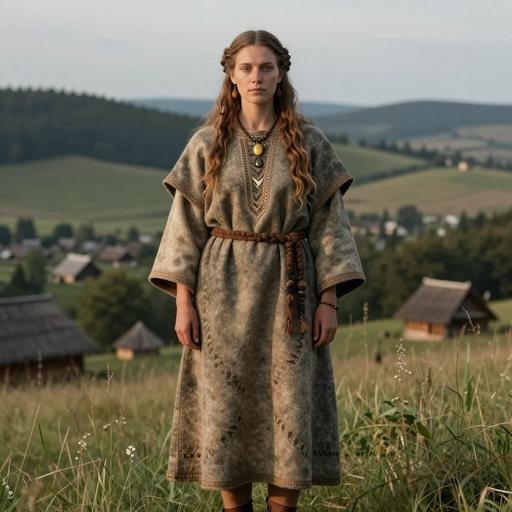
H5A1 is a subclade of mtDNA haplogroup H5A (often written H5a), itself part of the broader H5 branch of haplogroup H. Based on the phylogenetic position of H5A1 beneath H5A and the estimated time depth of H5A in the early Holocene, H5A1 most likely arose in the Near East / West Asia during the early Neolithic or late pre-Neolithic (roughly ~8–9 kya). Its emergence fits a pattern seen for many H5 sublineages: origin in West Asia followed by dispersal into Europe during post‑glacial recolonization and the Neolithic agricultural expansion.
Subclades (if applicable)
H5A1 itself is one branch within H5A and may contain downstream sublineages (for example, named subbranches recorded in some databases as H5A1a/H5A1b etc.). These downstream lineages are typically regionally restricted and can show local founder effects. Subclade structure within H5A1 is useful for resolving more recent maternal expansions in Europe and the Near East, and for tracing lineages that contributed to modern population structure in Mediterranean and southern European regions.
Geographical Distribution
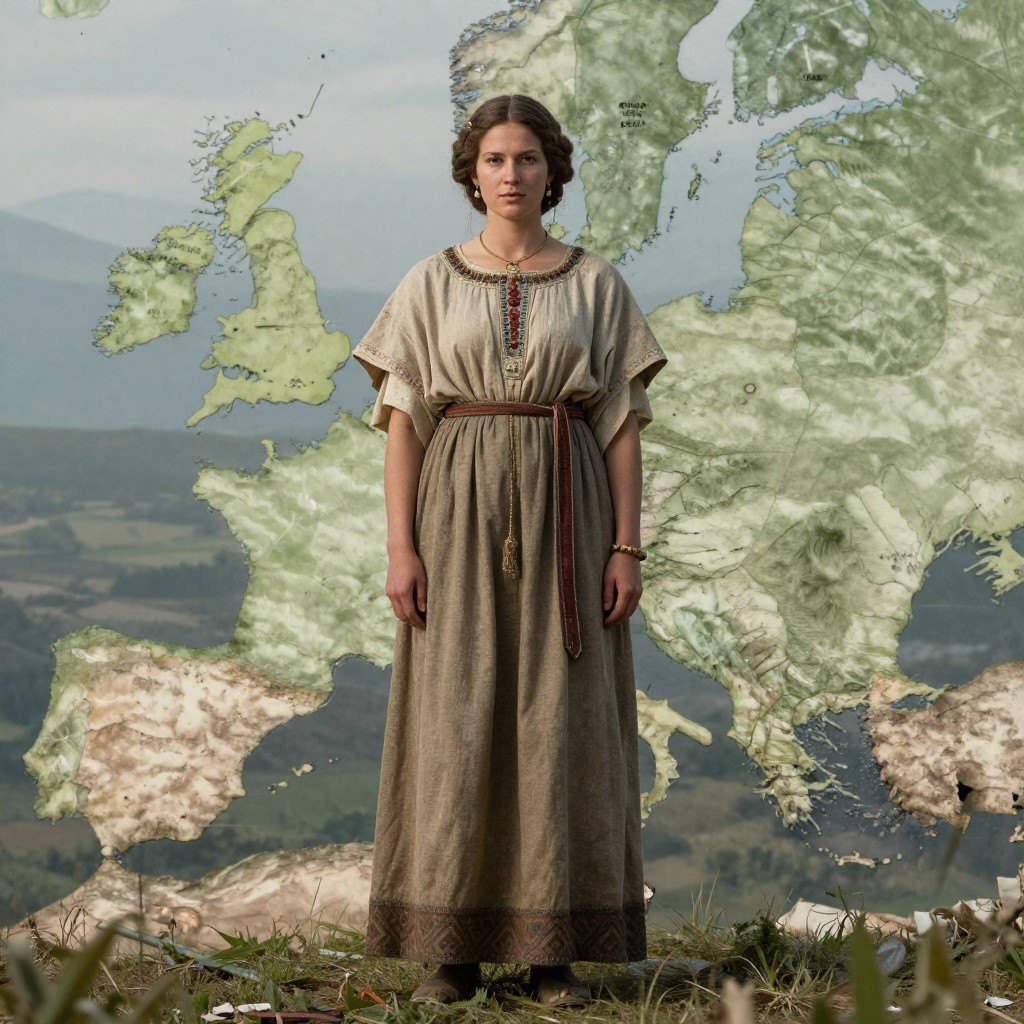
H5A1 is most frequently observed in Southern Europe and the Mediterranean basin but is also present at lower to moderate frequencies across much of Western, Eastern, and parts of Central Europe. The haplogroup is found in the Near East and Anatolia, and occurs at low to moderate frequencies in the Caucasus and North Africa. H5A1 has been reported in several Jewish communities (notably some Ashkenazi and other Levantine-derived maternal lineages), where founder events have locally increased its frequency. Ancient DNA studies recover H5A and some of its subclades in Neolithic and later archaeological contexts across southeastern Europe and the Mediterranean, consistent with dispersal with farming and subsequent regional demographic processes.
Historical and Cultural Significance
The distribution and age of H5A1 link it to major demographic transitions in West Eurasia: the post‑glacial recolonization of Europe, the spread of Neolithic farmers from Anatolia/Levant, and later population movements and local expansions during the Bronze and Iron Ages. In southern Europe and certain island contexts, H5A1 (and its sublineages) can reflect maritime connectivity and localized drift or founder effects. Its presence in some Jewish maternal lineages also highlights how small community sizes and founder events can shape haplogroup frequencies over historical time.
Conclusion
H5A1 is a regionally informative maternal lineage tracing back to the Near East in the early Holocene, which contributed to the maternal genetic pool of southern and western Europe through Neolithic and post‑Neolithic processes. Studying H5A1 and its subclades helps clarify fine‑scale maternal demographic history in the Mediterranean and adjacent regions and complements broader analyses based on other H5 sublineages and non‑maternal markers.
Late Bronze Age Scotland - United Kingdom - Scotland. Covesea Cave 2
United Kingdom Scotland LBA 969-812 calBCE (2738±29 BP, SUERC-68715)
H5a1Direct
Sample ID: PCA0378
Iron Age Santok Culture - Poland - Santok (Lubusz Province, Gorzów Wielkopolski, Santok)
Poland Iron Age Santok Culture 1000-1200 CE
H5a1Direct
Sample ID: UKR027
UKR027
Ukraine Ukraine LateMedieval 1100-1200 CE
H5a1Direct
Sample ID: RISE499
Karasuk Culture, Russia - Russia - Bystrovka
Russia Russia Karasuk 1400 BCE - 900 BCE
H5a1Direct
Sample ID: CGG100498
Medieval Danish - Denmark - Vor Frue Kirkegård (Aalborg)
Denmark Denmark Medieval 1400-1450 CE
H5a1Direct
Sample ID: RISE499
Russia The Karasuk Culture 1400 BCE - 900 BCE
H5a1Direct
Sample ID: I11973
Middle Bronze Age Netherlands - Netherlands - Noord-Holland. Westwoud-Binnenwijzend
Netherlands Netherlands MBA 1415-1230 calBCE (3065±30 BP, Poz-86327)
H5a1Direct
Sample ID: KZL004
Late Bronze Age Tasmola Culture, Kazakhstan - Kazakhstan - Karaganda Region. Aktogay District. Mount Begazy on the right bank of Karatal River. Kyzyl. mound 5
Kazakhstan Late Bronze Age Tasmola Culture, Kazakhstan 1436-1296 calBCE (3109±22 BP)
H5a1Direct
Sample ID: CGG100453
Danish Post-Medieval - Denmark - Vor Frue Kirkegård (Aalborg)
Denmark Danish Post-Medieval 1536 CE - 1806 CE
H5a1Direct
Sample ID: kro013
Southern Swedish Post-Medieval Culture - Sweden - Kronan (Kalmar län, Mörbylånga)
Sweden Southern Swedish Post-Medieval Culture 1676 CE
H5a1Direct
Sample ID: UKR055-I
UKR055-I
Ukraine Ukraine BA 1873-1566 calBCE (3404±35, UBA-48163)
H5a1Direct
Sample ID: MX277
Early Bronze Age Singen, Southern Germany - Germany - Southern Germany. Singen
Germany Early Bronze Age Singen, Southern Germany 1936-1751 calBCE (3526±23 BP, BE-9211.1.1)
H5a1Direct
Sample ID: I1061
Mid-Late Bronze Sintashta - Russia - Kamennyi Ambar 5 Cemetery
Russia Russia MLBA Sintashta 2050-1700 BCE
H5a1Direct
Sample ID: I4075
Bell Beaker Culture, Netherlands - Netherlands - Noord-Holland. Oostwoud. De Tuithoorn
Netherlands Bell Beaker Culture, Netherlands 2127-1933 calBCE (3635±20 BP, PSUAMS-2337)
H5a1Direct
Sample ID: I4249
Bell Beaker Culture, Germany - Germany - Irlbach LKR
Germany Bell Beaker Culture, Germany 2341 BCE - 2141 BCE
H5a1Direct
Sample ID: I4249
Germany The Bell Beaker Culture 2341 BCE - 2141 BCE
H5a1Direct
Sample ID: I5655
Bell Beaker Culture, Germany - Germany - Irlbach LKR
Germany Bell Beaker Culture, Germany 2500 BCE - 2000 BCE
H5a1Direct
Sample ID: I5655
Germany The Bell Beaker Culture 2500 BCE - 2000 BCE