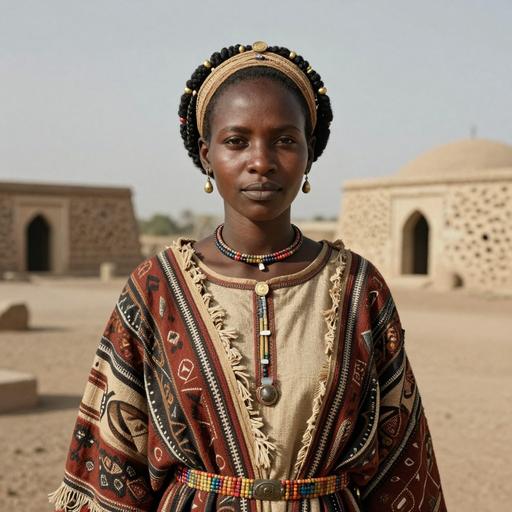
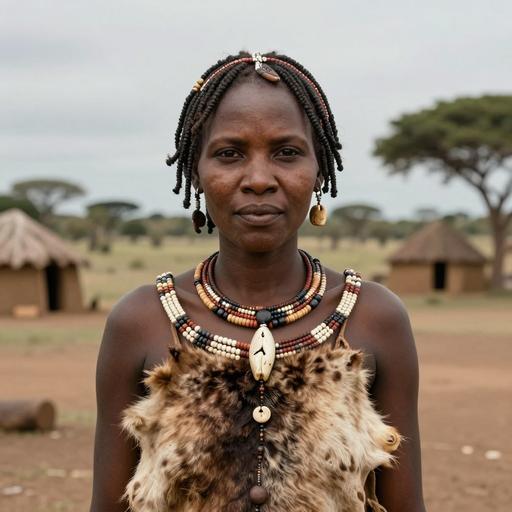
部门背景
mtDNA 谱系分支 L3E2B1 的历史背景
Origins and Evolution
L3E2B1 is a subclade of the broader L3E2 lineage, itself nested within the major African macro-haplogroup L3. The parent clade L3E2B likely arose in West/Central Africa in the early-to-mid Holocene (around ~6 kya), and L3E2B1 represents a subsequent branching event probably occurring a few thousand years later (estimated here ~5 kya). The emergence of L3E2B1 took place against a backdrop of Holocene climatic stabilization, population growth, and increased regional interaction in West and Central Africa, which facilitated local differentiation of maternal lineages.
Mitochondrial phylogenies built from modern complete mtDNA sequences and limited ancient DNA data indicate that L3E2-derived lineages underwent regional diversification in West/Central Africa, producing subclades that track both hunter-gatherer and agriculturalist expansions in the region.
Subclades (if applicable)
Within current sequencing databases L3E2B1 has relatively limited named downstream subclades compared with older, deeper haplogroups. Where deeper resolution exists, it often reflects local private mutations found in specific ethnic groups (for example, particular West African or Central African communities) or in Bantu-speaking populations that spread the lineage across a wider geographic range. Ongoing high-resolution mitogenome sequencing can reveal further internal structure; many of the observed variants are consistent with relatively recent Holocene diversification rather than deep Pleistocene splits.
Geographical Distribution
L3E2B1 shows a concentration in West and Central Africa, with occurrences documented among Yoruba and other West African groups, as well as among Central African rainforest populations. The haplogroup (and its sublineages) is also carried by many Bantu-speaking groups due to demographic movements associated with the Bantu expansions that redistributed West/Central African maternal lineages across Central, Southern and parts of Eastern Africa. Lower-frequency occurrences are recorded in southern African contexts (including admixture with Khoe-San–adjacent groups), coastal East African populations (reflecting long-term coastal connections), and—through the transatlantic slave trade—in the Americas and the Caribbean. Very low frequencies may be detected in North Africa and the Near East as a result of historical gene flow.
Historical and Cultural Significance
Although mitochondrial haplogroups should not be equated with archaeological cultures, the distribution and timing of L3E2B1 are consistent with major demographic processes in Holocene Africa. In particular:
- The Bantu expansions (beginning roughly 3–5 kya) redistributed many West/Central African maternal lineages, including L3E2-derived clades, into Central, Southern and parts of Eastern Africa. This process accounts for many of the modern occurrences of L3E2B1 across sub-Saharan Africa.
- The Iron Age / West African terrace of cultural change saw regional population growth and increased social complexity, during which local mtDNA diversity continued to accumulate.
- The transatlantic slave trade in the last 500 years transported West and Central African maternal lineages to the Americas; L3E2B1 is therefore observed at low but measurable frequencies in African-descended populations in the Caribbean and the Americas.
Modern population-genetic and forensic surveys, as well as targeted mitogenome sequencing projects, use markers within L3E2B1 to help reconstruct maternal ancestry in both African and African-descended populations.
Conclusion
L3E2B1 is a Holocene-age maternal lineage rooted in West/Central Africa that reflects regional diversification and later dispersals associated with major demographic processes such as the Bantu expansions and historic migrations. Its presence in both continental African populations and the African diaspora makes it informative for studies of maternal ancestry, migration, and admixture in and beyond sub-Saharan Africa. As more complete mitogenomes and ancient DNA samples become available, the fine-scale structure and phylogeographic history of L3E2B1 will continue to be refined.
关键点
- Origins and Evolution
- Subclades (if applicable)
- Geographical Distribution
- Historical and Cultural Significance
- Conclusion