部门背景
mtDNA 谱系分支 U5A1C2A 的历史背景
Origins and Evolution
U5A1C2A is a subclade of U5A1C2 and therefore sits within the broader U5a branch of haplogroup U5, a lineage strongly associated with European Mesolithic hunter‑gatherers. The parent clade U5A1C2 likely formed after the Last Glacial Maximum in Northern/Northeastern Europe; U5A1C2A represents a further derived branch that probably arose in the region as people reoccupied formerly glaciated landscapes during the early to mid‑Holocene (roughly the 7 kya timeframe suggested here). Ancient DNA research shows that U5 lineages were frequent among post‑glacial forager groups across northern and eastern Europe, and derived subclades such as U5A1C2A reflect local diversification as small, relatively isolated populations expanded and adapted to boreal and subarctic environments.
Subclades (if applicable)
At present, U5A1C2A is treated as a relatively narrow terminal or near‑terminal subclade derived from U5A1C2. Published phylogenies and population surveys indicate only a small number of downstream lineages within U5A1C2 that have been named or observed; U5A1C2A itself may include population‑specific private mutations visible in high‑resolution mitogenomes but lacks widely reported major named child clades in the literature. Continued mitogenome sequencing in northern Europe may reveal additional internal structure.
Geographical Distribution
U5A1C2A shows a geographic concentration consistent with other U5a lineages of Mesolithic origin. It is most frequent and best documented in Fennoscandia and northern Scandinavia, including among Sámi and other indigenous northern Scandinavian groups. Elevated frequencies are also observed in broader Scandinavian populations (Norway, Sweden, Denmark) and across the Baltic states (Latvia, Lithuania, Estonia). The lineage occurs at moderate frequencies in parts of northeastern and eastern Europe (northwestern Russia, parts of Finland, Poland) and appears sporadically at low frequencies further south and east (central Europe, Caucasus) likely due to later gene flow and historical movements.
Historical and Cultural Significance
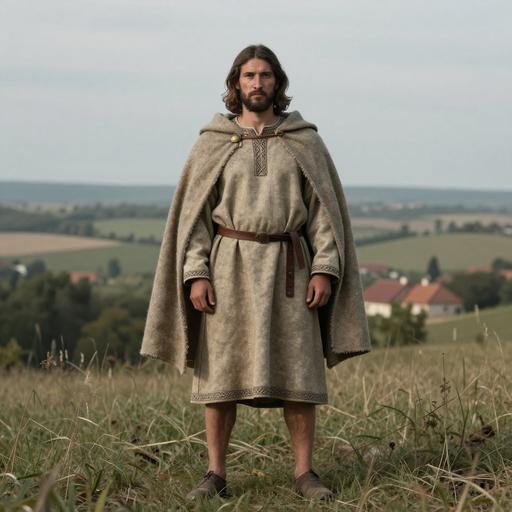
Haplogroup U5 and its subclades are emblematic of Mesolithic hunter‑gatherer ancestry in Europe. U5A1C2A's distribution suggests continuity of maternal lines from post‑glacial forager populations through the Neolithic and into the historic era in high latitude environments. In regions like northern Fennoscandia the persistence of U5 lineages reflects long‑term demographic continuity and genetic resilience of groups that maintained foraging and later mixed subsistence strategies. Where U5A1C2A coexists with farmer‑associated haplogroups (for example H and J), it records maternal admixture between indigenous hunter‑gatherers and incoming Neolithic or later populations.
Conclusion
U5A1C2A is a geographically focused, Mesolithic‑rooted maternal lineage that illustrates post‑glacial diversification in northern Europe. It is most informative for studies of regional continuity in Fennoscandia and the Baltic and provides a useful marker for tracing maternal hunter‑gatherer ancestry and its persistence through later cultural transitions. As more complete mitogenomes are generated from both ancient and modern samples, the internal structure and precise age of U5A1C2A will become better resolved.
关键点
- Origins and Evolution
- Subclades (if applicable)
- Geographical Distribution
- Historical and Cultural Significance
- Conclusion