部门背景
mtDNA 谱系分支 U5A1C2A1 的历史背景
Origins and Evolution
mtDNA haplogroup U5A1C2A1 is a subclade nested beneath U5A1C2A and ultimately within U5, one of the oldest and most characteristic maternal lineages of post‑glacial Europe. U5 diversified in Upper Paleolithic and Mesolithic Europe; more derived branches such as U5A1C2A appear in northern and northeastern Europe during the post‑glacial Mesolithic and early Neolithic. Given the parent clade U5A1C2A has been dated to roughly ~7 kya, U5A1C2A1 is plausibly a slightly younger split (on the order of a few thousand years more recent), arising as small founder lineages differentiated in the patchy, high‑latitude populations of Fennoscandia and adjacent regions.
Subclades
As a terminal or near‑terminal subclade in many current phylogenies, U5A1C2A1 may have limited further named downstream branches in published trees (many fine‑scale substructure in mtDNA is discovered as more mitogenomes are sequenced). Where present, downstream diversity of U5A1C2A1 is expected to be shallow and geographically concentrated, reflecting local founder effects and genetic drift in small, northern populations.
Geographical Distribution
U5A1C2A1 shows its highest frequencies and most consistent representation in Fennoscandia (including Sámi and other indigenous northern Scandinavian groups), the Baltic states, and parts of northern and northwestern Russia. It is found at lower but measurable frequencies in neighboring Central and Northern European populations (for example parts of Norway, Sweden, Finland, Latvia, Lithuania, Estonia, Poland and northern Russia). Reports of this lineage at very low frequency in some southern or eastern contexts (Caucasus, North Africa) are likely the result of later mobility or isolated introductions rather than primary centers of origin.
Historical and Cultural Significance
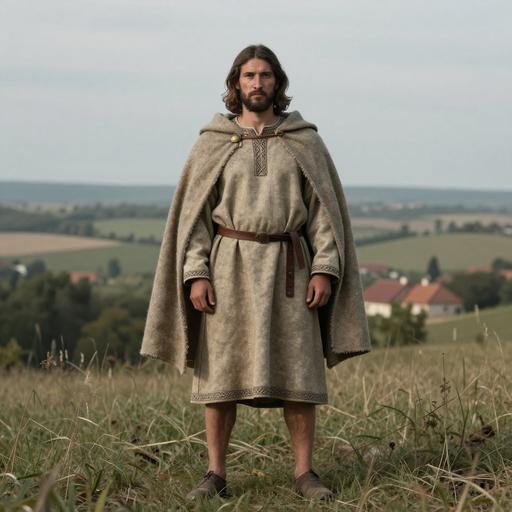
This haplogroup fits the broader pattern of Mesolithic hunter‑gatherer maternal ancestry that persisted in northern Europe well into the Neolithic and later periods. Lineages like U5A1C2A1 are often interpreted as markers of continuity from pre‑agricultural populations of high‑latitude Europe, surviving in higher relative frequency in populations that remained less affected by early farmer expansions (for example, Sámi and other northern groups). The haplogroup's persistence through time reflects demographic processes such as isolation, small effective population size, and founder effects in northern environments.
Although U5 lineages are sometimes detected in ancient DNA contexts associated with later archaeological cultures (e.g., Comb Ceramic or local Mesolithic–Neolithic transition assemblages), U5A1C2A1 is not generally associated with the large steppe‑derived migrations that reshaped parts of Europe in the Bronze Age; instead it documents local maternal continuity and the survival of hunter‑gatherer maternal lineages alongside incoming farming and pastoralist groups.
Conclusion
U5A1C2A1 is a geographically focused, archaeogenetically informative maternal lineage tied to northern and northeastern Europe. Its pattern—low to moderate frequency in wider Europe but elevated representation among Sámi and northern populations—makes it a useful marker for studies of Mesolithic continuity, post‑glacial recolonization, and the demographic history of high‑latitude Europe. Continued mitogenome sequencing and ancient DNA sampling in the region will refine the internal structure and precise age estimates for this subclade.
关键点
- Origins and Evolution
- Subclades
- Geographical Distribution
- Historical and Cultural Significance
- Conclusion