跳转到主内容
mtDNA · 母亲 lineage

U5B2C1

mtDNA Haplogroup U5B2C1

一个家族分支的参考简介 。 共享haplogroups 无法建立家庭关系或文化认同 。

参考简介

部门背景

mtDNA 谱系分支 U5B2C1 的历史背景

Origins and Evolution

mtDNA haplogroup U5B2C1 sits as a downstream branch within the U5b2 subclade of haplogroup U5, one of the oldest and most characteristic maternal lineages associated with European Pleistocene and early Holocene hunter-gatherers. The broader U5 lineage arose in Upper Paleolithic Europe, while U5b2 and its descendants diversified later; U5B2C1 is estimated to have formed in Western/Northern Europe in the early Holocene (around ~9 kya). Its phylogenetic position—nested under U5b2C—indicates a regional derivation from local Mesolithic hunter-gatherer populations and subsequent survival through population turnover events.

Subclades (if applicable)

U5B2C1 is itself a terminal or near-terminal branch in many modern and ancient sequence datasets, with limited internal diversity compared with older U5 lineages. Its immediate parent is U5b2C (also referred to as U5B2C in some literature); further sister branches within U5b2 include other low-frequency subclades that share diagnostic mutations reflecting a common Mesolithic ancestry. The scarcity of deeply branching substructure beneath U5B2C1 in published datasets implies a relatively recent split or a history of drift and bottlenecks that reduced diversity.

Geographical Distribution

The modern distribution of U5B2C1 is patchy and of generally low frequency. It is most reliably reported in Northern and Western European populations (including some indigenous groups such as the Saami), present at low frequencies in Central and Eastern Europe, and occurs sporadically in neighboring regions such as parts of North Africa and the Caucasus/Anatolia. This spatial pattern is consistent with origin in northern/ western Europe followed by localized persistence and occasional outward dispersal through later contacts and population movements. The haplogroup has been identified in multiple ancient DNA samples (11 samples in the referenced database), confirming its presence in archaeological contexts and supporting continuity from Mesolithic/early Holocene time depths in Europe.

Historical and Cultural Significance

Because U5 and its subclades are strongly associated with European hunter-gatherers, the presence of U5B2C1 in archaeological and modern samples is informative about pre-Neolithic ancestry in a region. The lineage likely reflects remnants of Mesolithic maternal ancestry that persisted through the Neolithic and Bronze Age periods, sometimes becoming incorporated into populations associated with later archaeological cultures via admixture. Low-frequency survival in groups such as the Saami and in some western European populations may reflect founder effects, genetic drift in small or isolated communities, and limited female-mediated gene flow.

Conclusion

U5B2C1 is a diagnostically informative but rare mtDNA subclade that encapsulates a fragment of Europe's Mesolithic maternal heritage. Its presence in both ancient and modern samples underscores localized continuity in parts of northern and western Europe and illustrates how deep Paleolithic and Mesolithic lineages can persist at low frequencies into the present. The haplogroup's restricted distribution and low diversity highlight the role of drift, isolation, and episodic migration in shaping maternal lineages after the end of the last Ice Age.

关键点

  • Origins and Evolution
  • Subclades (if applicable)
  • Geographical Distribution
  • Historical and Cultural Significance
  • Conclusion
参考简介

树形关系( N)

phylgenetic 上下文和子拼写

进化路径

沿已记录的上级分支追溯至 U5B2C1。年代为估计值,可能随参考数据更新而调整。

步骤 单倍群 年龄估计 考古时代 时间流逝 直系后裔 被测试的现代后裔 古代连接
1 U5B2C1 当前 ~9,000 years ago Neolithic 9,000 years 0 0 0
2 U5B2C ~9,000 years ago Neolithic 9,000 years 4 31 42
3 U5B2 ~12,000 years ago Neolithic 12,000 years 5 394 0
4 U5b ~22,000 years ago Mesolithic 22,000 years 3 654 140
5 U5A'B - - - 2 1,339 0
6 U5 ~35,000 years ago Paleolithic 35,000 years 1 1,339 142
7 U ~46,000 years ago Paleolithic 46,000 years 5 5,557 110
8 R ~55,000 years ago Paleolithic 55,000 years 17 22,830 57
9 NA - - - 1 22,830 0
10 N ~60,000 years ago Paleolithic 60,000 years 16 26,150 13
11 L3 ~70,000 years ago Paleolithic 70,000 years 7 30,162 6
12 L3'4 - - - 2 30,212 0
13 L3'4'6 - - - 2 30,216 0
14 L2'3'4'6 - - - 2 31,333 0
15 L2'3'4'5'6'7 - - - 2 31,349 0
16 L1'2'3'4'5'6'7 - - - 2 31,852 0
17 L ~160,000 years ago Paleolithic 160,000 years 2 32,236 5

Subclades (0)

终端分支 -没有记录的子密钥

Siblings (3)

来自同一父分支的分支( oplogroup)

参考简介

哪里是这个世界

地理分布和现代存在

记录来源

Western/Northern Europe

现代发行

The populations where mtDNA haplogroup U5B2C1 is found include:

  1. Western European populations
  2. Northern European populations (including Saami and other indigenous groups)
  3. Central European populations
  4. Eastern European populations
  5. North African populations (low frequency, sporadic)
  6. Caucasus and Anatolia (low frequency, sporadic)
历史背景

分枝穿越时间

大致历史时间范围内的估计形成情况:周期标志提供了背景,并不意味着与特定文化的联系。

  1. ~10k 年前

    新石器革命

    农业开始,定居社区形成

  2. ~9k 年前

    Haplogroup U5B2C1

    此 mtDNA 分支的形成时间为推定值,日期和地点仅作参考。

    这个分支
  3. ~5k 年前

    青铜时代

    金属加工、书写和早期文明

  4. ~3k 年前

    铁器时代

    铁工具,扩大贸易网络

  5. ~2.5k 年前

    古典时代

    希腊和罗马文明蓬勃发展

  6. 现

    现日

    现代时代

参考简介

考古学背景

已记录的 mtDNA 分支 U5B2C1 考古关联

有记录的协会

这些标签描述与 U5B2C1 相关的参考样本所处的考古背景。仅凭这种关联,无法判断所有携带者都属于某种文化或沿同一路线迁徙。

Anglo-Saxon Iron Gates Culture Linear Pottery Culture Lithuanian Mesolithic Mesolithic Iberian Middle Iron Age British Narva Nästegården Culture Volosovo Culture
文化任务基于古代DNA样本的考古背景,可能代表特定时期的区域协会.
参考简介

样本目录

单倍群 U5B2C1 的直接携带者 9 名

9 显示 ^ 9 匹配样本

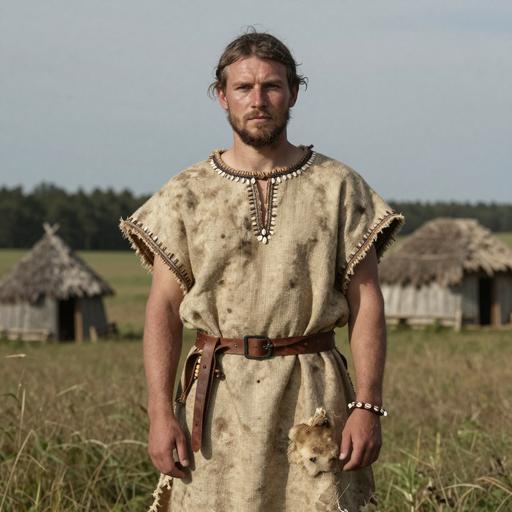
Portraits是AI生成的插图,样本标签和加入ID识别参考记录.

纵向 样本 国家 大纪元 日期 文化 mtDNA 匹配
AI生成的示例性肖像 England MIA individual, England. Kent. East Kent Access Road, United Kingdom (401-208 BCE)
Sample ID: I13732
United Kingdom England MIA 401-208 calBCE (2280±30 BP, SUERC-40712) Middle Iron Age British U5b2c1 Direct
AI生成的示例性肖像 England Early Medieval individual, England. Dorset. Worth Matravers, United Kingdom (500-700 CE)
Sample ID: I11579
United Kingdom England EarlyMedieval 432-589 calCE (1547±29 BP, SUERC-61181) Anglo-Saxon U5b2c1 Direct
AI生成的示例性肖像 Nastegarden Steppe-o Steppe2 individual, Nästegården, Sweden (1,883-1,751 BCE)
Sample ID: NAS001
Sweden Swedish Steppe-Influenced Culture at Nästegården 1883-1751 calBCE [R_Combine: (3500±15 BP; UCIAMS-275225), (3476±28 BP; UBA-47857)] Nästegården Culture U5b2c1 Direct
AI生成的示例性肖像 Ivanovo Eneolithic Volosovo individual, Sakhtysh-2a (Ivanovo Oblast, Teykovsky District, Sakhtysh Village), Russia (4,313-4,045 BCE)
Sample ID: NEO180
Russia Volosovo culture 4313-4045 calBCE (5314±34 BP, UBA-39992) Volosovo Culture U5b2c1 Direct
AI生成的示例性肖像 Narva individual, Donkalnis (Telsiai County, Telšių rajono savivaldybė), Lithuania (4,784-4,556 BCE)
Sample ID: DON006
Lithuania Lithuania Narva 4784-4556 calBCE (5822±25 BP) [R_Combine: (5785±40 BP, CAMS-85220), (5843±30 BP, FTMC-IL27-1)] Narva U5b2c1 Direct
AI生成的示例性肖像 Essenbach Ammerbreite EN LBK individual, Lower Bavaria. Landshunt County. Essenbach-Ammerbreite, Germany (5,100-4,950 BCE)
Sample ID: Ess7
Germany Early Neolithic Linear Pottery Culture, Essenbach-Ammerbreite, Germany 5100-4950 BCE Linear Pottery Culture U5b2c1 Direct
AI生成的示例性肖像 Iberian individual, León. La Braña-Arintero, Spain (5,982-5,741 BCE)
Sample ID: I0585
Spain Hunter-Gatherer Spain 5982 BCE - 5741 BCE Mesolithic Iberian U5b2c1 Direct
AI生成的示例性肖像 Mesolithic individual, Donkalnis, Lithuania (5,991-5,736 BCE)
Sample ID: Donkalnis4
Lithuania Lithuania Mesolithic 5991-5736 calBCE (6995±65 BP, OxA-5924) Lithuanian Mesolithic U5b2c1 Direct
AI生成的示例性肖像 Mesolithic individual, Castilla y León. León. La Brana-Arintero, Spain (6,015-5,789 BCE)
Sample ID: I0843
Spain Hunter-Gatherer Spain 6015-5789 calBCE (7030±50 BP, Beta-226473) Mesolithic Iberian U5b2c1 Direct
MATERNAL LINEAGE · ANCIENT DNA

古代世系证据地图

跟随母舰飞向这个分支 探索古代载体的发现地点

正在装入古老的观测...

标记是考古发现地点。一个破碎的连接器是连续分支之间一种不确定的、拟议中的地理过渡,辅以多个日期的观察;它不是一个准确的旅行路线、出生地或直接血统的证明。父系样本可能属于其他后代分支。在证据不足的地方,差距依然存在。样本日期与随机群形成日期不同。

参考简介

载体分布图

9 个古代 DNA 样本的地理分布,涵盖 U5B2C1 及其下游分支的携带者

直接承运人
时间段过滤器
所有时间段
显示全部样本
参考简介

时间分布

载体在考古时期的分布

参考简介

地理分布

按有记录的抽样国家计算,反映的是现有的参考选择,而不是人口频率。

参考简介

国家 × 大纪元发行

比较各国和考古时期记录的样本数量。选择一个人口密集的细胞来检查样本。

数据

数据证明( P)

来源信息和数据质量

上次更新 2026-02-16
信心分数 50/100
覆盖范围 Low

数据来源

分类、估计日期和地理背景反映了所记录的参考数据,随着证据的修订而可能发生变化,样本覆盖范围不均匀;所记录的地点和考古协会没有确定个人出身或文化特征。