Menu
mtDNA Haplogroup • Maternal Lineage

U5B2C1

mtDNA Haplogroup U5B2C1

~9,000 years ago
Western/Northern Europe
0 subclades
Scroll to explore
Chapter I

The Story

The journey of mtDNA haplogroup U5B2C1

Origins and Evolution

mtDNA haplogroup U5B2C1 sits as a downstream branch within the U5b2 subclade of haplogroup U5, one of the oldest and most characteristic maternal lineages associated with European Pleistocene and early Holocene hunter-gatherers. The broader U5 lineage arose in Upper Paleolithic Europe, while U5b2 and its descendants diversified later; U5B2C1 is estimated to have formed in Western/Northern Europe in the early Holocene (around ~9 kya). Its phylogenetic position—nested under U5b2C—indicates a regional derivation from local Mesolithic hunter-gatherer populations and subsequent survival through population turnover events.

Subclades (if applicable)

U5B2C1 is itself a terminal or near-terminal branch in many modern and ancient sequence datasets, with limited internal diversity compared with older U5 lineages. Its immediate parent is U5b2C (also referred to as U5B2C in some literature); further sister branches within U5b2 include other low-frequency subclades that share diagnostic mutations reflecting a common Mesolithic ancestry. The scarcity of deeply branching substructure beneath U5B2C1 in published datasets implies a relatively recent split or a history of drift and bottlenecks that reduced diversity.

Geographical Distribution

The modern distribution of U5B2C1 is patchy and of generally low frequency. It is most reliably reported in Northern and Western European populations (including some indigenous groups such as the Saami), present at low frequencies in Central and Eastern Europe, and occurs sporadically in neighboring regions such as parts of North Africa and the Caucasus/Anatolia. This spatial pattern is consistent with origin in northern/ western Europe followed by localized persistence and occasional outward dispersal through later contacts and population movements. The haplogroup has been identified in multiple ancient DNA samples (11 samples in the referenced database), confirming its presence in archaeological contexts and supporting continuity from Mesolithic/early Holocene time depths in Europe.

Historical and Cultural Significance

Because U5 and its subclades are strongly associated with European hunter-gatherers, the presence of U5B2C1 in archaeological and modern samples is informative about pre-Neolithic ancestry in a region. The lineage likely reflects remnants of Mesolithic maternal ancestry that persisted through the Neolithic and Bronze Age periods, sometimes becoming incorporated into populations associated with later archaeological cultures via admixture. Low-frequency survival in groups such as the Saami and in some western European populations may reflect founder effects, genetic drift in small or isolated communities, and limited female-mediated gene flow.

Conclusion

U5B2C1 is a diagnostically informative but rare mtDNA subclade that encapsulates a fragment of Europe's Mesolithic maternal heritage. Its presence in both ancient and modern samples underscores localized continuity in parts of northern and western Europe and illustrates how deep Paleolithic and Mesolithic lineages can persist at low frequencies into the present. The haplogroup's restricted distribution and low diversity highlight the role of drift, isolation, and episodic migration in shaping maternal lineages after the end of the last Ice Age.

Key Points

  • Origins and Evolution
  • Subclades (if applicable)
  • Geographical Distribution
  • Historical and Cultural Significance
  • Conclusion
Chapter II

Tree & Relationships

Phylogenetic context and subclades

Evolution Path

This haplogroup's evolutionary journey from its earliest ancestor to the present.

Steps Haplogroup Age Estimate Archaeology Era Time Passed Immediate Descendants Tested Modern Descendants Ancient Connections
1 U5B2C1 Current ~9,000 years ago 🌾 Neolithic 9,000 years 0 0 0
2 U5B2C ~9,000 years ago 🌾 Neolithic 9,000 years 4 26 42
3 U5B2 ~12,000 years ago 🌾 Neolithic 12,000 years 5 290 0
4 U5b ~9,000 years ago 🌾 Neolithic 9,000 years 3 495 140
5 U ~46,000 years ago 🦴 Paleolithic 46,000 years 12 2,835 110
6 R ~60,000 years ago 🦴 Paleolithic 60,000 years 12 10,987 57
7 N ~60,000 years ago 🦴 Paleolithic 60,000 years 15 15,452 13
8 L3 ~70,000 years ago 🦴 Paleolithic 70,000 years 11 17,621 6
9 L ~160,000 years ago 🦴 Paleolithic 160,000 years 7 18,987 5

Subclades (0)

Terminal branch - no known subclades

Siblings (3)

Other branches from the same parent haplogroup

Chapter III

Where in the World

Geographic distribution and modern presence

Place of Origin

Western/Northern Europe

Modern Distribution

The populations where mtDNA haplogroup U5B2C1 is found include:

  1. Western European populations
  2. Northern European populations (including Saami and other indigenous groups)
  3. Central European populations
  4. Eastern European populations
  5. North African populations (low frequency, sporadic)
  6. Caucasus and Anatolia (low frequency, sporadic)
CHAPTER IV

When in Time

Your haplogroup in the context of human history

~10k years ago

Neolithic Revolution

Agriculture begins, settled communities form

~9k years ago

Haplogroup U5B2C1

Your mtDNA haplogroup emerged in Western/Northern Europe

Western/Northern Europe
~5k years ago

Bronze Age

Metalworking, writing, and early civilizations

~3k years ago

Iron Age

Iron tools, expanded trade networks

~2k years ago

Classical Antiquity

Greek and Roman civilizations flourish

Present

Present Day

Modern era

Your Haplogroup
Historical Era
Chapter IV-B

Linked Cultures

Ancient cultures associated with mtDNA haplogroup U5B2C1

Cultural Heritage

These ancient cultures have been linked to haplogroup U5B2C1 based on matching ancient DNA samples from archaeological excavations. The presence of this haplogroup in these cultures provides insights into the migrations and population movements of populations carrying this haplogroup.

Anglo-Saxon Iron Gates Culture Linear Pottery Culture Lithuanian Mesolithic Mesolithic Iberian Middle Iron Age British Narva Nästegården Culture Volosovo Culture
Culture assignments are based on archaeological context of ancient DNA samples and may represent regional associations during specific time periods.
Chapter V

Sample Catalog

8 direct carriers of haplogroup U5B2C1

8 / 8 samples
Portrait Sample Country Era Date Culture mtDNA Match
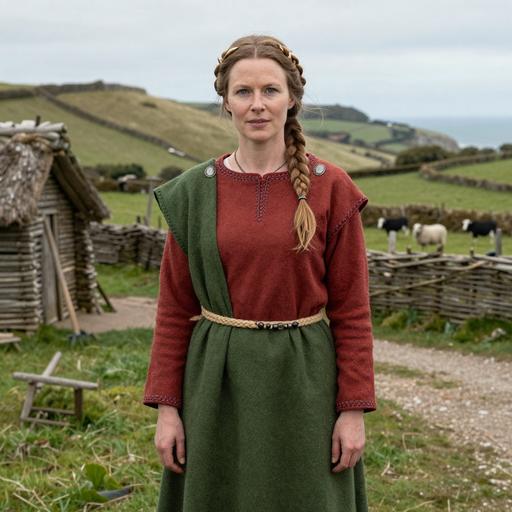
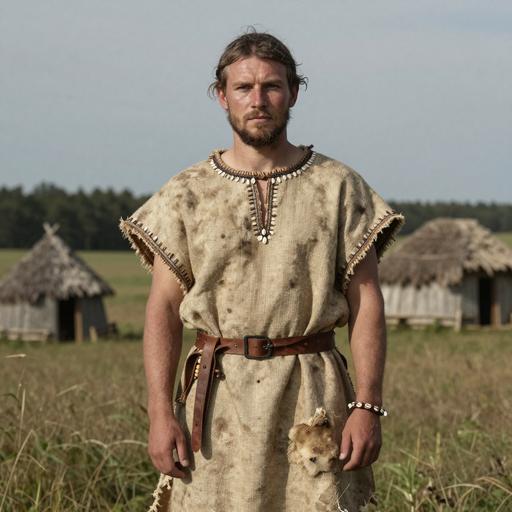
Portrait of ancient individual I13732 from United Kingdom, dated 401 BCE - 208 BCE
I13732
United Kingdom Middle Iron Age England 401 BCE - 208 BCE Middle Iron Age British U5b2c1 Direct
Portrait of ancient individual I11579 from United Kingdom, dated 500 CE - 700 CE
I11579
United Kingdom Early Medieval England 500 CE - 700 CE Anglo-Saxon U5b2c1 Direct
Portrait of ancient individual NAS001 from Sweden, dated 1883 BCE - 1751 BCE
NAS001
Sweden Swedish Steppe-Influenced Culture at Nästegården 1883 BCE - 1751 BCE Nästegården Culture U5b2c1 Direct
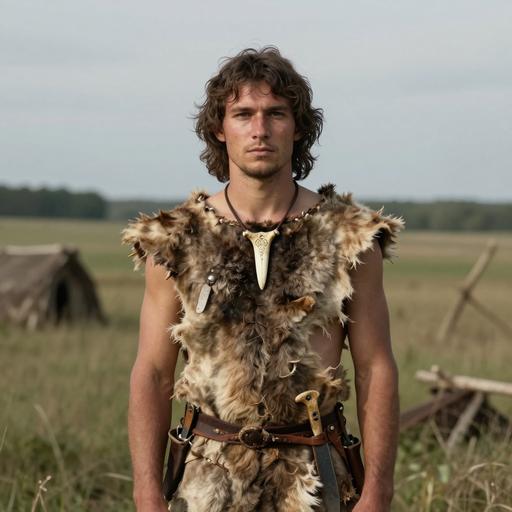
Portrait of ancient individual NEO180 from Russia, dated 4313 BCE - 4045 BCE
NEO180
Russia Volosovo culture 4313 BCE - 4045 BCE Volosovo Culture U5b2c1 Direct
Portrait of ancient individual DON006 from Lithuania, dated 4784 BCE - 4556 BCE
DON006
Lithuania Narva Culture 4784 BCE - 4556 BCE Narva U5b2c1 Direct
Portrait of ancient individual Ess7 from Germany, dated 5100 BCE - 4950 BCE
Ess7
Germany Early Neolithic Linear Pottery Culture, Essenbach-Ammerbreite, Germany 5100 BCE - 4950 BCE Linear Pottery Culture U5b2c1 Direct
Portrait of ancient individual Donkalnis4 from Lithuania, dated 5991 BCE - 5736 BCE
Donkalnis4
Lithuania Mesolithic Lithuania 5991 BCE - 5736 BCE Lithuanian Mesolithic U5b2c1 Direct
Portrait of ancient individual I0843 from Spain, dated 6015 BCE - 5789 BCE
I0843
Spain Hunter-Gatherer Spain 6015 BCE - 5789 BCE Mesolithic Iberian U5b2c1 Direct
Chapter VI

Carrier Distribution Map

Geographic distribution of 8 ancient DNA samples (direct and subclade carriers of U5B2C1)

Direct carrier
Time Period Filter
All Time Periods
Showing all samples
Chapter VII

Temporal Distribution

Distribution of carriers across archaeological periods

Chapter VIII

Geographic Distribution

Distribution by country of origin (direct and subclade carriers shown by default)

Chapter IX

Country × Era Distribution

Cross-tabulation of carrier countries and archaeological periods (direct and subclade carriers shown by default)

Data

Data & Provenance

Source information and data quality

Last Updated 2026-02-16
Confidence Score 50/100
Coverage Low
Data Source

We use the latest phylotree for MTDNA haplogroup classification and data.