Echoes of the Mongol Steppe

下载的 PDF 是图像副本。如需可选中文本及更好的辅助技术支持,请使用打印功能。

Echoes of the Mongol Steppe

揭开一个失落的文明

正在加载考古记录……

正在收集古代记录

跳转到主内容
Echoes of the Mongol Steppe
文明焦点

Echoes of the Mongol Steppe

Genetic and archaeological portrait of the Mongol world across the steppe (550–1600 CE)

550 CE - 1600 CE
Mongolia, Kazakhstan (Central Asian Steppe)
1 Ancient Samples
滚动开始
Chapter I

剧情

了解 Echoes of the Mongol Steppe 文化

Archaeological and ancient-DNA evidence from 58 individuals across Mongolia and Kazakhstan illuminates population dynamics of the Mongol-era steppe (550–1600 CE). Graves, horse gear, and genomes show a layered mosaic of local East Asian lineages and wider Eurasian connections.

Time Period

550–1600 CE

Region

Mongolia, Kazakhstan (Central Asian Steppe)

Common Y-DNA

C (15), N (5), R (4), O (3), D (3)

Common mtDNA

D (13), M (6), F (5), G (4), C (3)

Chapter II

时间线

这种文化历史上的关键时刻

550 CE

Early steppe polities and mobility

Regional steppe networks and proto-Mongolic groups establish long-standing pastoral lifeways present in later medieval communities.

1206 CE

Unification under Genghis Khan

Traditional date for the political unification that begins large-scale movements, warfare, and demographic change across Eurasia.

1227 CE

Death of Genghis Khan and dispersal

After 1227 the Mongol world fragments into khanates, prompting population redistribution and trade realignments.

1271 CE

Yuan dynasty era

Mongol-ruled Yuan dynasty in China facilitates south–north exchanges and gene flow between East and Central Asia.

1500 CE

Late medieval regional reorganization

By the early modern period, steppe polities and populations show new configurations, with local continuities amid broader Eurasian links.

Chapter III

Origins & Emergence

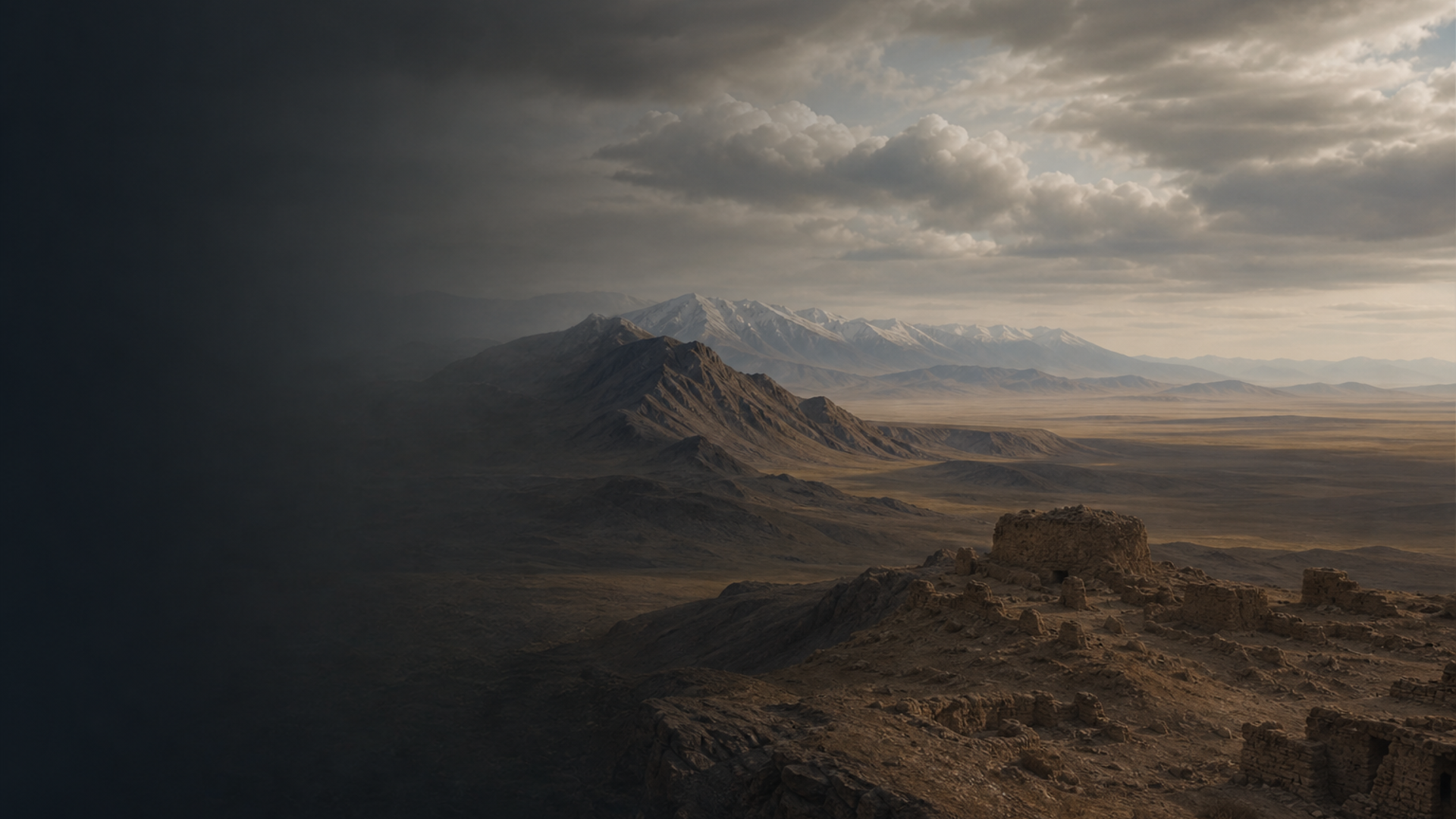
Archaeological data indicates the cultural mosaic that became the Mongol world was a long product of steppe mobility and interaction. Sites sampled in this dataset — from Tuv's Argali Mountain and Bayan Khairkhan to Selenge's Burgaldain Khundii and sites in the Tian Shan (Central Steppe, Kazakhstan) — span landscapes where pastoral lifeways, horse-riding technology, and transregional exchange coalesced.

Material culture shows continuity with earlier nomadic traditions (kurgan burial architecture, horse trappings) alongside innovations documented during the Late Medieval period. The chronological span of 550–1600 CE captures pre-unification polities, the rise of Genghis Khan's confederation in the early 13th century, and subsequent political reorganization (Golden Horde, Yuan influence) that redistributed people and goods across Eurasia.

Genetically, the dataset reveals layered ancestries consistent with local East Asian roots and repeated episodes of admixture with western Eurasian lineages. Limited evidence from earlier centuries suggests continuity in regional lineages, while medieval centuries show increased heterogeneity reflecting steppe-wide movements. Archaeologists emphasize that settlement patterns, funerary choices, and artifact assemblages must be read alongside genomes to trace origins; each line of evidence carries its own sampling biases.

  • Samples from named sites across Mongolia and Tian Shan indicate long-term steppe occupation
  • Material culture links nomadic pastoral traditions with 13th-century political consolidation
  • Genomes show layered local East Asian ancestry with episodic western Eurasian input
Chapter IV

Daily Life & Society

The everyday world of people in these steppe communities was shaped by mobility, horses, and pastoral ecologies. Burial contexts at Lamt Mountain, Melkhii Chuluu (Arkhangai), Erdene Mountain, and Ganzagad frequently include horse gear, bridles, and occasional weapons — archaeological signals of mounted pastoralist lifeways. Seasonal herding across river valleys and mountain pastures is recorded in settlement scatters and faunal remains from Sukhbaatar and Khentii provinces.

Social life blended kinship-based households with flexible political networks. Ethnographic analogy and burial inequality suggest differences in wealth and status: some graves are richly furnished, others sparse. Trade and tribute across the steppe—links to Central Asian trade routes through the Tian Shan—brought metalwork, textiles, and ideas. Archaeological traces of craftwork and temporary camps underscore a rhythm of movement punctuated by encampments and ritualized burial rites.

Archaeologists caution that preservation bias (open-air burials vs. protected sites) and modern disturbance affect the picture: many pastoral sites leave ephemeral traces, so reconstructions rely on integrating sparse material culture with historical records and genetic data.

  • Grave goods (horse trappings, metalwork) reflect mounted pastoral lifeways
  • Evidence of social differentiation in burial richness and crafted goods
Chapter V

Genetic Profile

The genetic dataset contains 58 sampled individuals from Mongolia and the Central Tian Shan (Kazakhstan), offering a broad window into steppe population structure between 550 and 1600 CE. Among Y-chromosome calls in this collection, haplogroup C is the most frequently observed (15 counts), followed by N (5), R (4), O (3), and D (3). Mitochondrial lineages are dominated by haplogroup D (13), with M (6), F (5), G (4), and C (3) also common.

This profile paints an interpretable picture: strong representation of East Asian-associated lineages (Y-C, mtDNA-D, F, G) consistent with local Mongolic and neighboring populations, together with Eurasian-wide markers (Y-R, N and mtDNA-M) indicative of admixture and long-distance connections. The temporal breadth of samples shows increased heterogeneity in medieval centuries, aligning with historical episodes of migration, conquest, and trade (13th–14th centuries).

Genetic evidence should be read with caution. Although 58 samples give reasonable power to detect major patterns, uneven geographic and temporal sampling across sites (for example, more Late Medieval material from Tuv and Umnugobi) can bias frequency estimates. Low-frequency haplogroups and fine-scale ancestry proportions require larger, denser sampling. Nevertheless, the combined archaeological and genetic signal supports a dynamic, connected steppe population with persistent local roots and periodic influxes of external ancestry.

  • Y-DNA dominated by haplogroup C, with notable N, R, O, D presence
  • mtDNA largely East Asian types (D, M, F, G) with some western influence
Chapter VI

Legacy & Modern Connections

The genetic and archaeological imprints of the Mongol-era steppe persist in modern populations across Mongolia, parts of Kazakhstan, and beyond. Contemporary gene pools in these regions retain signatures—especially haplogroup C and mitochondrial D—reflecting deep continuity of steppe maternal and paternal lines.

Cultural legacies are equally tangible: mounted pastoralism, horseback technologies, and social patterns of mobile pastoral households shaped regional demographics and movements that continue to influence identity and ancestry narratives today. Ancient genomes illuminate how medieval political events—conquest, resettlement, and trade—left biological traces, but they also highlight continuity; many genetic lineages predate 13th-century upheavals.
Researchers stress ongoing work: denser sampling across underrepresented valleys and time slices, and integration with isotopic and archaeological datasets, will sharpen our understanding of how ancient mobility translated into modern genetic landscapes.

  • Modern populations in Mongolia and adjacent regions show continuity with ancient lineages
  • Medieval mobility left admixture signals, but many lineages predate the 13th century
Chapter VII

样本目录

1 份与 Echoes of the Mongol Steppe 文化相关的古 DNA 样本,为研究该时期的人群提供遗传线索。

1 / 1 samples
纵向 样本 国家 大纪元 日期 文化 性别 Y-DNA mtDNA
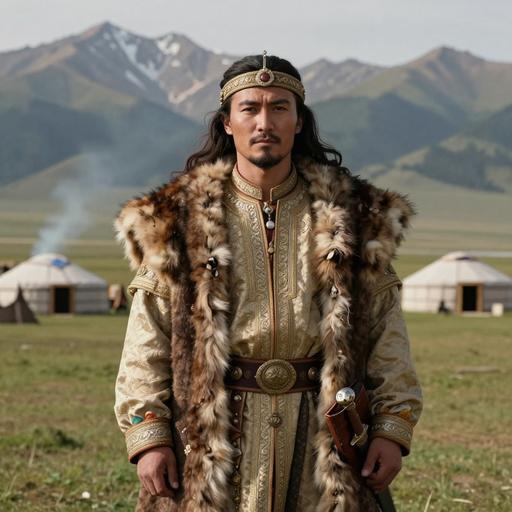
重建的肖像画 Mongol Empire individual, Kazakhstan
Mongol Empire individual, Kazakhstan
Kazakhstan Kazakhstan_GoldenHordeAsian 1200 CE Mongol Empire M C-ZQ346 D4m2
AI 电源

AI 助手

就 Echoes of the Mongol Steppe 文化提问

AI 助手 由DNAGENICS公司制作

解锁此特性
Ask questions about the Echoes of the Mongol Steppe culture. Our AI assistant can explain genetic findings, historical context, archaeological evidence, and modern connections.
AI 样本分析

Echoes of the Mongol Steppe 文化是人类历史中值得了解的一章……

遗传分析揭示了与早期种群的联系,同时显示了独特的适应和文化创新的证据。 古代DNA样本提供了对迁徙模式、社会结构以及古代种群之间的生物关系的深刻见解。

这是人工智能分析的预览。 解锁全AI 助手, 以探索关于:

  • 遗传组成和祖先
  • 移徙模式和起源
  • 日常生活和文化习俗
  • 现代遗传遗产

探索更古老的文化

揭开古代世界文明的故事

使用优惠码 可减免 35% • 11月12日 到期





