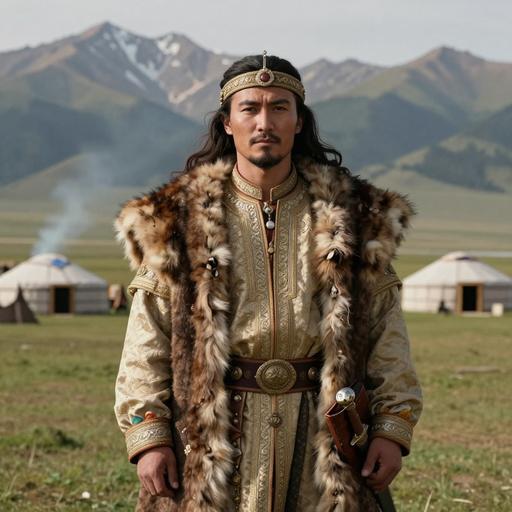
The genetic dataset contains 58 sampled individuals from Mongolia and the Central Tian Shan (Kazakhstan), offering a broad window into steppe population structure between 550 and 1600 CE. Among Y-chromosome calls in this collection, haplogroup C is the most frequently observed (15 counts), followed by N (5), R (4), O (3), and D (3). Mitochondrial lineages are dominated by haplogroup D (13), with M (6), F (5), G (4), and C (3) also common.
This profile paints an interpretable picture: strong representation of East Asian-associated lineages (Y-C, mtDNA-D, F, G) consistent with local Mongolic and neighboring populations, together with Eurasian-wide markers (Y-R, N and mtDNA-M) indicative of admixture and long-distance connections. The temporal breadth of samples shows increased heterogeneity in medieval centuries, aligning with historical episodes of migration, conquest, and trade (13th–14th centuries).
Genetic evidence should be read with caution. Although 58 samples give reasonable power to detect major patterns, uneven geographic and temporal sampling across sites (for example, more Late Medieval material from Tuv and Umnugobi) can bias frequency estimates. Low-frequency haplogroups and fine-scale ancestry proportions require larger, denser sampling. Nevertheless, the combined archaeological and genetic signal supports a dynamic, connected steppe population with persistent local roots and periodic influxes of external ancestry.