South Andros Ceramic Horizon

下载的 PDF 是图像副本。如需可选中文本及更好的辅助技术支持,请使用打印功能。

跳转到主内容
文明焦点

South Andros Ceramic Horizon

A shoreline culture preserved in blue holes and DNA

900 CE - 1500 CE
South Andros, Bahamas

剧情

Archaeological and genetic evidence from South Andros (900–1500 CE) reveals a Ceramic-period island community whose paternal lineages are dominated by Y-haplogroup Q and whose maternal lineages include A2, B2e, and C variants. Small sample sizes make these results preliminary.

Time Period

900–1500 CE

Region

South Andros, Bahamas

Common Y-DNA

Q (6 of 8 samples)

Common mtDNA

A2 (3), B2e (2), C/C1b/A2h

时间线

900 CE

Ceramic traditions established

Archaeological evidence marks the appearance of Ceramic-period occupation on South Andros, initiating centuries of coastal settlement and exchange.

1200 CE

Local networks and trade

Material culture and site distribution suggest sustained interaction with neighboring islands and participation in Ceramic-period exchange networks.

1492 CE

Era of first European contact

European arrival in the northern Caribbean begins wider demographic and cultural disruptions that reshape Indigenous lifeways.

Origins & Emergence

The Ceramic occupation of South Andros emerges in the archaeological record around 900 CE, part of the broader Ceramic Period traditions that spread through the Caribbean. Archaeological data from sinkhole burials and occupation deposits at Sanctuary Blue Hole and Stargate Blue 166 indicate people who made and used shell-rich middens, plain and decorated ceramics, and coastal camps adapted to a maritime landscape. The material culture shows continuity with Ceramic-phase communities across the northern Caribbean, suggesting networks of movement and exchange rather than isolated islands.

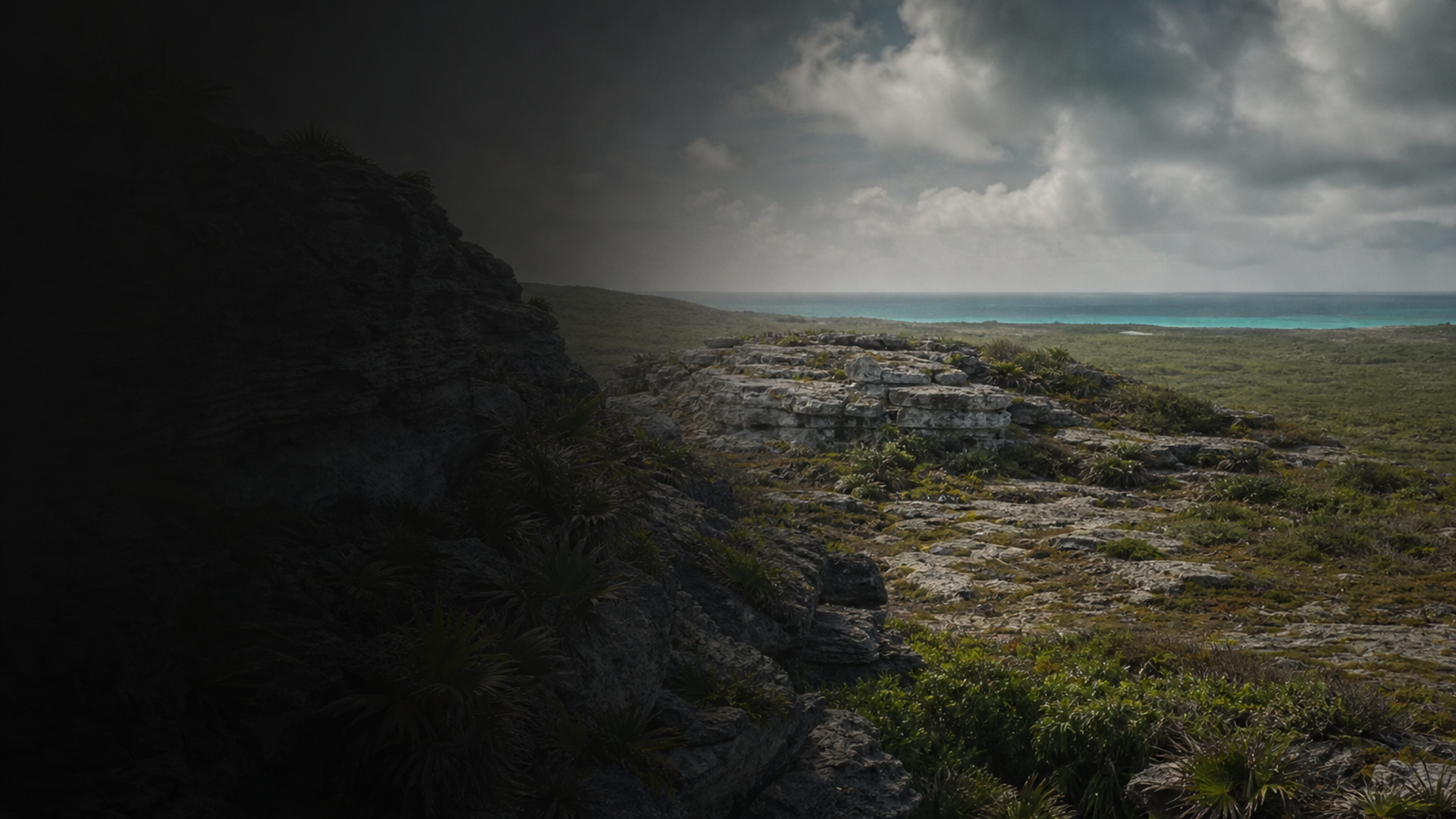
Archaeologically, pottery styles and settlement traces anchor these communities to a Caribbean-wide Ceramic horizon. Geographically the sites lie within the shallow banks and tidal creeks of South Andros, a landscape of mangroves and reef flats that would have shaped diet and mobility. Limited evidence suggests seasonal or year-round use of shallow-water resources and a reliance on marine protein and coastal plants.

Genetic data from eight ancient individuals provide complementary evidence: paternal lineages dominated by haplogroup Q are consistent with Native American founder ancestries, while maternal lineages (A2, B2e, C variants) reflect pan-American mitochondrial diversity. Because the sample count is small, interpretations about population origins and migration remain provisional and subject to expansion by future sampling.

  • Ceramic-period sites dated 900–1500 CE on South Andros
  • Key sites: Sanctuary Blue Hole; Stargate Blue 166
  • Archaeology indicates maritime adaptation and Caribbean connections

Daily Life & Society

Life on South Andros during the Ceramic period would have been shaped by the rhythm of tides, seasonal storms, and the abundance of reef and lagoon resources. Archaeological deposits recovered from blue holes and littoral contexts preserve fish bone, shell, and occasional plant remains that point to a diet centered on fish, shellfish, and coastal foraging. Pottery fragments, often plain or minimally decorated, imply household food preparation and storage, while tools made from shell and bone speak to craft traditions adapted to island resources.

Social organization can be glimpsed through burial practice and artifact distributions. Where human remains have been recovered—oftentimes from sinkhole contexts—grave goods are sparse, suggesting modest funerary display or differential preservation. The landscape of South Andros, with its protected creeks and productive flats, would support small, mobile communities linked by kinship and exchange across nearby islands. Archaeological data indicate trade in raw materials and stylistic influences across the northern Bahamas and toward Hispaniola.

Because excavation is limited and preservation variable in shallow-water contexts, many aspects of household composition, social hierarchy, and seasonal mobility remain open questions. Future archaeological and aDNA sampling will refine these portraits of daily life.

  • Marine resources and shell-based tools dominate middens
  • Burials from blue holes suggest local funerary practices, but data are sparse

Genetic Profile

Ancient DNA from eight individuals recovered at Sanctuary Blue Hole and Stargate Blue 166 provides a first glimpse of the genetic makeup of South Andros Ceramic communities. On the paternal side, six of eight males carry Y-haplogroup Q—an observation consistent with Native American founder lineages widely observed throughout the Americas. Mitochondrial haplogroups show greater diversity: A2 (three individuals) is the most frequent maternal lineage, accompanied by B2e (two individuals) and single occurrences of C and C1b and an A2h variant. These mtDNA lineages are typical of Indigenous American maternal ancestries and echo patterns seen in other Ceramic-period Caribbean and mainland populations.

Genetic signals suggest continuity with pre-contact Caribbean populations and with broader pan-American ancestries, supporting archaeological inferences of long-standing Caribbean occupation. However, the small sample size (n=8) mandates caution: patterns that appear robust could shift as more individuals and sites are studied. Population structure, kinship networks, and sex-biased mobility (for example, male-mediated continuity vs. female exogamy) cannot be confidently resolved with current numbers.

Future sampling across multiple burial contexts and improved radiocarbon control will allow testing of hypotheses about migration, local continuity, and social organization inferred from both material culture and genetic data.

  • Y-haplogroup Q dominates paternal lineages (6/8 samples)
  • Maternal lineages include A2, B2e, and C variants; sample size limits conclusions

Legacy & Modern Connections

The genetic and archaeological traces from South Andros speak to a living legacy of Caribbean Indigenous histories. Mitochondrial and Y-chromosome markers identified in these ancient individuals connect them to broad Native American ancestries, and thereby to the Indigenous peoples of the Caribbean and adjacent mainland. For modern communities, these findings underscore deep time continuities in the region, even as colonial disruption after 1492 altered demography and cultural continuity.

Archaeological sites like Sanctuary Blue Hole and Stargate Blue 166 are fragile archives; their preservation in submerged and semi-submerged contexts offers unique windows but also special conservation challenges. As more ancient DNA and archaeological data are gathered across the Bahamas and greater Caribbean, a richer and more nuanced story will emerge about movement, exchange, and resilience across island seascapes.

Until then, the South Andros Ceramic genetic profile should be treated as an evocative, preliminary chapter in a longer human story.

  • Ancient DNA links South Andros people to pan-American Indigenous ancestries
  • Findings are preliminary; more sampling will clarify long-term continuity

AI 助手

AI 助手 由DNAGENICS公司制作

解锁此特性
Ask questions about the South Andros Ceramic Horizon culture. Our AI assistant can explain genetic findings, historical context, archaeological evidence, and modern connections.

AI 样本分析

South Andros Ceramic Horizon 文化是人类历史中值得了解的一章……

遗传分析揭示了与早期种群的联系,同时显示了独特的适应和文化创新的证据。 古代DNA样本提供了对迁徙模式、社会结构以及古代种群之间的生物关系的深刻见解。

这是人工智能分析的预览。 解锁全AI 助手, 以探索关于:

  • 遗传组成和祖先
  • 移徙模式和起源
  • 日常生活和文化习俗
  • 现代遗传遗产
使用优惠码 可减免 25% • 11月13日 到期




