


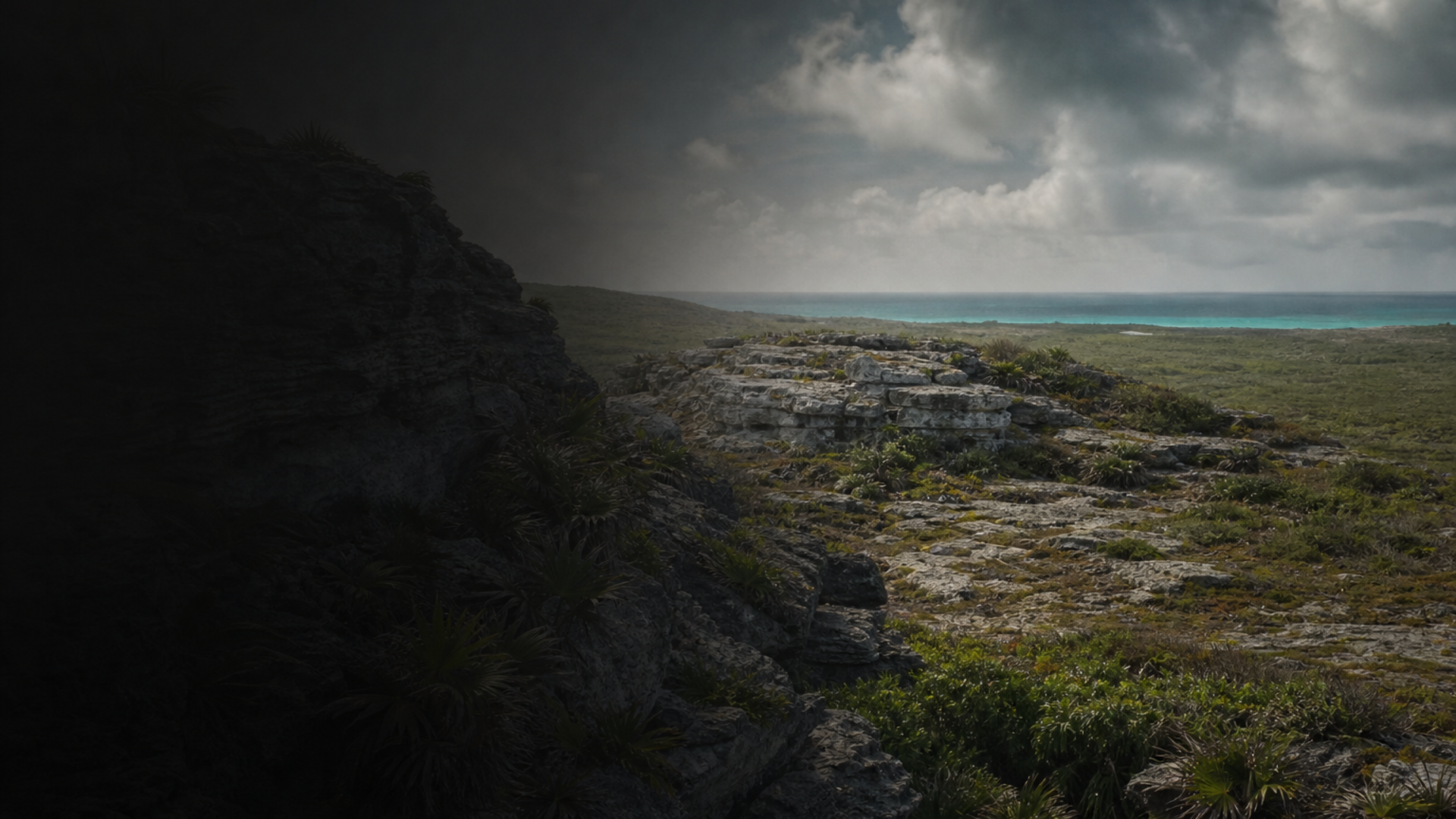
The Ceramic occupation of South Andros emerges in the archaeological record around 900 CE, part of the broader Ceramic Period traditions that spread through the Caribbean. Archaeological data from sinkhole burials and occupation deposits at Sanctuary Blue Hole and Stargate Blue 166 indicate people who made and used shell-rich middens, plain and decorated ceramics, and coastal camps adapted to a maritime landscape. The material culture shows continuity with Ceramic-phase communities across the northern Caribbean, suggesting networks of movement and exchange rather than isolated islands.
Archaeologically, pottery styles and settlement traces anchor these communities to a Caribbean-wide Ceramic horizon. Geographically the sites lie within the shallow banks and tidal creeks of South Andros, a landscape of mangroves and reef flats that would have shaped diet and mobility. Limited evidence suggests seasonal or year-round use of shallow-water resources and a reliance on marine protein and coastal plants.
Genetic data from eight ancient individuals provide complementary evidence: paternal lineages dominated by haplogroup Q are consistent with Native American founder ancestries, while maternal lineages (A2, B2e, C variants) reflect pan-American mitochondrial diversity. Because the sample count is small, interpretations about population origins and migration remain provisional and subject to expansion by future sampling.





