Ulaanzukh 2: Late Bronze Age Steppe Burials

下载的 PDF 是图像副本。如需可选中文本及更好的辅助技术支持,请使用打印功能。

跳转到主内容
文明焦点

Ulaanzukh 2: Late Bronze Age Steppe Burials

Four tombs in eastern Mongolia reveal a compact genetic snapshot of a mobile Bronze Age community.

1550 CE - 1250 BCE
Sükhbaatar, Mongolia

剧情

Archaeological and aDNA analysis of four Ulaanzukh 2 burials (1550–1250 BCE) from Sükhbaatar aimag, Mongolia links Y-haplogroup Q and Eurasian maternal lineages to Late Bronze Age steppe lifeways. Small sample size makes conclusions preliminary.

Time Period

1550–1250 BCE

Region

Sükhbaatar, Mongolia

Common Y-DNA

Q (3 of 4)

Common mtDNA

M (2), D4i (1), C (1)

时间线

1550 BCE

Earliest Ulaanzukh 2 burials

First dated burials at Ulaanzukh 2 sites in Sükhbaatar aimag mark the emergence of this Late Bronze Age local horizon.

Origins & Emergence

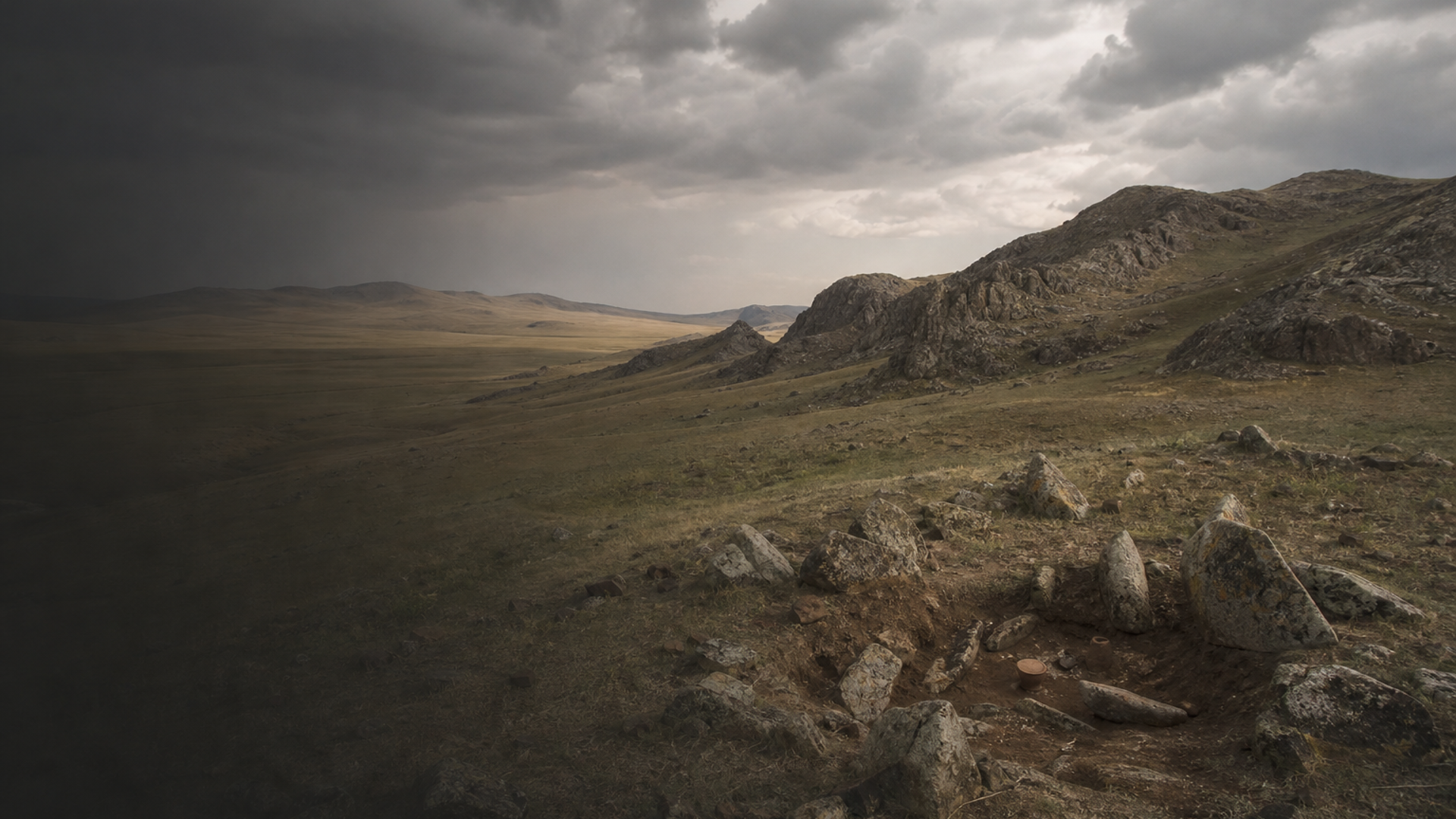
A cold light falls across the wide Mongolian steppe in the Late Bronze Age, and in that light small human stories emerge from stone and bone. Archaeological deposits attributed to the Ulaanzukh 2 horizon in Tüvshinshiree district (notably Adgiin gol Tomb 21; Bulgiin ekh Tomb 47; Ulaanzukh Tomb 17; Bulgiin-ekh) date to roughly 1550–1250 BCE. These tombs form part of a regional mosaic of pastoralist lifeways and mobility across eastern Mongolia.

Material traces in these tombs—skeletal remains accompanied by modest artifact assemblages—fit within broader Late Bronze Age steppe patterns, suggesting households oriented around herding, seasonal movement, and connections with neighboring groups. Archaeological data indicates continuity with earlier Ulaanzukh traditions in mortuary practice, though local variation is evident at each cemetery. Environmental and settlement traces in the wider Sükhbaatar landscape point to a resource-rich corridor used repeatedly by mobile communities.

Limited evidence suggests these burials reflect a small, kin-based social unit rather than large, centralized polities. Because the dataset from Ulaanzukh 2 currently comprises only four analysed individuals, any reconstruction of origin or migration must remain cautious and provisional: this snapshot hints at broader processes but cannot alone resolve complex regional histories.

  • Sites: Adgiin gol Tomb 21, Bulgiin ekh Tomb 47, Ulaanzukh Tomb 17, Bulgiin-ekh
  • Date range: 1550–1250 BCE, Late Bronze Age
  • Evidence points to mobile pastoralism and regional steppe networks

Daily Life & Society

The Ulaanzukh 2 burials evoke a life shaped by open horizons and seasonal rhythms. Archaeological indicators across the region—animal remains, portable tools, and the burial contexts themselves—are consistent with a pastoral economy centered on sheep, goat, horse, and possibly cattle. Settlement traces elsewhere in eastern Mongolia suggest temporary camps and corralling structures rather than dense, permanent villages, implying mobility as an economic and social strategy.

Mortuary behavior recorded in the four tombs shows individual interments with varying accompanying goods, reflecting differentiated identities or roles within small communities. Grave contexts hint at personal belongings being taken on life’s journeys and placed with the dead, a cinematic gesture that underscores both continuity and change across generations. Craft items and wear patterns on remains may indicate tasks related to herd management, leatherworking, and horseback riding—activities that structured daily routines.

Archaeological data indicates strong connections with neighboring steppe groups through shared material styles and funerary norms. However, without larger excavation datasets, interpretations of social hierarchy, gender roles, and community size remain necessarily tentative.

  • Economy centered on pastoralism (sheep, goat, horse)
  • Burial goods and contexts suggest personal, kin-based identities

Genetic Profile

Ancient DNA from four individuals assigned to Mongolia_LBA_Ulaanzukh_2 provides a compact but informative genetic glimpse. Three of the four males carry Y-chromosome haplogroup Q, a lineage with deep roots across northern Eurasia and known presence in various ancient Siberian and Native American populations. On the maternal side, mitochondrial haplogroups observed include M (two individuals), D4i (one), and C (one)—lineages commonly found in northern and eastern Eurasia.

These genetic markers align with an expected northern Eurasian genetic background for Bronze Age Mongolia, supporting archaeological impressions of long-standing steppe demographic continuity combined with mobility-driven gene flow. The predominance of Y-haplogroup Q in this small set suggests male-line continuity or localized paternal structure in this community, while diverse maternal haplogroups point to more varied female ancestry or exogamous practices.

Crucially, the sample count is four—below the typical threshold for robust population-level inference. Thus, while the presence of Q and eastern Eurasian mtDNA is consistent with regional patterns, conclusions about population structure, migration waves, or social practices (such as patrilocality) must be framed as provisional. Future sampling across more sites and individuals will be essential to move from snapshot to narrative.

  • Y-DNA: Q in 3 of 4 individuals suggesting northern Eurasian paternal affinity
  • mtDNA: M (2), D4i (1), C (1) indicating eastern/northern Eurasian maternal lineages

Legacy & Modern Connections

The bones and genes of Ulaanzukh 2 whisper across millennia into the genetic landscape of modern Mongolia and the broader Eurasian steppe. Archaeogenetic affinities seen in these four individuals resonate with lineages that persist in northern and eastern Asian populations today. This continuity underscores the deep-time connections between Bronze Age pastoralists and later inhabitants of the steppe.

At the same time, the Ulaanzukh 2 record is a small window: it can suggest directions for research—such as male-line persistence, maternal diversity, and the role of mobility in shaping genetic landscapes—but cannot by itself map direct ancestry to modern communities. For museum audiences and citizens alike, these tombs humanize long-term processes: seasonal herding, kin networks, and movement across an immense landscape that helped shape later population histories across Mongolia and adjacent regions.

  • Genetic lineages show continuity with broader northern/eastern Eurasian populations
  • Small sample size means connections to modern groups remain suggestive, not definitive

AI 助手

AI 助手 由DNAGENICS公司制作

解锁此特性
Ask questions about the Ulaanzukh 2: Late Bronze Age Steppe Burials culture. Our AI assistant can explain genetic findings, historical context, archaeological evidence, and modern connections.
AI 样本分析

Ulaanzukh 2: Late Bronze Age Steppe Burials 文化是人类历史中值得了解的一章……

遗传分析揭示了与早期种群的联系,同时显示了独特的适应和文化创新的证据。 古代DNA样本提供了对迁徙模式、社会结构以及古代种群之间的生物关系的深刻见解。

这是人工智能分析的预览。 解锁全AI 助手, 以探索关于:

  • 遗传组成和祖先
  • 移徙模式和起源
  • 日常生活和文化习俗
  • 现代遗传遗产
使用优惠码 可减免 30% • 11月14日 到期




