Menu
Store
Blog
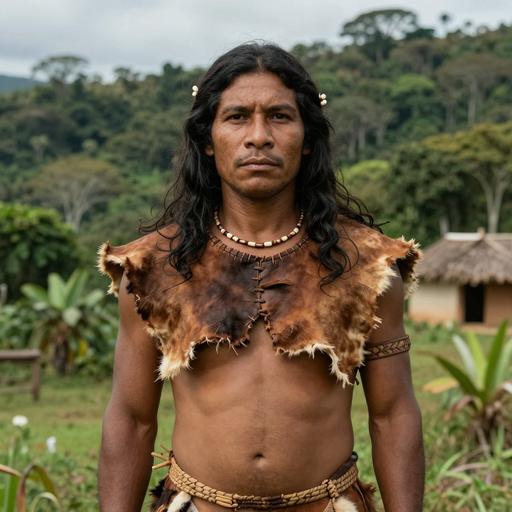
Portrait reconstruction of CAP007
Ancient Individual

A man buried in Brazil in the Early Holocene era

CAP007
8547 BCE - 8304 BCE
Male
Lagoa Santa Culture
Brazil
Scroll to begin
Chapter I

Identity

The biological and cultural markers that define this ancient individual

Sample ID

CAP007

Date Range

8547 BCE - 8304 BCE

Biological Sex

Male

mtDNA Haplogroup

C1d1

Y-DNA Haplogroup

Q-M3

Cultural Period

Lagoa Santa Culture

Chapter II

Place

Where this individual was discovered

Country Brazil
Locality Capelinha (Southeast Coast)
Chapter III

Time

When this individual lived in the broader context of human history

CAP007 8547 BCE - 8304 BCE
Chapter IV

Story

The narrative of this ancient life

The Lagoa Santa Culture is a fascinating pre-Columbian archaeological culture that flourished in the region surrounding Lagoa Santa, a municipality in the Brazilian state of Minas Gerais. This culture dates back approximately 11,000 years and is known for its significant contributions to our understanding of early human settlement in South America. This description delves deeply into various aspects of the Lagoa Santa Culture, including its archaeological significance, lifestyle, subsistence methods, burial practices, and potential connections with other ancient cultures.

Archaeological Significance

The Lagoa Santa region gained prominence in the 19th century when Danish naturalist Peter Wilhelm Lund began exploring and excavating the numerous limestone caves in the area. His findings included human skeletal remains alongside the bones of now-extinct megafauna, such as giant ground sloths and saber-toothed cats. These discoveries were crucial in establishing a timeline for human habitation in the Americas, as they provided evidence that humans coexisted with Pleistocene megafauna.

Lund's work laid the foundation for future archaeological research in the area, which has continued to the present day. The caves and rock shelters have yielded a rich array of artifacts, including stone tools, which have been instrumental in shedding light on the technological capabilities and lifestyle of the Lagoa Santa people.

Lifestyle and Settlements

The people of the Lagoa Santa Culture were primarily hunter-gatherers who adapted to the diverse ecological environments surrounding them. The region's landscape consists of a mix of cerrado (a type of savanna), forested areas, and water bodies, offering a variety of resources. Communities likely lived in small, semi-nomadic bands, moving periodically to exploit seasonal resources.

The caves and rock shelters provided natural protection and were strategically located near water sources, which would have been crucial for sustaining life. These dwellings likely served as base camps where food was processed and tools were manufactured. The evidence suggests a sophisticated understanding of their environment, enabling them to exploit a broad spectrum of resources.

Subsistence

The Lagoa Santa Culture's subsistence strategy was based on hunting, gathering, and possibly some forms of early plant management. The presence of faunal remains, particularly of medium and big game like deer and peccaries, indicate the importance of hunting. Stone projectile points and other hunting implements found in the area corroborate this.

Gathering of plant resources, such as fruits, nuts, and seeds, complemented their diet. Although there is no direct evidence of agriculture, the knowledge of plant cycles and manipulation of wild resources likely existed. Fishing and trapping small animals and birds might have also contributed to their dietary needs.

Burial Practices

One of the most distinctive features of the Lagoa Santa Culture is the complexity of its burial practices. The Lagoa Santa region has yielded some of the earliest known human burials in the Americas, characterized by elaborate and diverse funerary customs. Burials often occurred in natural cave settings but distinguish themselves by their variability. Some burials were primary, with bodies placed in extended positions, while others were secondary, involving the reburial of remains.

Grave goods, though rare, indicate a degree of ritual or symbolic behavior. Red ochre, a common component in many ancient burials worldwide, was occasionally used. The treatment of the dead reflects a spiritual or cultural framework through which the Lagoa Santa people understood life and death.

Genetic and Cultural Connections

Recent genetic studies have illuminated the potential origins and migration patterns of the Lagoa Santa people. Analyses of ancient DNA suggest a direct link between these early inhabitants and present-day indigenous tribes in the Amazon, indicating a complex web of migration and interaction across South America. These findings challenge previous models that suggested a simple southward expansion and emphasize the diversity of early human populations in the Americas.

Additionally, the Lagoa Santa Culture's stone tool technology shows some similarities with other early South American cultures, such as the Itaparica and Umbu traditions. These connections hint at possible cultural exchanges or parallel technological evolution among disparate groups.

Conclusion

The Lagoa Santa Culture represents a key chapter in the prehistory of South America. Its archaeological record provides invaluable insights into the lives of early human communities in the region, their adaptation strategies, and their interactions with the environment. This culture not only helps fill in gaps about the peopling of the Americas but also highlights the diversity and complexity of human cultures in ancient Brazil. As research continues, new discoveries promise to deepen our understanding of these ancient peoples and their enduring legacy.

Chapter V

Context

Other ancient individuals connected to this sample

Sources

References

Scientific publications and genetic data

Scientific Publication

Genomic history of coastal societies from eastern South America

Authors Ferraz T, Suarez Villagran X, Nägele K
Abstract

Sambaqui (shellmound) societies are among the most intriguing archaeological phenomena in pre-colonial South America, extending from approximately 8,000 to 1,000 years before present (yr BP) across 3,000 km on the Atlantic coast. However, little is known about their connection to early Holocene hunter-gatherers, how this may have contributed to different historical pathways and the processes through which late Holocene ceramists came to rule the coast shortly before European contact. To contribute to our understanding of the population history of indigenous societies on the eastern coast of South America, we produced genome-wide data from 34 ancient individuals as early as 10,000 yr BP from four different regions in Brazil. Early Holocene hunter-gatherers were found to lack shared genetic drift among themselves and with later populations from eastern South America, suggesting that they derived from a common radiation and did not contribute substantially to later coastal groups. Our analyses show genetic heterogeneity among contemporaneous Sambaqui groups from the southeastern and southern Brazilian coast, contrary to the similarity expressed in the archaeological record. The complex history of intercultural contact between inland horticulturists and coastal populations becomes genetically evident during the final horizon of Sambaqui societies, from around 2,200 yr BP, corroborating evidence of cultural change.

Use code for 40% off Expires Mar 01