Menu
Store
Blog
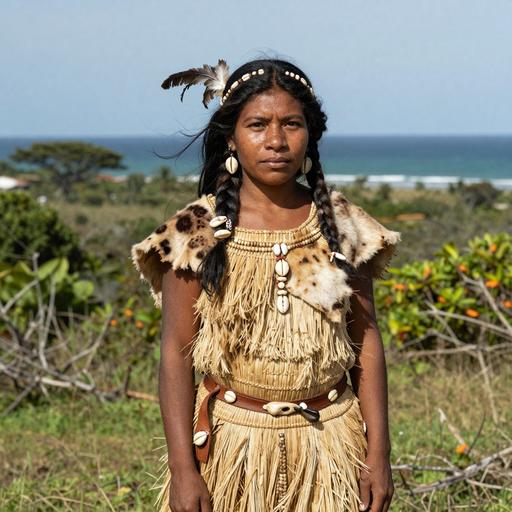
Portrait reconstruction of GA4002
Ancient Individual

A woman buried in Brazil in the Shell Mound era

GA4002
644 CE - 833 CE
Female
Sambaqui Culture of Galheta IV
Brazil
Scroll to begin
Chapter I

Identity

The biological and cultural markers that define this ancient individual

Sample ID

GA4002

Date Range

644 CE - 833 CE

Biological Sex

Female

mtDNA Haplogroup

C1c

Cultural Period

Sambaqui Culture of Galheta IV

Chapter II

Place

Where this individual was discovered

Country Brazil
Locality Galheta IV (South Coast)
Chapter III

Time

When this individual lived in the broader context of human history

GA4002 644 CE - 833 CE
Chapter IV

Story

The narrative of this ancient life

The Sambaqui Culture, particularly the Galheta IV site, is a fascinating chapter in the pre-Columbian history of Brazil, offering deep insights into the life and environment of coastal communities thousands of years ago. The term \Sambaqui" is derived from the Tupi-Guarani words "tamba" (shellfish) and "ki" (mound) and refers to shell mounds that are found along the Brazilian coastline, notoriously rich in archaeological and anthropological significance.

Geographic and Temporal Context

The Sambaqui mounds, including those at the Galheta IV site, are primarily located along the Brazilian coast, stretching from Rio Grande do Sul in the south to Rio de Janeiro in the north. These sites date back to as early as 8,000 years ago, with Galheta IV being part of a later phase within this broad timeframe. This specific site, like many others, serves as an ancient testament to the extensive habitation and adaptation strategies of indigenous communities who thrived in rhythm with the coastal ecosystems.

Environmental Setting

The environment in which the Sambaqui builders thrived was rich and diverse, characterized by vast coastal biomes including mangroves, rich tidal zones, and abundant marine life. This natural bounty fostered a life that leaned heavily on the resources provided by the sea. The climate would have varied, but generally, the area experienced a tropical to subtropical climate with pronounced wet and dry seasons.

Cultural Characteristics

Galheta IV, like other Sambaqui sites, is an intricate shell mound that provides invaluable insight into the daily lives and spiritual practices of its builders. Here's a breakdown of the main cultural aspects:

  1. Subsistence and Diet: The people of the Sambaqui culture were primarily fishers, hunter-gatherers, and foragers. Their diet included a wide variety of marine resources such as fish, shellfish, and other sea creatures, supplemented by terrestrial resources like small mammals, birds, and plants. The dense accumulation of shells and bones within the mounds is a testament to this dietary focus.

  2. Social Structure and Settlement: The size and complexity of the Galheta IV site suggest a relatively sedentary lifestyle with a well-organized community structure. The Sambaqui people lived in tight-knit communities, which might have had social stratifications, inferred from the differing quality and quantity of grave goods and burial practices found in excavations.

  3. Burial Practices and Spirituality: Burials in the Sambaqui mounds indicate that these mounds were not just refuse piles but also places of spiritual significance. The dead were interred with goods such as ornaments and tools, which implies a belief system concerning the afterlife. The elaboration of some grave sites hints at varying levels of social or spiritual status within the community.

  4. Material Culture and Technology: The artefacts found at Galheta IV encompass a range of tools and ornaments made predominantly from available natural resources like stone, bone, and shells. Stone tools such as axes, knives, and scrapers suggest advanced crafting techniques. The presence of decorative items, including shell and bone beads, reflects an aesthetic and possibly symbolic or trade-oriented element of their culture.

Environmental and Cultural Impact

The creation of sambaquis had a significant impact on the environment, as the gathering and subsequent accumulation of shells and bones altered the landscape. These mounds could reach impressively large sizes, with some extending over several hectares. This alteration of their environment displays an early instance of human capacity to shape and adapt nature to their cultural needs.

Decline and Legacy

The decline of the Sambaqui culture around 1,000 AD is attributed to a variety of factors, including environmental changes, resource depletion, and possible interactions with other indigenous groups. However, the true fate of these communities remains a subject of research and debate.

Today, the Sambaqui sites, including Galheta IV, are invaluable to understanding Brazil's ancient past. They offer a window into the ingenious adaptations and complex social structures of pre-Columbian coastal societies. Modern archaeological studies continue to unravel the mysteries of their lives, contributing to broader narratives about human history in South America."

Chapter V

Context

Other ancient individuals connected to this sample

Sources

References

Scientific publications and genetic data

Scientific Publication

Genomic history of coastal societies from eastern South America

Authors Ferraz T, Suarez Villagran X, Nägele K
Abstract

Sambaqui (shellmound) societies are among the most intriguing archaeological phenomena in pre-colonial South America, extending from approximately 8,000 to 1,000 years before present (yr BP) across 3,000 km on the Atlantic coast. However, little is known about their connection to early Holocene hunter-gatherers, how this may have contributed to different historical pathways and the processes through which late Holocene ceramists came to rule the coast shortly before European contact. To contribute to our understanding of the population history of indigenous societies on the eastern coast of South America, we produced genome-wide data from 34 ancient individuals as early as 10,000 yr BP from four different regions in Brazil. Early Holocene hunter-gatherers were found to lack shared genetic drift among themselves and with later populations from eastern South America, suggesting that they derived from a common radiation and did not contribute substantially to later coastal groups. Our analyses show genetic heterogeneity among contemporaneous Sambaqui groups from the southeastern and southern Brazilian coast, contrary to the similarity expressed in the archaeological record. The complex history of intercultural contact between inland horticulturists and coastal populations becomes genetically evident during the final horizon of Sambaqui societies, from around 2,200 yr BP, corroborating evidence of cultural change.

Use code for 40% off Expires Mar 01