


Chapter IV
Story
The narrative of this ancient life
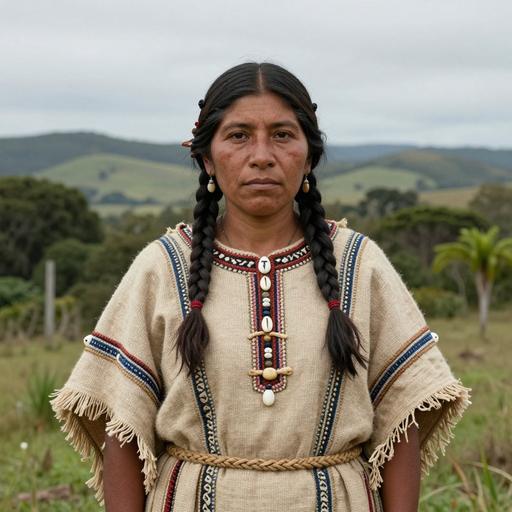
The precolonial era in the region now known as Rocha, Uruguay, was predominantly inhabited by the indigenous Charrúa people. Prior to European contact, the area was characterized by diverse ecosystems, including lush grasslands, forests, wetlands, and coastal areas, all of which played an integral role in the lifestyle and culture of the Charrúa people.
Environment and Geography
Rocha is located in southeastern Uruguay and is marked by a variety of landscapes. The Atlantic Ocean borders it to the east, providing access to rich marine resources, while the interior features rolling hills, rivers, and fertile plains. These diverse environments offered an abundance of resources that the Charrúa skillfully utilized.
The Charrúa People
The Charrúa were a semi-nomadic group with a rich cultural heritage deeply tied to the land and its resources. Their society was organized into small, egalitarian bands or groups, which would move according to the seasonal availability of resources. The Charrúa people were known for their resilience and adaptability, qualities that helped them navigate the dynamic landscapes of Rocha.
Social Structure and Lifestyles
The social structure of the Charrúa was relatively egalitarian, with decisions often made collectively within bands. Leadership roles were typically informal, with respected elders or skilled individuals guiding the group. The Charrúa valued community and kinship, with extended families forming the core social units.
Families lived in simple, adaptable dwellings such as tents made from animal hides, which facilitated their mobile lifestyle. Their economy was based on hunting, gathering, and fishing. The pampas and woodlands provided a variety of game, including deer and small mammals, while rivers and the ocean offered ample fish and shellfish. The rich biodiversity of Rocha enabled the Charrúa to have a varied diet, supplementing meat and fish with wild fruits, seeds, and tubers.
Cultural Practices
The Charrúa people had a rich cultural tradition, although much of it was orally transmitted and thus not extensively documented before European contact. They are believed to have had animistic spiritual beliefs, seeing the natural elements and animals around them as imbued with spiritual significance. Rituals and ceremonies likely played a central role in Charrúa life, serving as a means to reinforce social bonds and mark significant life events.
Music, dance, and art were integral to their cultural expression. Drums, flutes, and other instruments likely featured in their music, accompanying dances that could serve both celebratory and ceremonial purposes. Body painting and the use of adornments crafted from natural materials signify their artistic ambition and expression of identity.
Adaptation and Resistance
The Charrúa were highly adaptable, as evidenced by their effective use of the diverse resources found in Rocha. This adaptability also extended into their interactions with other indigenous groups, with whom they traded and occasionally came into conflict.
The arrival of European colonizers in the 16th century profoundly impacted the Charrúa way of life. The Charrúa are noted for their resistance against the colonizers' incursions into their territory. They were among the indigenous groups who resisted Spanish and Portuguese efforts to dominate the region, employing guerrilla tactics and leveraging their deep knowledge of the local terrain.
Legacy
The Charrúa people's legacy continues to influence the cultural identity of modern Uruguay. Despite suffering significant population loss due to conflict and diseases brought by Europeans, the historical memory and cultural traditions of the Charrúa are preserved through descendants, cultural revival initiatives, and academic research. Their deep connection to the land and resilient spirit remain significant elements of the historical consciousness in Rocha and Uruguay as a whole.
In conclusion, precolonial Rocha was characterized by the vibrant, resilient culture of the Charrúa people, whose lives were intricately connected to the diverse ecosystems of the region. Despite the subsequent challenges brought by European colonization, the legacy of the Charrúa people continues to be a vital part of the cultural tapestry of Uruguay.