Menu
Store
Blog
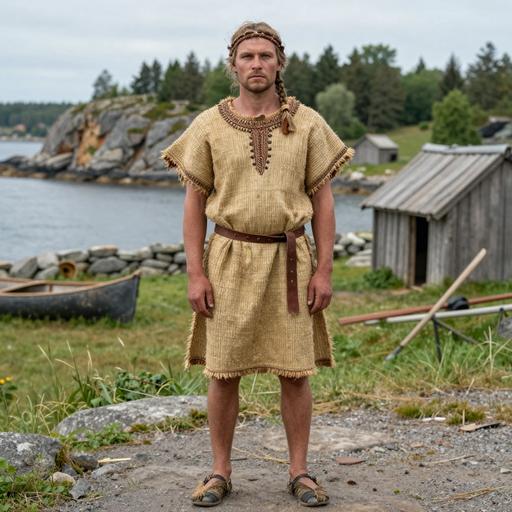
Portrait reconstruction of HUN002
Ancient Individual

A man buried in Sweden in the Iron Age era

HUN002
3370 BCE - 3108 BCE
Male
Northern Swedish Coastal Culture
Sweden
Scroll to begin
Chapter I

Identity

The biological and cultural markers that define this ancient individual

Sample ID

HUN002

Date Range

3370 BCE - 3108 BCE

Biological Sex

Male

mtDNA Haplogroup

H

Y-DNA Haplogroup

Not available

Cultural Period

Northern Swedish Coastal Culture

Chapter II

Place

Where this individual was discovered

Country Sweden
Locality Hunnebostrand
Coordinates 58.4384, 11.3007
Chapter III

Time

When this individual lived in the broader context of human history

HUN002 3370 BCE - 3108 BCE
Chapter IV

Story

The narrative of this ancient life

The Northern Swedish Coastal Culture of the Nordic region is a fascinating blend of unique geographical, historical, and social elements that have shaped the lives of its inhabitants for centuries. This culture is deeply influenced by its proximity to the Baltic Sea, the harsh climate conditions of the far North, and the historical interplay between indigenous Sami traditions and broader Scandinavian influences.

Geography and Environment

The landscapes of Northern Sweden are characterized by a rugged coastline dotted with inlets, archipelagos, and vast stretches of boreal forests. This natural environment is a defining aspect of the Northern Swedish Coastal Culture. The presence of the Gulf of Bothnia creates a maritime culture that is deeply intertwined with the sea, making fishing, shipping, and maritime trade essential components of the local economy and lifestyle.

Climate plays a significant role as well; the long, harsh winters and the short, intense summers influence everything from architectural styles to food preservation methods. The presence of the Midnight Sun in summer and polar nights in winter creates a unique rhythm to daily life and cultural activities.

Historical Background

Historically, the Northern Swedish coastal areas have witnessed varied cultural influences due to their location as a crossroads of trade and migration. The indigenous Sami people, the earliest known inhabitants, have contributed significantly to the cultural richness of the area. Their traditions, languages, and practices have combined with those of later settlers from other parts of Scandinavia and beyond.

The Viking Age left a lasting imprint on the region, with evidence of settlements and trading posts that attest to its strategic importance. As part of the broader kingdom of Sweden, Northern Sweden experienced both periods of prosperity and hardship, including resource-driven conflicts and economic fluctuations due to its reliance on fishing and timber.

Social Structure and Community

The social structure in this region traditionally revolves around tight-knit communities. Villages and towns are often centered around a key communal resource, such as a harbor or fish processing facility. The local communities tend to be self-sufficient, with a strong emphasis on interdependence and cooperation, essential for survival in challenging environmental conditions.

Family life is highly valued, and traditional customs often revolve around seasonal cycles and community events. Festivals and holidays often have roots in ancient pagan traditions, adapted and integrated into Christian practices over centuries.

Economy and Industry

Economically, the Northern Swedish Coastal Culture has been largely driven by industries related to natural resources. These include fishing, forestry, and mining, with more recent diversification into modern enterprises such as renewable energy and technology. The sea is a central component of the economy, providing routes for trade and transportation that have connected Northern Sweden with the rest of Scandinavia and beyond.

Cuisine

The cuisine of the region reflects both its coastal and deep forest heritage. Fish, particularly herring and salmon, features prominently in local dishes, often prepared with traditional preservation methods such as smoking or pickling. Reindeer meat, a staple in Sami diet, is also popular, prepared in stews or dried. Berries such as lingonberries and cloudberries, and mushrooms from the forests, add seasonal flavors and nutrients to the local diet.

Language and Art

Language in the Northern Swedish Coastal Culture includes Swedish as well as Sami languages. This linguistic diversity enriches cultural expressions through folklore, storytelling, and music. Art and craftsmanship often reflect the natural environment, with common themes in painting and sculpture relating to the sea, forests, and the Northern Lights.

Traditional Attire and Crafts

Traditional attire, especially during festivals and ceremonies, often incorporates elements from Sami design, including intricate patterns and the use of natural materials. Craftspeople in the region are known for their woodworking, weaving, and silver jewelry, often inspired by nature and reflecting the interplay between practicality and aesthetics.

Conclusion

The Northern Swedish Coastal Culture of the Nordic region is a testament to the resilience and creativity of its people. It is a culture that cherishes nature’s bounty and the sea’s influence, reflecting a deep-rooted connection to the land’s history and its evolving identity. This unique blend of indigenous and Scandinavian elements continues to influence modern cultural expressions, making it a vibrant and essential part of Sweden's cultural mosaic.

Chapter V

Context

Other ancient individuals connected to this sample

Sources

References

Scientific publications and genetic data

Scientific Publication

Repeated plague infections across six generations of Neolithic Farmers

Authors Seersholm FV, Sjögren KG, Koelman J
Abstract

In the period between 5,300 and 4,900 calibrated years before present (cal. BP), populations across large parts of Europe underwent a period of demographic decline1,2. However, the cause of this so-called Neolithic decline is still debated. Some argue for an agricultural crisis resulting in the decline3, others for the spread of an early form of plague4. Here we use population-scale ancient genomics to infer ancestry, social structure and pathogen infection in 108 Scandinavian Neolithic individuals from eight megalithic graves and a stone cist. We find that the Neolithic plague was widespread, detected in at least 17% of the sampled population and across large geographical distances. We demonstrate that the disease spread within the Neolithic community in three distinct infection events within a period of around 120 years. Variant graph-based pan-genomics shows that the Neolithic plague genomes retained ancestral genomic variation present in Yersinia pseudotuberculosis, including virulence factors associated with disease outcomes. In addition, we reconstruct four multigeneration pedigrees, the largest of which consists of 38 individuals spanning six generations, showing a patrilineal social organization. Lastly, we document direct genomic evidence for Neolithic female exogamy in a woman buried in a different megalithic tomb than her brothers. Taken together, our findings provide a detailed reconstruction of plague spread within a large patrilineal kinship group and identify multiple plague infections in a population dated to the beginning of the Neolithic decline.

Use code for 40% off Expires Feb 27