Menu
Store
Blog
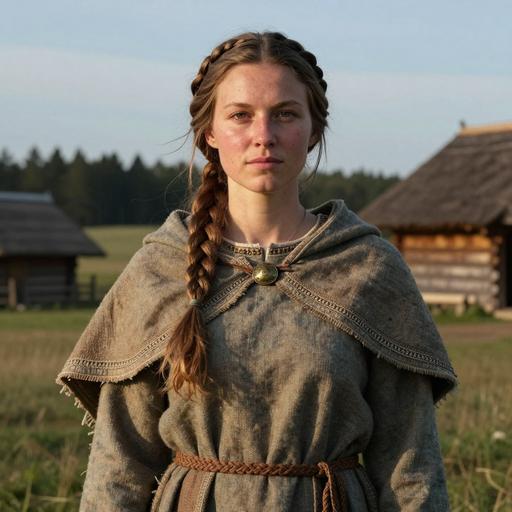
Portrait reconstruction of PCA0070
Ancient Individual

An individual buried in Poland in the Iron Age era

PCA0070
1000 CE - 1100 CE
Not known
Sowinki Iron Age Culture
Poland
Scroll to begin
Chapter I

Identity

The biological and cultural markers that define this ancient individual

Sample ID

PCA0070

Date Range

1000 CE - 1100 CE

Biological Sex

Not known

mtDNA Haplogroup

T2b

Cultural Period

Sowinki Iron Age Culture

Chapter II

Place

Where this individual was discovered

Country Poland
Locality Sowinki (Greater Poland Province, Poznań, Mosina)
Coordinates 52.2100, 16.8900
Chapter III

Time

When this individual lived in the broader context of human history

PCA0070 1000 CE - 1100 CE
Chapter IV

Story

The narrative of this ancient life

The Sowinki culture is an intriguing yet often overlooked archaeological culture from the late Iron Age, primarily identified in the region that is now Poland, specifically the central and western areas. Flourishing roughly between the 2nd century BCE and 5th century CE, this culture is named after its type site, Sowinki, where significant archaeological findings have allowed researchers to piece together a picture of the people and their way of life. The Sowinki culture, like many of its contemporaries in Central and Eastern Europe, is essential in understanding the transitional phases leading up to the formation of Slavic ethnic groups.

Geographic and Temporal Context

The Sowinki culture emerged during a period of significant transition and cultural intermingling in Europe. The timeframe coincides with the tail end of the La Tène culture, associated with the Celts, and the early stages of the Migration Period. This era was characterized by considerable movement among tribes and communities, largely influenced by expansive trade routes, warfare, and the gradual decline of the Roman Empire's influence in the region. The Sowinki culture's territory included areas that were highly strategic for trade and movement, such as river valleys and fertile plains, ideally suited to agriculture and settlement.

Settlement Patterns and Architecture

Archaeological evidence suggests that the Sowinki people lived in semi-permanent villages, consisting of wooden structures that served as both homes and communal buildings. These settlements were typically located near water sources, which provided necessary resources for agriculture, as well as trade opportunities. Buildings were primarily made from timber, using techniques that maximized the available natural resources. The dwellings were often rectangular and had thatched roofs, with fireplaces located centrally for heating and cooking purposes.

Economy and Subsistence

The economy of the Sowinki culture was varied, drawing from agriculture, cattle-raising, and trade. The fertile lands supported the cultivation of barley, wheat, and rye, along with various legumes and vegetables. The presence of domesticated animals like cattle, sheep, and pigs indicates a mixed agricultural economy. The culture also showed evidence of hunting and foraging, supplementing the diet with game and wild plants.

Trade was an essential aspect of the Sowinki economy, as the culture was positioned strategically along various trade routes that connected them to distant regions. Artifacts such as Roman coins, glassware, and pottery found in Sowinki sites suggest that they engaged in long-distance trade, exchanging local products such as amber, animal hides, and agricultural goods.

Social Structure and Culture

Although the specifics of Sowinki social structure remain somewhat speculative due to the paucity of written records, it is inferred that their society was tribal and kinship-based. There likely existed a hierarchical system led by chieftains or elders who played roles in decision-making and conflict resolution. The presence of burial mounds and graves containing weapons and jewelry suggests the existence of social stratification.

The culture likely possessed a rich oral tradition, featuring myths, legends, and folklore, conveyed through stories, songs, and perhaps ritualistic practices. Artifacts such as pottery, metalwork, and tools display a level of craftsmanship indicative of skilled artisans who contributed to cultural continuity and identity.

Religion and Rituals

The religious beliefs of the Sowinki culture, much like contemporary European Iron Age societies, were likely polytheistic and animistic, revolving around nature and ancestral spirits. Archaeological finds, including sacrificial altars and religious artifacts, suggest the presence of ritualistic practices possibly aimed at ensuring fertility, good harvests, and protection. Burial practices, with variations including cremation and inhumation, hint at beliefs in an afterlife and the importance of honoring the dead.

Legacy and Influence

The Sowinki culture plays a vital role in the tapestry of European prehistory, representing a period of cultural amalgamation and transformation. As a predecessor to the Slavic cultures that would rise in the subsequent centuries, the Sowinki provided a foundation in terms of traditions, agricultural practices, and social structures. Their interactions with neighboring cultures, including Germanic, Celtic, and Roman, facilitated a cultural melting pot that influenced language, art, and societal organization in the region.

In summary, the Sowinki Iron Age culture is a significant yet less studied component of pre-Slavic Europe. Their role in the transitional dynamics of Iron Age societies contributes to our understanding of the cultural and historical development of Central and Eastern Europe prior to the Slavic expansion. Further archaeological investigation and interdisciplinary research continue to illuminate the complexities and contributions of this fascinating culture.

Chapter V

Context

Other ancient individuals connected to this sample

Sources

References

Scientific publications and genetic data

Scientific Publication

Genetic history of East-Central Europe in the first millennium CE

Authors Stolarek I, Zenczak M, Handschuh L
Abstract

Background: The appearance of Slavs in East-Central Europe has been the subject of an over 200-year debate driven by two conflicting hypotheses. The first assumes that Slavs came to the territory of contemporary Poland no earlier than the sixth century CE; the second postulates that they already inhabited this region in the Iron Age (IA). Testing either hypothesis is not trivial given that cremation of the dead was the prevailing custom in Central Europe from the late Bronze Age until the Middle Ages (MA).

Use code for 40% off Expires Feb 27