Menu
Store
Blog
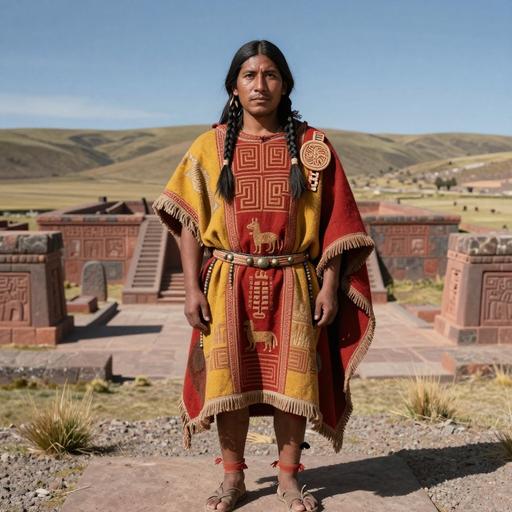
Portrait reconstruction of TW027
Ancient Individual

A man buried in Bolivia in the Pre-Columbian South America era

TW027
990 CE - 1129 CE
Male
Tiwanaku Culture at Lukurmata, Bolivia
Bolivia
Scroll to begin
Chapter I

Identity

The biological and cultural markers that define this ancient individual

Sample ID

TW027

Date Range

990 CE - 1129 CE

Biological Sex

Male

mtDNA Haplogroup

B2

Y-DNA Haplogroup

Q1b1

Cultural Period

Tiwanaku Culture at Lukurmata, Bolivia

Chapter II

Place

Where this individual was discovered

Country Bolivia
Locality Lukurmata
Chapter III

Time

When this individual lived in the broader context of human history

TW027 990 CE - 1129 CE
Chapter IV

Story

The narrative of this ancient life

The Tiwanaku culture, located in the Andean region of Bolivia, is one of the most significant pre-Columbian civilizations in South America, flourishing roughly between 200 AD and 1000 AD. Lukurmata is an archaeological site associated with this culture, positioned within the broader context of the Tiwanaku civilization that centered around the celebrated city of Tiwanaku near Lake Titicaca.

Geographical Context

Lukurmata is situated on the Altiplano, a high plateau region characterized by its elevated, flat terrain surrounded by the Andean mountains. This region is notable for its challenging environment, including a high-altitude climate and fluctuating temperature extremes. Despite these conditions, it was a fertile area enriched by Lake Titicaca's resources, supporting extensive agricultural activity.

Historical Background

Tiwanaku emerged as a dominant Andean civilization, known for its profound influence across the Southern Andes, which extended into modern-day Peru, Chile, and Argentina. The culture rose to prominence through sophisticated agricultural practices, architectural innovation, and a complex sociopolitical system. Lukurmata, while not the central hub, firmly reflects the wider cultural and architectural practices characteristic of the Tiwanaku civilization.

Architecture and Urban Planning

The Tiwanaku civilization is renowned for its monumental architecture, and Lukurmata exhibits similar features, albeit on a smaller scale than Tiwanaku itself. The site features large stone constructions, ceremonial plazas, and domestic buildings. The distinct use of megalithic blocks, precise stone carving, and construction techniques highlight Tiwanaku's architectural skill and ingenuity.

At Lukurmata, as well as other Tiwanaku sites, there is evidence of sophisticated urban planning, including well-defined residential, public, and ceremonial spaces, showcasing an organized society with complex urban management.

Economy and Agriculture

Tiwanaku's economy, as reflected at Lukurmata, heavily relied on agriculture, supported by advanced techniques such as raised field farming, known as suka kollus. This method involved creating elevated planting surfaces separated by canals, enhancing crop yields by improving drainage and reducing frost damage—a crucial adaptation to the high-altitude environment.

Additionally, Lukurmata was involved in regional trade networks, exchanging goods such as textiles, pottery, and metals like copper and bronze, facilitated by its connections to Lake Titicaca and surrounding regions.

Society and Culture

The Tiwanaku society was stratified, with a clear hierarchy evident in artistic and cultural expressions. Lukurmata, like other Tiwanaku sites, indicates the presence of social classes. The elites enjoyed privileges, as seen through finer domestic structures, elaborate grave offerings, and exclusive access to luxury goods.

The culture placed a strong emphasis on religion and cosmology, as evidenced by the iconography and artifacts discovered at Lukurmata. Religious motifs, commonly depicting deities and mythological creatures, adorned ceramics, textiles, and stone carvings. Spiritual beliefs were further emphasized through the organization of ceremonial activities in plazas and ritual sites.

Art and Iconography

The Tiwanaku culture is celebrated for its distinctive art, which features abstract and symbolic motifs. At Lukurmata, artefacts such as pottery, textiles, and small lithic sculptures reveal a rich tradition of artistic expression. Common motifs include geometric patterns and representations of deities, particularly those associated with the Andean pantheon.

Decline and Legacy

The decline of the Tiwanaku civilization occurred around 1000 AD, likely due to a combination of climate change, resource depletion, and social upheaval. The legacy of Tiwanaku, however, endures as it significantly influenced subsequent Andean cultures, including the Inca, in terms of architecture, agricultural practices, and socio-political organization.

Lukurmata's archaeological remains provide essential insights into the Tiwanaku culture, offering a detailed glimpse into the societal complexities and achievements of this influential Andean civilization. Its study helps illuminate the broader cultural and historical narrative of pre-Columbian Andean societies, emphasizing Tiwanaku's role as a cornerstone of pre-Incan heritage.

Chapter V

Genetics

The genetic ancestry of this ancient individual

Ancient Genetic Admixture

This analysis compares the DNA profile of TW027 with ancient reference populations, showing the genetic composition in terms of prehistoric ancestral groups.

Ancient Native Americans 79.7%
Ancient Asians 16.3%
Neolithic Farmers 4.0%

Modern Genetic Admixture

This analysis compares the DNA profile with present-day reference populations, showing what percentage of genetic makeup resembles modern populations from different regions.

America 86.8%
America 86.8%
Native American 86.8%
Asia 13.2%
Northern Asian 13.2%
Siberian 13.2%

Closest Modern Populations

These are the modern populations showing the closest statistical alignment to A man buried in Bolivia in the Pre-Columbian South America era, ranked by genetic distance. Lower distance values indicate closer statistical similarity.

1
Aymara
2.2829
2
Bolivian Lapaz
2.4817
3
Piapoco
2.7686
4
Yukpa
2.7968
5
Colla
2.9176
6
Cachi
3.0264
7
Wichi
3.3359
8
Mixe
3.3715
9
Mayan
3.8077
10
Pima
4.1884
Chapter VI

Context

Other ancient individuals connected to this sample

Sources

References

Scientific publications and genetic data

Scientific Publication

Ancient genomes reveal long-range influence of the pre-Columbian culture and site of Tiwanaku

Authors Popović D, Molak M, Ziółkowski M
Abstract

Tiwanaku civilization flourished in the Lake Titicaca basin between 500 and 1000 CE and at its apogee influenced wide areas across the southern Andes. Despite a considerable amount of archaeological data, little is known about the Tiwanaku population. We analyzed 17 low-coverage genomes from individuals dated between 300 and 1500 CE and demonstrated genetic continuity in the Lake Titicaca basin throughout this period, which indicates that the substantial cultural and political changes in the region were not accompanied by large-scale population movements. Conversely, the ritual center of Tiwanaku revealed high diversity, including individuals with primarily local genetic ancestry and those with foreign admixture or provenance from as far as the Amazon. Nonetheless, most human offerings associated with the Akapana platform exhibited pure Titicaca basin ancestry and dated to ca. 950 CE—the onset of Tiwanaku’s decline as a sociopolitical center. Our results strengthen the view of Tiwanaku as a complex and far-reaching polity.

G25 Coordinates

The G25 coordinates for sample TW027 can be used for detailed admixture analysis in our G25 Studio tool.

TW027,0.05734032,-0.31295432,0.10847156,0.09598392,-0.11146658,-0.0102916,-0.29664908,-0.34903502,-0.01605764,-0.0167109,-0.00028238,-0.00108044,-0.00136228,0.0243198,-0.0056223,-0.00084836,0.006438,0.00237778,0.00016306,-0.00169418,-0.00046728,0.00740074,-0.00176288,-0.0052249,-0.00623316
Analyze in G25 Studio
Use code for 40% off Expires Feb 27