Menu
Store
Blog
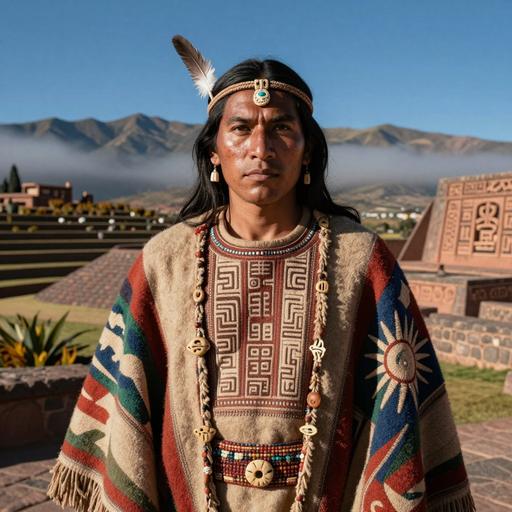
Portrait reconstruction of CO066
Ancient Individual

A man buried in Peru in the Pre-Columbian South America era

CO066
1455 CE - 1623 CE
Male
Tiwanaku Culture Maucallacta, Peru
Peru
Scroll to begin
Chapter I

Identity

The biological and cultural markers that define this ancient individual

Sample ID

CO066

Date Range

1455 CE - 1623 CE

Biological Sex

Male

mtDNA Haplogroup

B2b

Y-DNA Haplogroup

Q1b1a1a1i

Cultural Period

Tiwanaku Culture Maucallacta, Peru

Chapter II

Place

Where this individual was discovered

Country Peru
Locality Maucallacta
Chapter III

Time

When this individual lived in the broader context of human history

CO066 1455 CE - 1623 CE
Chapter IV

Story

The narrative of this ancient life

The Tiwanaku culture, often associated with one of the most influential early civilizations in the Andes, thrived around Lake Titicaca in what is now Bolivia from approximately 300 to 1000 AD. Its influence extended over large parts of the southern Andes, including sites such as Maucallacta in present-day Peru. This culture is renowned for its architectural achievements, complex societal structure, and far-reaching influence on later Andean cultures, most notably the Inca.

Geographical Setting

Maucallacta is situated in the high-altitude Andean region, characterized by rugged mountainous terrain and a harsh environment. Despite the challenging conditions, the Tiwanaku efficiently managed agriculture through advanced irrigation systems, creating raised fields known as \suka kollus" that significantly increased their agricultural output.

Architecture and Urban Planning

Tiwanaku is celebrated for its monumental architecture, characterized by massive stone constructions, finely cut masonry, and fertile understanding of cosmic alignment. This is reflected in structures like the Akapana Pyramid, the Kalasasaya Temple, and the Gateway of the Sun at the Tiwanaku site. Maucallacta, while not as visually imposing as the central Tiwanaku site, displays influences through its own ceremonial centers that follow similar planning principles.

The architecture of Tiwanaku, including its satellite sites like Maucallacta, was not just for functional purposes but contained cosmic and spiritual significance, often aligning with celestial events. This reflects a deep integration of religion and astronomy in the societal structure.

Society and Culture

Tiwanaku society was hierarchically organized, with a powerful elite class that controlled religious and state affairs. This class system facilitated the sophisticated organization required for monumental construction projects and elaborate trade networks. Tiwanaku culture is marked by its extensive trade routes, which spread across the Andes, connecting distant regions. This enabled the exchange not only of goods such as pottery, textiles, and metals but also of ideas and cultural practices.

In terms of religion, Tiwanaku society was deeply spiritual, worshiping deities often represented in their art and architecture. The most significant deity is believed to have been Viracocha, a creator god. Artifacts and iconography frequently depict religious figures, suggesting a rich tradition of mythology and oral history.

Art and Iconography

The art of Tiwanaku, including that found at Maucallacta, is characterized by intricate stone carvings, textile designs, and ceramics. These often feature abstract and symbolic motifs, such as the Andean cross (chakana) and representations of mythological beings. The iconography frequently included representations of pumas, condors, and human figures, often interpreted as symbolic of power and divinity.

Tiwanaku ceramics are distinguished by their polychrome designs and sophisticated iconographic themes, often reflecting religious or cosmological significance. These ceramics have been found throughout the Tiwanaku influence zones, indicating a standardized style shared across their territory.

Agriculture and Economy

The Tiwanaku civilization was highly adept in agriculture, employing advanced techniques suited to the high-altitude environment. The "suka kollus" raised fields enabled them to create a productive agricultural system capable of sustaining large populations. This agricultural innovation was crucial for supporting the urban centers and enabling the trade networks that facilitated the cultural expansion of Tiwanaku.

Decline and Legacy

The decline of the Tiwanaku civilization around 1000 AD is believed to have been caused by a combination of climatic changes, such as prolonged drought, and perhaps social upheaval or conflict. However, their cultural legacy persisted, heavily influencing subsequent civilizations, including the Inca. The organizational, architectural, and cultural practices developed by Tiwanaku were mirrored and expanded upon by the Inca, who revered Tiwanaku as a sacred site and a foundational element of their own civilization.

Conclusion

Understanding the Tiwanaku culture, particularly through sites like Maucallacta, provides significant insights into early Andean civilizations. Their advancements in architecture, society, and agriculture are testament to their complexity and far-reaching influence. Additionally, the cultural and religious practices laid foundational elements that would shape the Andean world for centuries to come."

Chapter V

Genetics

The genetic ancestry of this ancient individual

Ancient Genetic Admixture

This analysis compares the DNA profile of CO066 with ancient reference populations, showing the genetic composition in terms of prehistoric ancestral groups.

Ancient Native Americans 76.5%
Ancient Asians 20.6%
Neolithic Farmers 2.9%

Modern Genetic Admixture

This analysis compares the DNA profile with present-day reference populations, showing what percentage of genetic makeup resembles modern populations from different regions.

America 80.8%
America 80.8%
Native American 80.8%
Asia 15.9%
Northern Asian 9.6%
Siberian 9.6%
Chinese & Southeast Asian 6.3%
Tibetan 6.3%
Africa 3.3%
African Hunter-Gatherer 3.3%

Closest Modern Populations

These are the modern populations showing the closest statistical alignment to A man buried in Peru in the Pre-Columbian South America era, ranked by genetic distance. Lower distance values indicate closer statistical similarity.

1
Piapoco
1.7100
2
Wichi
1.9806
3
Yukpa
2.3049
4
Aymara
2.3486
5
Karitiana
2.6848
6
Bolivian Lapaz
3.5558
7
Surui
3.7358
8
Colla
3.9792
9
Cachi
4.6108
10
Mixe
5.0086
Chapter VI

Context

Other ancient individuals connected to this sample

Sources

References

Scientific publications and genetic data

Scientific Publication

Ancient genomes reveal long-range influence of the pre-Columbian culture and site of Tiwanaku

Authors Popović D, Molak M, Ziółkowski M
Abstract

Tiwanaku civilization flourished in the Lake Titicaca basin between 500 and 1000 CE and at its apogee influenced wide areas across the southern Andes. Despite a considerable amount of archaeological data, little is known about the Tiwanaku population. We analyzed 17 low-coverage genomes from individuals dated between 300 and 1500 CE and demonstrated genetic continuity in the Lake Titicaca basin throughout this period, which indicates that the substantial cultural and political changes in the region were not accompanied by large-scale population movements. Conversely, the ritual center of Tiwanaku revealed high diversity, including individuals with primarily local genetic ancestry and those with foreign admixture or provenance from as far as the Amazon. Nonetheless, most human offerings associated with the Akapana platform exhibited pure Titicaca basin ancestry and dated to ca. 950 CE—the onset of Tiwanaku’s decline as a sociopolitical center. Our results strengthen the view of Tiwanaku as a complex and far-reaching polity.

G25 Coordinates

The G25 coordinates for sample CO066 can be used for detailed admixture analysis in our G25 Studio tool.

CO066,0.05515056,-0.31637488,0.11146552,0.10392324,-0.1148762,-0.01212164,-0.30969688,-0.36399746,-0.01572134,-0.01744304,0.00107276,-0.00113488,-0.0011798,0.02571336,-0.00574556,-0.00062834,0.00616236,0.00278248,0.00021938,-0.00187378,-0.00126384,0.00808968,-0.00256638,-0.00556394,-0.00632779
Analyze in G25 Studio
Use code for 40% off Expires Feb 27