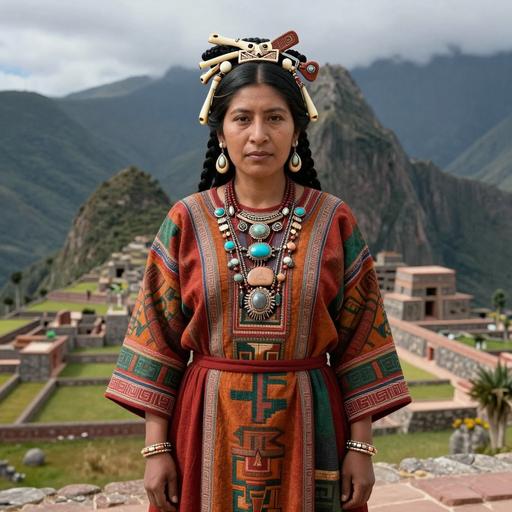
The Tiwanaku culture was one of the most significant pre-Columbian civilizations in the Andean region, flourishing around 1500 BC to AD 1000. While its heartland was located in the region surrounding Lake Titicaca in present-day Bolivia, its influence extended into parts of modern-day Peru and Chile, including the Cotahuasi area.
Geographic and Environmental Context
Cotahuasi Canyon, one of the deepest canyons in the world, is situated in the high Andes of southern Peru, within the current-day Department of Arequipa. This region is characterized by its stunning landscape, formed by deep canyons, towering mountain peaks, and high-altitude plains. The environment is challenging, with dramatic temperature fluctuations and limited agricultural land, making it a test of human ingenuity to sustain any significant population.
Cultural Influence and Integration in Cotahuasi
The Tiwanaku culture in the Cotahuasi area represents a regional expression of this far-reaching civilization. While not located in the central hub of Tiwanaku development, Cotahuasi was influenced by the expansive trade networks and cultural exchanges initiated by the Tiwanaku. These connections were primarily facilitated by llama caravans traversing various terrains, distributing goods, and spreading cultural practices over vast distances.
Political and Social Structure
Tiwanaku is known for its sophisticated social and political structure. It established a complex hierarchical society with divine kingship believed to have an intercessory role between the gods and humans. It operated on a theocratic and centralized state model. In regions like Cotahuasi, the influence of Tiwanaku would likely have manifested in local leadership adopting similar governance styles, perhaps with oversight or indirect control from the Tiwanaku core.
Economy and Trade
In Cotahuasi, as in other regions under Tiwanaku influence, the economy was diversified and depended heavily on agriculture, pastoralism, and trade. Tiwanaku farming techniques, notably the raised field agriculture known as waru waru, allowed for the effective cultivation of crops in challenging highland environments. This technique, however, may not have been as prevalent in the Cotahuasi regions' steep terrain.
Trade was a crucial element of Tiwanaku's influence. The empire engaged in extensive trade networks, exchanging goods like textiles, ceramics, metals, and foodstuffs. Cotahuasi, with its strategic location, would have served as both a production site and a transit point for these trade routes, facilitating the movement of both local products and Tiwanaku goods.
Religion and Cosmology
Tiwanaku's religious practices were complex and centralized around a pantheon of deities associated with nature, fertility, and astronomical phenomena. Iconography from the central Tiwanaku site indicates a rich mythology with prominent deities like Viracocha, the creator god. In Cotahuasi, religious practices would have been a syncretism of localized beliefs and Tiwanaku religion, as evident from the architecture and artifacts found in the region.
Tiwanaku religion significantly emphasized ritual and ceremony, often conducted in architectural spaces specifically designed for such purposes. While the grand monumental architecture of Tiwanaku—a hallmark of its central sites—might not exist in Cotahuasi, smaller local shrines or ritual spaces likely played a role in community life.
Art and Architecture
The Tiwanaku style in art and architecture is distinctive, characterized by monumental stone constructions, finely crafted pottery, and intricate textiles. Stonework from the central Tiwanaku sites often features iconography that is geometrically intricate and symbolic. In peripheral areas like Cotahuasi, while monumental architecture might not be as prevalent, the influence of Tiwanaku artistic styles would be evident in local ceramics and textiles, seen through motifs and techniques.
Decline and Legacy
The decline of the Tiwanaku culture around AD 1000 is attributed to a combination of climatic changes, resource depletion, and socio-political upheaval. For areas like Cotahuasi, as the central Tiwanaku power waned, local cultures might have experienced a period of cultural fragmentation and transition, assimilating early influences into evolving local identities.
The legacy of Tiwanaku in areas like Cotahuasi is significant. It left behind a cultural foundation that subsequent civilizations, including the Inca, would inherit and adapt. The robust trade networks, agricultural techniques, and religious ideas of Tiwanaku set the stage for future Andean civilizations, ensuring its place in the rich tapestry of Andean history.