
Menu
Store
Blog
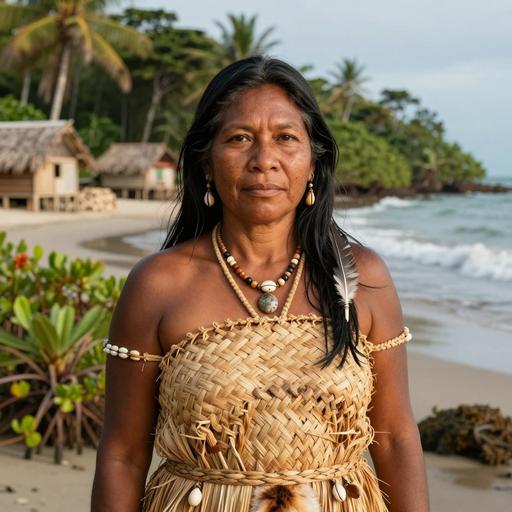
Portrait reconstruction of CUB002
Ancient Individual

A woman buried in Brazil in the Shell Mound era

CUB002
756 BCE - 412 BCE
Female
Sambaqui Culture of Cubatão
Brazil
Scroll to begin
Chapter I

Identity

The biological and cultural markers that define this ancient individual

Sample ID

CUB002

Date Range

756 BCE - 412 BCE

Biological Sex

Female

mtDNA Haplogroup

D1

Cultural Period

Sambaqui Culture of Cubatão

Chapter II

Place

Where this individual was discovered

Country Brazil
Locality Cubatão I (South Coast)
Chapter III

Time

When this individual lived in the broader context of human history

CUB002 756 BCE - 412 BCE
Chapter IV

Story

The narrative of this ancient life

The Sambaqui Culture, particularly in the region of Cubatão in Brazil, represents a fascinating period of Pre-Columbian history marked by its complex social structures, innovative survival strategies, and unique cultural practices. The term \Sambaqui" is derived from the Tupi-Guarani language, meaning "shell mound," which perfectly encapsulates one of the most distinctive features of this culture: the construction of large mounds composed primarily of shells, fish bones, ceramics, and other organic materials. These mounds serve as significant archaeological sites, providing valuable insights into the lifeways of the ancient Brazilians.

Geographical and Environmental Context

Cubatão is located in the state of São Paulo, in southeastern Brazil. It is part of the Atlantic Forest biome, a region characterized by its rich biodiversity and natural resources. The environment during the era of the Sambaqui culture was slightly different from today, with expansive coastal areas, estuaries, and rivers. These provided abundant resources, supporting a thriving community adept at exploiting what the land and sea had to offer.

Chronological Framework

The Sambaqui Culture dates back to approximately 8000 BCE and continued to evolve until around 1000 CE. It represents one of the earliest examples of human settlement along the Atlantic coast of Brazil. The specific timeframe for the Sambaqui culture in Cubatão likely falls within this broader range, with evidence suggesting that the height of its activity in this particular area was during the mid to late Holocene epoch.

Social and Political Structure

The society of the Sambaqui culture was remarkably complex. The presence of large, communal shell mounds indicates a sophisticated level of organization and cooperation among inhabitants. These mounds were not only refuse heaps but also possibly ceremonial sites or territorial markers, suggesting an intricate social structure with shared beliefs and practices. Leadership roles and social hierarchies may have been present, inferred from the unequal distribution of grave goods found in burial sites within the mounds.

Economic Practices

Subsistence strategies of the Sambaqui people in Cubatão were largely based on hunting, fishing, and gathering. The coastal and riverine environments provided a rich supply of seafood, including fish, shellfish, and crustaceans. Evidence from tool remains, such as fishhooks and net weights, indicates advanced fishing techniques. Additionally, they hunted terrestrial animals and gathered plant resources, which would have included fruits, nuts, and tubers. It is likely that they practiced a form of seasonal migration to optimize resource collection.

Material Culture and Technology

Material culture is well-represented through the artifacts recovered from sambaquis. These include pottery, tools, and ornaments. Pottery items were often functional, used for cooking, storage, and serving. Tools were predominantly made from stone, bone, and shell, showcasing the resourcefulness of the Sambaqui people in utilizing available materials. Shells, in particular, were crafted into a variety of implements and decorative items, highlighting the aesthetic sensibilities of this culture.

Burial Customs and Religious Beliefs

The archaeological evidence from the sambaquis of Cubatão suggests complex burial customs that reflect their cosmological views and religious beliefs. Human burials within the shell mounds often include grave goods, indicating a belief in an afterlife or the need to provide for the dead in some capacity. The orientation and placement of bodies, as well as the inclusion of offerings, reveal significant ritual practices and a deep spiritual life interwoven with everyday activities.

Art and Symbolism

Although direct evidence of artistic expression is less common in sambaqui sites, the presence of worked shells, decorated pottery, and personal ornaments suggests an appreciation for art and symbolism. These artifacts provide clues about the identity and status of individuals within the community, as well as the broader cultural motifs that bound the group together.

Interaction with Other Cultures

Evidence of trade and interaction with neighboring cultures is apparent in the materials and techniques found among artifacts. This includes non-local stone types or styles that suggest a wider network of exchange. The Sambaqui culture in Cubatão, while largely adapted to its immediate environment, was not isolated but was part of a broader tapestry of indigenous cultures across South America.

Legacy

The sambaquis of Cubatão and other regions of Brazil are crucial to understanding the pre-Columbian history of South America. They provide a window into the lives of ancient peoples whose innovations laid the groundwork for subsequent cultural developments in the region. Unfortunately, many sambaqui sites have been threatened by modern development and environmental changes. Nonetheless, these sites continue to be a focal point for archaeological study, offering invaluable insights into the resilience and adaptability of the Sambaqui culture over millennia.

In summary, the Sambaqui Culture of Cubatão was a sophisticated society characterized by its utilization of coastal resources, complex social structures, and rich cultural practices. Its remnants provide a vital link to the understanding of human adaptation and cultural evolution in pre-Columbian Brazil."

Chapter V

Context

Other ancient individuals connected to this sample

Sources

References

Scientific publications and genetic data

Scientific Publication

Genomic history of coastal societies from eastern South America

Authors Ferraz T, Suarez Villagran X, Nägele K
Abstract

Sambaqui (shellmound) societies are among the most intriguing archaeological phenomena in pre-colonial South America, extending from approximately 8,000 to 1,000 years before present (yr BP) across 3,000 km on the Atlantic coast. However, little is known about their connection to early Holocene hunter-gatherers, how this may have contributed to different historical pathways and the processes through which late Holocene ceramists came to rule the coast shortly before European contact. To contribute to our understanding of the population history of indigenous societies on the eastern coast of South America, we produced genome-wide data from 34 ancient individuals as early as 10,000 yr BP from four different regions in Brazil. Early Holocene hunter-gatherers were found to lack shared genetic drift among themselves and with later populations from eastern South America, suggesting that they derived from a common radiation and did not contribute substantially to later coastal groups. Our analyses show genetic heterogeneity among contemporaneous Sambaqui groups from the southeastern and southern Brazilian coast, contrary to the similarity expressed in the archaeological record. The complex history of intercultural contact between inland horticulturists and coastal populations becomes genetically evident during the final horizon of Sambaqui societies, from around 2,200 yr BP, corroborating evidence of cultural change.

Use code for 40% off Expires Mar 01