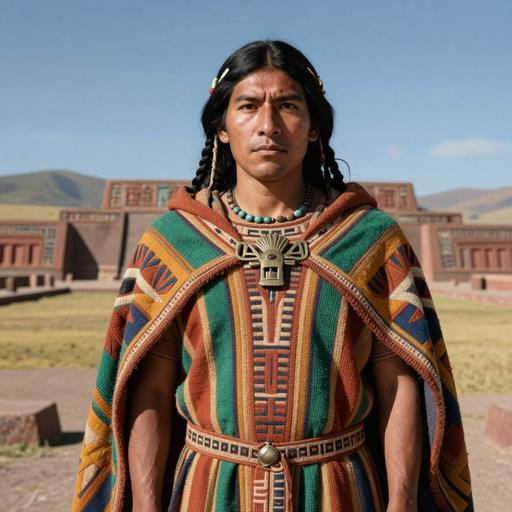
The Tiwanaku culture, flourishing from around 500 to 950 AD, was one of the most significant pre-Columbian civilizations in the Andean region of South America. It centered around the city of Tiwanaku, located near the southern shore of Lake Titicaca in present-day Bolivia. Among the most intriguing and architecturally sophisticated sites associated with this culture is Pumapunku, a large temple complex that reflects the Tiwanaku's engineering ingenuity and religious significance.
Overview of Tiwanaku Culture
The Tiwanaku culture is renowned for its remarkable achievements in architecture, agriculture, and art. Its influence spread across a vast region, including parts of modern-day Peru, Chile, and Argentina. The civilization's economy relied heavily on a combination of agriculture, fishing, and trade, supported by sophisticated agricultural techniques such as raised field cultivation and irrigation, which enabled them to thrive in the high-altitude environment of the Andes.
Architecture and Engineering
One of the most striking aspects of Tiwanaku culture is its monumental architecture, and Pumapunku is a standout example. This site is characterized by precisely cut andesite and sandstone blocks that were engineered to fit together like a puzzle, without the use of mortar. The stones, some weighing as much as 130 tons, were transported from quarries many miles away, demonstrating advanced understanding of logistics and civil engineering.
Pumapunku
The Pumapunku complex is part of the larger Tiwanaku religious hub, and its name translates to \The Door of the Puma." It was likely a spiritual and ceremonial center. The site's layout is indicative of a deep connection to cosmology, perhaps representing the Tiwanaku's philosophies and religious beliefs. Distinctive features of Pumapunku include:
Precision Stonework: Known for its high precision, the blocks at Pumapunku were cut in such a way that they lock together, which might have symbolized the interconnectedness of the universe as perceived by the Tiwanaku. Their methods of stone-cutting are still a subject of academic interest today.
H-Blocks: Among the architectural highlights are the famous ‘H-shaped’ blocks, which were part of a larger assemblage. They showcase the Tiwanaku's keen ability to achieve uniformity and complex geometric designs.
Terraced Platform: The temple complex consists of a terraced earthen mound originally faced with megalithic blocks. This step-like structure might have had both religious significance and structural utility.
Plazas and Monoliths: The site features sunken plazas and monolithic gates, which likely played a role in ritual and ceremonial practices.
Social and Religious Context
The Tiwanaku were a theocratic society, with religion playing a central role in governance and daily life. The civilization exhibited social stratification, with elites likely tracing their descent from divine figures. Tiwanaku religious practices revolved around the worship of deities associated with natural forces, such as the Sun God and agriculturally significant elements. Altars, ritual paraphernalia, and iconography found at Tiwanaku sites suggest complex religious ceremonies and offerings.
Influence and Legacy
The influence of the Tiwanaku culture extended far beyond its immediate geographical area. Artifacts, architectural styles, and agricultural techniques associated with Tiwanaku have been found throughout the Andes, indicating active trade networks and cultural exchanges. Aspects of the Tiwanaku legacy can be seen in the practices and organizations of subsequent civilizations, including the Inca, who revered Tiwanaku as a significant cultural and religious predecessor.
Decline
The decline of Tiwanaku around 950 AD is believed to have been due to a combination of climatic changes, which impacted agricultural productivity, and social upheaval. Despite its fall, the Tiwanaku culture left a lasting imprint on Andean civilization, influencing art, religion, and societal organization for centuries to come.
Today, sites like Pumapunku continue to offer valuable insights into the ingenuity and complexity of the Tiwanaku culture, giving modern archaeologists and historians a window into the past sophistication of Andean civilizations. The ongoing study and preservation of these sites are crucial for understanding pre-Columbian history in the Americas."