Saltar al contenido principal
Y-DNA · Paterno linaje

E1B1B1B2B2A

Y-DNA Haplogroup E1B1B1B2B2A

Un perfil de referencia de una rama de linaje. Compartir haplogrupos no demuestra una relación familiar ni una identidad cultural.

Perfil de referencia

Contexto de la rama

Contexto histórico de la rama de linaje Y-DNA E1B1B1B2B2A

Origins and Evolution

Haplogroup E1B1B1B2B2A (a terminal subclade within the wider E‑M81 / Maghrebi cluster) is best understood as a recent branch that split from the parent E1B1B1B2B2 clade that is centered in the Maghreb. Given the time depth of its parent (estimated ~2 kya) and the low internal diversity observed in comparable local subclades of E‑M81, a coalescent (time to most recent common ancestor) estimate in the range of several hundred to about one thousand years ago is plausible for E1B1B1B2B2A. Its phylogenetic position places it firmly within the North African E‑M81 radiation that developed strong local founder effects and population structure.

As with many recent terminal branches, the full topology and diversity of E1B1B1B2B2A depend on dense regional sampling and high-resolution SNP typing; current interpretations rely on published patterns for nearby, better-sampled E‑M81 subclades and on the geographic concentrations seen in modern and ancient samples.

Subclades

At present E1B1B1B2B2A behaves like a low‑diversity, terminal or near‑terminal subclade beneath the E1B1B1B2B2 node. Where deeper substructure is present, it often reflects island or local founder events (for example, lineages amplified within isolated Amazigh communities or island populations). More SNP discovery and high‑coverage sequencing in North Africa and the Canary Islands would be required to resolve finer subclades and their branching order.

Geographical Distribution

The distribution of E1B1B1B2B2A is centered in the Maghreb with highest frequencies in Amazigh (Berber) groups and in populations of the Canary Islands, where founder effects and isolation have amplified particular E‑M81 sublineages. It occurs at lower but detectable frequencies along southern Iberia (especially western Andalusia and coastal Portugal), parts of the central and western Mediterranean (including Sicily) and in some coastal North African populations (Morocco, Algeria, Tunisia). Scattered, low‑frequency occurrences arise elsewhere due to medieval and historic mobility (Arab‑Medieval expansions, trans‑Saharan contacts, later maritime movements) and the transatlantic African diaspora.

Historical and Cultural Significance

E1B1B1B2B2A is best interpreted as a marker of recent regional demographic processes in Northwest Africa rather than deep prehistoric expansions. Its pattern of concentration in Amazigh communities and in island populations (Guanche/Canary Islanders) points to local founder events, endogamy and isolation. The presence—at lower frequencies—in southern Iberia and parts of the Mediterranean is consistent with long‑standing trans‑Mediterranean contact (trade, migration and occasional settlement) between North Africa and Iberia from antiquity through the medieval period. Historical processes that can explain its distribution include Amazigh population structure and movements, medieval Islamic‑period mobility across the Maghreb and Iberia, and subsequent colonial and modern era migrations that dispersed lineages into wider Mediterranean and Atlantic contexts.

Practical notes for researchers and genealogists
  • This clade is useful for resolving fine‑scale North African paternal lineages when typed with high‑resolution SNP panels or sequencing; simple STR profiles alone may not distinguish it reliably from neighboring E‑M81 subclades.
  • Elevated frequencies on islands (e.g., the Canaries) indicate where targeted sampling can reveal additional substructure and time depth via ancient DNA or well‑dated modern genealogies.
  • Because it is a relatively recent, geographically concentrated clade, its presence in a lineage often points to Maghrebi / Amazigh ancestry, though low‑level historic admixture clients mean context (archaeological, documented genealogy, autosomal data) remains important.

Conclusion

E1B1B1B2B2A represents a recent, regionally concentrated branch of the North African E‑M81 radiation with clear signatures of founder effects in Amazigh groups and island populations. Its limited age and geographic focus make it a valuable marker for studies of historical population structure, recent migrations across the western Mediterranean, and island colonization dynamics, but fuller interpretation requires denser SNP coverage and integration with archaeological and historical data.

Puntos clave

  • Origins and Evolution
  • Subclades
  • Geographical Distribution
  • Historical and Cultural Significance
  • Practical notes for researchers and genealogists
Perfil de referencia

Árbol y relaciones

Contexto filogenético y subclados

Trayectoria evolutiva

Sigue las ramas superiores registradas hasta E1B1B1B2B2A. Las fechas son estimaciones y pueden cambiar al revisarse los datos de referencia.

Pasos Haplogrupo Antigüedad estimada Época arqueológica Tiempo transcurrido Subclados inmediatos Portadores modernos analizados Referencias antiguas
1 E1B1B1B2B2A Actual ~800 years ago Medieval 800 years 1 0 5
2 E1B1B1B2B2 ~2,000 years ago Roman Period 2,000 years 1 0 0
3 E1B1B1B2B ~2,000 years ago Roman Period 2,000 years 1 30 8
4 E1B1B1B2 ~3,000 years ago Iron Age 3,000 years 2 177 0
5 E1B1B1B ~4,000 years ago Bronze Age 4,500 years 2 405 0
6 E1B1B1 ~22,000 years ago Mesolithic 22,000 years 2 1,055 0
7 E1B1B ~26,000 years ago Paleolithic 26,000 years 1 1,116 2
8 E1B1 ~28,000 years ago Paleolithic 28,000 years 2 1,572 0
9 E1B ~30,000 years ago Paleolithic 30,000 years 1 1,583 0
10 E1 ~50,000 years ago Paleolithic 50,000 years 2 1,667 2
11 E ~50,000 years ago Paleolithic 50,000 years 3 1,813 3
Perfil de referencia

En el mundo

Distribución geográfica y presencia moderna

Origen registrado

Northwest Africa (Maghreb)

Distribución moderna

The populations where Y-DNA haplogroup E1B1B1B2B2A is found include:

  1. Amazigh (Berber) populations of Morocco, Algeria and Tunisia
  2. Canary Islanders (ancient Guanche and modern island populations)
  3. Coastal North African groups (Moroccans, Algerians, Tunisians, some Libyans)
  4. Southern Iberian populations (western Andalusia, Portugal) and parts of Sicily
  5. Sahelian and West African groups at low frequencies (through regional admixture)
  6. Small numbers in Near Eastern and eastern Mediterranean populations (historical gene flow)
  7. African‑descended populations in the Americas and Caribbean (historic/diaspora presence)
  8. Isolated communities showing founder effects (local Amazigh enclaves and island populations)

Presencia regional

North Africa (Maghreb) High
Northwest Africa / Canary Islands Moderate
Southwestern Europe (Andalusia, Algarve) Moderate
Near East / Eastern Mediterranean Low
North Africa (Maghreb) High
Mediterranean Europe (Sicily, islands) Low
Americas (diaspora) Low
Contexto histórico

Una rama a través del tiempo

Formación estimada en una cronología histórica amplia. Los marcadores temporales aportan contexto y no implican relación con culturas concretas.

  1. ~10k años de antigüedad

    Revolución neolítica

    Inicio de la agricultura y formación de comunidades sedentarias

  2. ~5k años de antigüedad

    Edad del Bronce

    Metalurgia, escritura y primeras civilizaciones

  3. ~3k años de antigüedad

    Edad del Hierro

    Herramientas de hierro y ampliación de redes comerciales

  4. ~2.5k años de antigüedad

    Antigüedad clásica

    Desarrollo de las civilizaciones griega y romana

  5. ~800 años de antigüedad

    Haplogrupo E1B1B1B2B2A

    Formación estimada de esta rama de Y-DNA; las fechas y ubicaciones son estimaciones de referencia.

    Esta rama
  6. Actualidad

    Actualidad

    Época moderna

Perfil de referencia

Contexto arqueológico

Asociaciones arqueológicas registradas para la rama Y-DNA E1B1B1B2B2A

Asociaciones registradas

Estas etiquetas describen contextos arqueológicos registrados para las muestras de referencia enlazadas a E1B1B1B2B2A. Una asociación no demuestra que todos los portadores pertenecieran a una cultura ni siguieran una ruta migratoria concreta.

Egypt_Nuwayrat_EDynastic Elmenteitan Culture Historic Era 2 Late Swahili Lukenya Hill Culture Pastoral Neolithic Tanzania Multi-Period Tanzanian Prehistoric
Las atribuciones culturales se basan en el contexto arqueológico de las muestras de ADN antiguo y pueden representar asociaciones regionales de periodos concretos.
Perfil de referencia

Catálogo de muestras

5 portadores de subclados del haplogrupo E1B1B1B2B2A (sin portadores directos en la selección de referencia actual)

5 mostradas · 5 muestras coincidentes

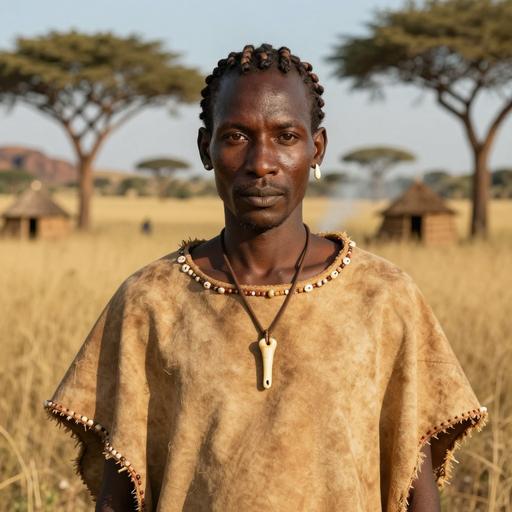
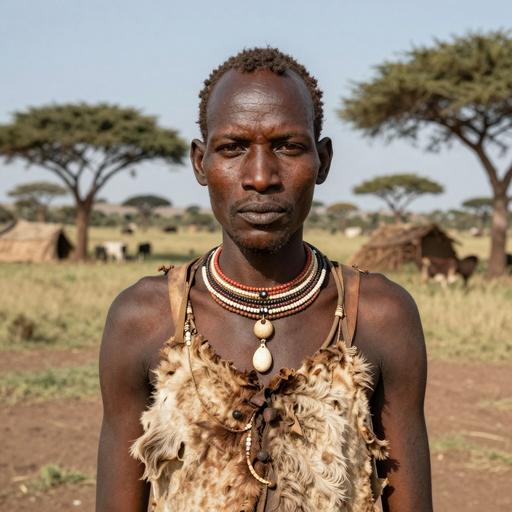
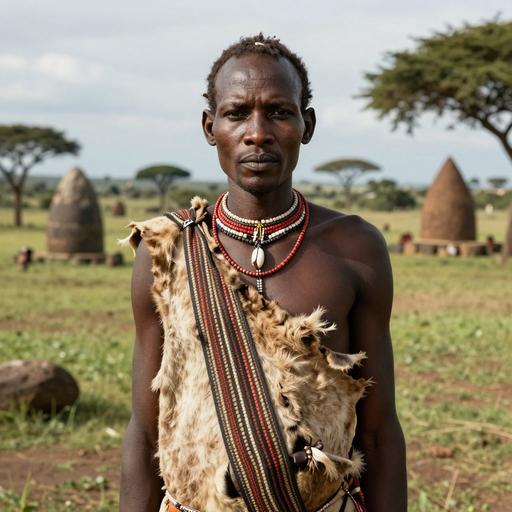
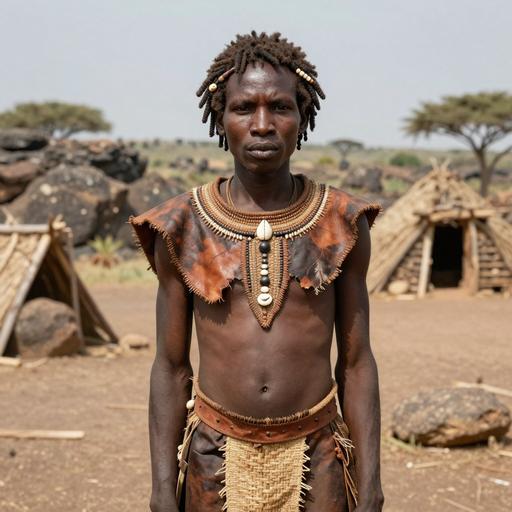
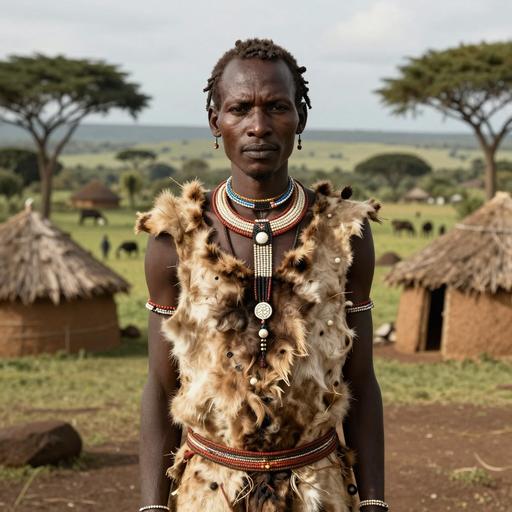
Los retratos son ilustraciones generadas con IA. Las etiquetas de muestra y los identificadores de acceso identifican los registros de referencia.

Retrato Muestra País Época Fecha Cultura Y-DNA Coincidencia
Retrato ilustrativo de Pastoral N IA-o individual, Gishimangeda Cave, Tanzania (200-1 BCE) generado con IA
Identificador de muestra: I13762
Tanzania Prehistoric and Iron Age in Tanzania 163-59 calBCE (2140±15 BP, PSUAMS-5458) Tanzania Multi-Period E1b1b1b2b2a1 Subclado
Retrato ilustrativo de Pastoral N individual, Nyandarua. Ol Kalou, Kenya (215-326 BCE) generado con IA
Identificador de muestra: I12384
Kenya Kenya PastoralN 229-358 calCE (1800±20 BP, PSUAMS-4940) Pastoral Neolithic E1b1b1b2b2a1 Subclado
Retrato ilustrativo de Pastoral N Elmenteitan individual, Nakuru. Rigo Cave. GrJh3, Kenya (767-519 BCE) generado con IA
Identificador de muestra: I12398
Kenya Kenya PastoralN Elmenteitan 778-539 calBCE (2538±13 BP) [R_combine: (2570±15 BP, PSUAMS-4946), (2480±20 BP, PSUAMS-4945)] Elmenteitan Culture E1b1b1b2b2a1 Subclado
Retrato ilustrativo de Pastoral N individual, Laikipia. Kisima Farm. KFR-A5/Porcupine Cave, Kenya (1,111-931 BCE) generado con IA
Identificador de muestra: I8809
Kenya Kenya PastoralN 1111-931 calBCE (2855±20 BP, PSUAMS-4510) Pastoral Neolithic E1b1b1b2b2a1 Subclado
Retrato ilustrativo de Historic individual, Emurula Ole Polos Cairns. GvJh 122, Kenya (1,527-1,662 CE) generado con IA
Identificador de muestra: I12379
Kenya Historic Era 2 in Kenya 1639-1797 calCE (270±15 BP, PSUAMS-4938) Historic Era 2 E1b1b1b2b2a1 Subclado
PATERNAL LINAJE · ADN ANTIGUO

Mapa de pruebas de linajes antiguos

Sigue los clados superiores hasta esta rama y explora dónde se encontraron portadores antiguos.

Cargando observaciones antiguas...

Los marcadores son ubicaciones de hallazgos arqueológicos. Una línea discontinua representa una transición geográfica propuesta e incierta entre ramas consecutivas, apoyada en varias observaciones fechadas; no es una ruta de viaje exacta, un lugar de nacimiento ni una prueba de descendencia directa. Las muestras del clado parental pueden pertenecer a otras ramas descendientes. Se mantienen huecos cuando las pruebas son insuficientes. Las fechas de las muestras son distintas de las fechas de formación de los haplogrupos.

Perfil de referencia

Mapa de distribución de portadores

Distribución geográfica de muestras de ADN antiguo (5), portadores directos o de subclados de E1B1B1B2B2A

Portador de un subclado
Filtro de periodo temporal
Todos los periodos
Mostrando todas las muestras
Perfil de referencia

Distribución temporal

Distribución de portadores por periodos arqueológicos

Perfil de referencia

Distribución geográfica

Recuentos por país registrado de las muestras. Reflejan la selección de referencia disponible, no frecuencias de población.

Perfil de referencia

Distribución por país y época

Compara los recuentos de muestras registradas por países y periodos arqueológicos. Selecciona una celda con datos para examinar una muestra.

Datos

Datos y procedencia

Información sobre las fuentes y la calidad de los datos

Última actualización 2026-06-16
Puntuación de confianza 50/100
Cobertura Low

Fuente de datos

La clasificación, las fechas estimadas y el contexto geográfico reflejan los datos de referencia registrados y pueden cambiar al revisarse las pruebas. La cobertura de muestras es desigual; las ubicaciones registradas y las asociaciones arqueológicas no establecen el origen personal ni la identidad cultural.