Aller au contenu principal
mtDNA · lignée Maternelle

A2U

mtDNA Haplogroup A2U

Profil de référence pour une branche de lignée. Des haplogroupes partagés n'établissent pas de lien familial ni d'identité culturelle.

Profil de référence

Contexte de la branche

Contexte historique de la branche de lignée mtDNA A2U

Origins and Evolution

mtDNA haplogroup A2U is a subclade within the broader Native American founding lineage A2, which itself derives from East/Northeast Asian haplogroup A. Given the parentage and the deep peopling history of the Americas, A2U most likely formed shortly after the initial Late Pleistocene occupation of Beringia and the first southward migrations into the Americas. An estimated origin around ~12 kya places its formation in the terminal Pleistocene to early Holocene, consistent with regional diversification as populations expanded and became regionally isolated following the end of the Last Glacial Maximum.

Subclades (if applicable)

At present, A2U is best treated as a defined branch under A2 with limited further branching described in published or public databases; if additional mutations within A2U are discovered through increased whole-mitochondrial sequencing or ancient DNA sampling, those would be documented as nested subclades (for example, A2U1, A2U2, etc.). Many A2 sublineages show region-specific diversification, and A2U may exhibit similarly restricted internal structure detectable only with broad sampling.

Geographical Distribution

A2U appears predominantly within the Americas, with highest representation reported in northern and northwestern Native American groups and scattered occurrences further south. The distribution pattern is consistent with a subclade that arose in populations connected to early postglacial expansions from Beringia into North America and then persisted regionally. Low-frequency detections in Arctic and sub-Arctic peoples (Inuit, Yup'ik, Aleut) or selected Indigenous Siberian groups are plausible either through early gene flow across Beringia or later contact, but such occurrences are rarer and require cautious interpretation. The haplogroup is also present in modern admixed populations in the Americas via indigenous maternal ancestry. Notably, only a small number of ancient DNA samples (including one noted in the user-supplied database) have been assigned to A2U so far, limiting direct archaeological anchoring.

Historical and Cultural Significance

While A2U is not linked to a single archaeological culture in the way that some Y-chromosome expansions map to material-culture horizons, its presence helps reconstruct maternal-line continuity and regional population structure in the Americas. Where A2U occurs among northern First Nations, Inuit or sub-Arctic groups, it can illuminate patterns of postglacial recolonization, coastal versus inland migration routes, and local demographic stability or replacement. In combination with other Native American mtDNA lineages (B2, C1, D1, X2a), A2U contributes to the mosaic of maternal ancestry used to infer migration timing, population interactions, and continuity between ancient and modern Indigenous communities.

Conclusion

mtDNA haplogroup A2U is a regional sublineage of the founding American maternal haplogroup A2, likely originating in the late Pleistocene to early Holocene in descendants of Beringian populations. Its relatively restricted distribution and current low representation in ancient and modern datasets make it a target for future high-resolution mitochondrial sequencing and ancient DNA sampling; such work will clarify its internal structure, precise geographic origins, and role in postglacial population dynamics across North America.

Points clés

  • Origins and Evolution
  • Subclades (if applicable)
  • Geographical Distribution
  • Historical and Cultural Significance
  • Conclusion
Profil de référence

Arbre et relations

Contexte phylogénétique et sous-clades

Voie évolutive

Suivez les branches parentes consignées jusqu'à A2U. Les dates sont des estimations et peuvent évoluer lorsque les données de référence sont révisées.

Étapes Haplogroupe Âge estimé Époque archéologique Temps écoulé Descendants immédiats Descendants modernes testés Liens anciens
1 A2U Actuel ~12,000 years ago Neolithic 12,000 ans 0 5 1
2 A2A ~12,000 years ago Neolithic 12,000 ans 26 332 58
3 A2 ~16,000 years ago Mesolithic 16,000 ans 8 895 14
4 AA1 - - - 14 942 0
5 AA - - - 4 947 0
6 A ~30,000 years ago Paleolithic 30,000 ans 4 997 192
7 N ~60,000 years ago Paleolithic 60,000 ans 16 26,150 13
8 L3 ~70,000 years ago Paleolithic 70,000 ans 7 30,162 6
9 L3'4 - - - 2 30,212 0
10 L3'4'6 - - - 2 30,216 0
11 L2'3'4'6 - - - 2 31,333 0
12 L2'3'4'5'6'7 - - - 2 31,349 0
13 L1'2'3'4'5'6'7 - - - 2 31,852 0
14 L ~160,000 years ago Paleolithic 160,000 ans 2 32,236 5

Sous-clades (0)

Branche terminale, aucune sous-clade consignée

Branches sœurs (25)

Autres branches issues du même haplogroupe parent

Profil de référence

Dans le monde

Distribution géographique et présence moderne

Origine consignée

Beringia / Northwest North America

Distribution moderne

The populations where mtDNA haplogroup A2U is found include:

  1. Indigenous Native American groups across North, Central, and South America (primarily detected in northern/western North America)
  2. Northern North American populations including Na-Dene and some Algonquian-speaking groups (regional occurrences)
  3. Arctic and sub-Arctic peoples (Inuit, Yup'ik, Aleut) with regionally specific A2 variants reported at low frequency
  4. Selected Indigenous Siberian and Arctic groups at low frequencies (possible Beringian connections or later contact)
  5. Modern admixed populations in the Americas (Latin American mestizo and other groups) through Indigenous maternal ancestry
Contexte historique

Une branche dans le temps

Formation estimée sur une chronologie historique large. Les repères de période servent de contexte et n'impliquent pas de lien avec des cultures particulières.

  1. Il y a ~12k ans

    Haplogroupe A2U

    Formation estimée de cette branche mtDNA ; les dates et les lieux sont des estimations de référence.

    Cette branche
  2. Il y a ~10k ans

    Révolution néolithique

    Début de l'agriculture et émergence de communautés sédentaires

  3. Il y a ~5k ans

    Âge du bronze

    Travail des métaux, écriture et premières civilisations

  4. Il y a ~3k ans

    Âge du fer

    Outils en fer, réseaux d'échanges élargis

  5. Il y a ~2.5k ans

    Antiquité classique

    Floraison des civilisations grecque et romaine

  6. Aujourd'hui

    Aujourd'hui

    Époque moderne

Profil de référence

Contexte archéologique

Associations archéologiques consignées pour la branche mtDNA A2U

Associations consignées

Ces libellés décrivent des contextes archéologiques consignés pour des échantillons de référence liés à A2U. Une association n'établit pas que tous les porteurs appartenaient à une culture ni qu'ils ont suivi une route migratoire précise.

Argentina_BuenosAires_7700BP Arroyo Seco Laguna Chica Lapa do Santo Lauricocha Culture Maya Classic Santa Rosa Island Culture
Les attributions culturelles reposent sur le contexte archéologique des échantillons d'ADN ancien et peuvent refléter des associations régionales à certaines périodes.
Profil de référence

Catalogue d'échantillons

1 porteur direct de l'haplogroupe A2U

1 affiché(s) · 1 échantillons correspondants

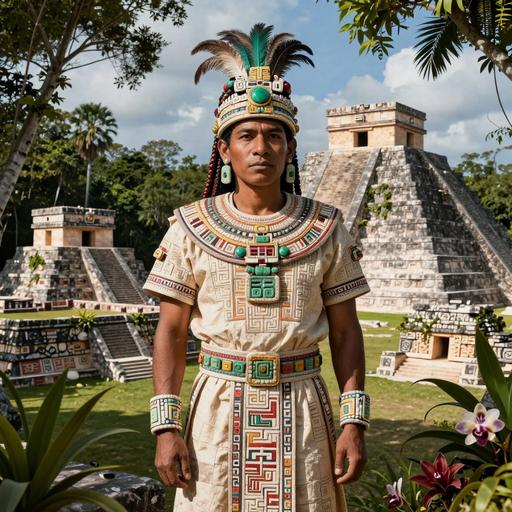
Les portraits sont des illustrations générées par IA. Les libellés d'échantillon et identifiants d'accès désignent les enregistrements de référence.

Portrait Échantillon Pays Époque Date Culture mtDNA Correspondance
Portrait illustratif généré par IA de Late Classic individual, Chichén Itzá (Yucatán), Mexico (702-882 CE)
Identifiant d'échantillon : YCH007
Mexico Maya Lowland Classic 702-882 calCE (1228±22 BP; MAMS-35811) Maya Classic A2u Direct
LIGNÉE MATERNELLE · ADN ANTIQUE

Carte des preuves de lignées antiques

Suivez les clades parents jusqu'à cette branche et explorez où des porteurs antiques ont été identifiés.

Chargement des observations antiques…

Les marqueurs indiquent des lieux de découvertes archéologiques. Un trait pointillé représente une transition géographique proposée et incertaine entre branches consécutives, appuyée sur plusieurs observations datées ; ce n'est pas un itinéraire exact, un lieu de naissance ni une preuve de descendance directe. Des échantillons de clades parents peuvent appartenir à d'autres branches descendantes. Des lacunes subsistent lorsque les preuves sont insuffisantes. Les dates d'échantillon diffèrent des dates de formation des haplogroupes.

Profil de référence

Carte de répartition des porteurs

Répartition géographique de 1 échantillon d'ADN ancien (porteurs directs et de sous-clade de A2U)

Porteur direct
Filtre de période
Toutes les périodes
Affichage de tous les échantillons
Profil de référence

Répartition temporelle

Répartition des porteurs selon les périodes archéologiques

Profil de référence

Répartition géographique

Effectifs par pays d'échantillon consigné. Ils reflètent la sélection de référence disponible, pas des fréquences de population.

Profil de référence

Répartition pays × époque

Comparez les effectifs d'échantillons consignés selon les pays et les périodes archéologiques. Sélectionnez une cellule renseignée pour examiner un échantillon.

Données

Données et provenance

Informations sur les sources et qualité des données

Dernière mise à jour 2026-02-16
Score de confiance 50/100
Couverture Low

Source des données

La classification, les dates estimées et le contexte géographique reflètent les données de référence consignées et peuvent évoluer lorsque les éléments sont révisés. La couverture d'échantillons est inégale ; les lieux consignés et les associations archéologiques n'établissent pas une origine personnelle ni une identité culturelle.