Menu
mtDNA Haplogroup • Maternal Lineage

A2U

mtDNA Haplogroup A2U

~12,000 years ago
Beringia / Northwest North America
0 subclades
1 ancient samples
Scroll to explore
Chapter I

The Story

The journey of mtDNA haplogroup A2U

Origins and Evolution

mtDNA haplogroup A2U is a subclade within the broader Native American founding lineage A2, which itself derives from East/Northeast Asian haplogroup A. Given the parentage and the deep peopling history of the Americas, A2U most likely formed shortly after the initial Late Pleistocene occupation of Beringia and the first southward migrations into the Americas. An estimated origin around ~12 kya places its formation in the terminal Pleistocene to early Holocene, consistent with regional diversification as populations expanded and became regionally isolated following the end of the Last Glacial Maximum.

Subclades (if applicable)

At present, A2U is best treated as a defined branch under A2 with limited further branching described in published or public databases; if additional mutations within A2U are discovered through increased whole-mitochondrial sequencing or ancient DNA sampling, those would be documented as nested subclades (for example, A2U1, A2U2, etc.). Many A2 sublineages show region-specific diversification, and A2U may exhibit similarly restricted internal structure detectable only with broad sampling.

Geographical Distribution

A2U appears predominantly within the Americas, with highest representation reported in northern and northwestern Native American groups and scattered occurrences further south. The distribution pattern is consistent with a subclade that arose in populations connected to early postglacial expansions from Beringia into North America and then persisted regionally. Low-frequency detections in Arctic and sub-Arctic peoples (Inuit, Yup'ik, Aleut) or selected Indigenous Siberian groups are plausible either through early gene flow across Beringia or later contact, but such occurrences are rarer and require cautious interpretation. The haplogroup is also present in modern admixed populations in the Americas via indigenous maternal ancestry. Notably, only a small number of ancient DNA samples (including one noted in the user-supplied database) have been assigned to A2U so far, limiting direct archaeological anchoring.

Historical and Cultural Significance

While A2U is not linked to a single archaeological culture in the way that some Y-chromosome expansions map to material-culture horizons, its presence helps reconstruct maternal-line continuity and regional population structure in the Americas. Where A2U occurs among northern First Nations, Inuit or sub-Arctic groups, it can illuminate patterns of postglacial recolonization, coastal versus inland migration routes, and local demographic stability or replacement. In combination with other Native American mtDNA lineages (B2, C1, D1, X2a), A2U contributes to the mosaic of maternal ancestry used to infer migration timing, population interactions, and continuity between ancient and modern Indigenous communities.

Conclusion

mtDNA haplogroup A2U is a regional sublineage of the founding American maternal haplogroup A2, likely originating in the late Pleistocene to early Holocene in descendants of Beringian populations. Its relatively restricted distribution and current low representation in ancient and modern datasets make it a target for future high-resolution mitochondrial sequencing and ancient DNA sampling; such work will clarify its internal structure, precise geographic origins, and role in postglacial population dynamics across North America.

Key Points

  • Origins and Evolution
  • Subclades (if applicable)
  • Geographical Distribution
  • Historical and Cultural Significance
  • Conclusion
Chapter II

Tree & Relationships

Phylogenetic context and subclades

Evolution Path

This haplogroup's evolutionary journey from its earliest ancestor to the present.

Steps Haplogroup Age Estimate Archaeology Era Time Passed Immediate Descendants Tested Modern Descendants Ancient Connections
1 A2U Current ~12,000 years ago 🌾 Neolithic 12,000 years 0 4 1
2 A2 ~15,000 years ago 🏹 Mesolithic 15,000 years 20 574 14
3 A ~30,000 years ago 🦴 Paleolithic 30,000 years 7 630 192

Subclades (0)

Terminal branch - no known subclades

Chapter III

Where in the World

Geographic distribution and modern presence

Place of Origin

Beringia / Northwest North America

Modern Distribution

The populations where mtDNA haplogroup A2U is found include:

  1. Indigenous Native American groups across North, Central, and South America (primarily detected in northern/western North America)
  2. Northern North American populations including Na-Dene and some Algonquian-speaking groups (regional occurrences)
  3. Arctic and sub-Arctic peoples (Inuit, Yup'ik, Aleut) with regionally specific A2 variants reported at low frequency
  4. Selected Indigenous Siberian and Arctic groups at low frequencies (possible Beringian connections or later contact)
  5. Modern admixed populations in the Americas (Latin American mestizo and other groups) through Indigenous maternal ancestry
CHAPTER IV

When in Time

Your haplogroup in the context of human history

~12k years ago

Haplogroup A2U

Your mtDNA haplogroup emerged in Beringia / Northwest North America

Beringia / Northwest North America
~10k years ago

Neolithic Revolution

Agriculture begins, settled communities form

~5k years ago

Bronze Age

Metalworking, writing, and early civilizations

~3k years ago

Iron Age

Iron tools, expanded trade networks

~2k years ago

Classical Antiquity

Greek and Roman civilizations flourish

Present

Present Day

Modern era

Your Haplogroup
Historical Era
Chapter IV-B

Linked Cultures

Ancient cultures associated with mtDNA haplogroup A2U

Cultural Heritage

These ancient cultures have been linked to haplogroup A2U based on matching ancient DNA samples from archaeological excavations. The presence of this haplogroup in these cultures provides insights into the migrations and population movements of populations carrying this haplogroup.

Arroyo Seco Laguna Chica Lapa do Santo Lauricocha Culture Maya Classic Santa Rosa Island Culture
Culture assignments are based on archaeological context of ancient DNA samples and may represent regional associations during specific time periods.
Chapter V

Sample Catalog

1 direct carrier of haplogroup A2U

1 / 1 samples
Portrait Sample Country Era Date Culture mtDNA Match
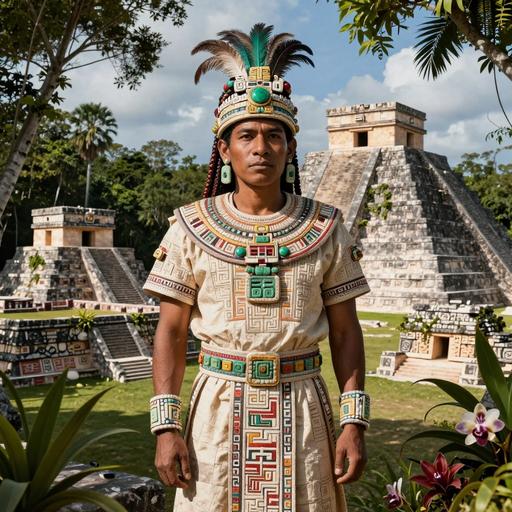
Portrait of ancient individual YCH007 from Mexico, dated 702 CE - 882 CE
YCH007
Mexico Maya Lowland Classic 702 CE - 882 CE Maya Classic A2u Direct
Chapter VI

Carrier Distribution Map

Geographic distribution of 1 ancient DNA sample (direct and subclade carriers of A2U)

Direct carrier
Time Period Filter
All Time Periods
Showing all samples
Chapter VII

Temporal Distribution

Distribution of carriers across archaeological periods

Chapter VIII

Geographic Distribution

Distribution by country of origin (direct and subclade carriers shown by default)

Chapter IX

Country × Era Distribution

Cross-tabulation of carrier countries and archaeological periods (direct and subclade carriers shown by default)

Data

Data & Provenance

Source information and data quality

Last Updated 2026-02-16
Confidence Score 50/100
Coverage Low
Data Source

We use the latest phylotree for MTDNA haplogroup classification and data.