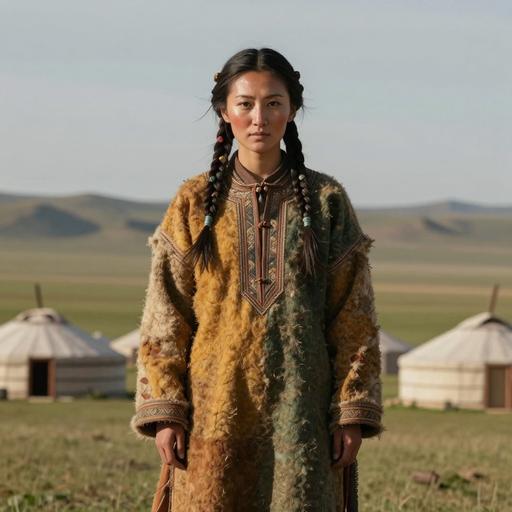
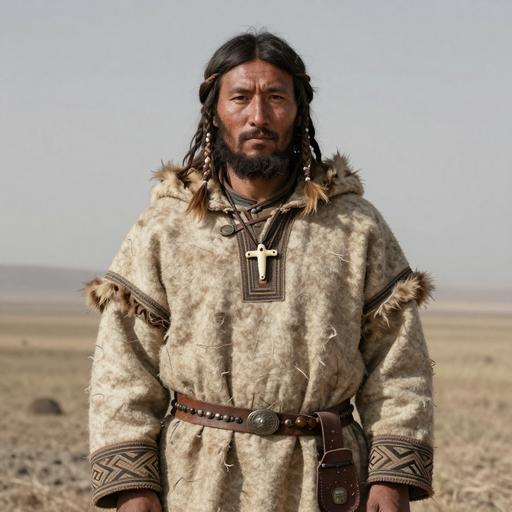
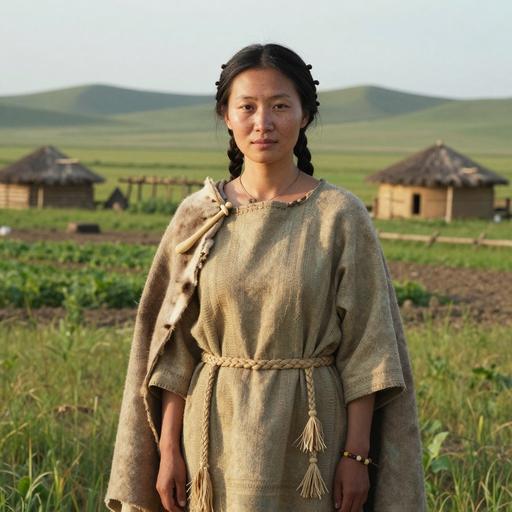
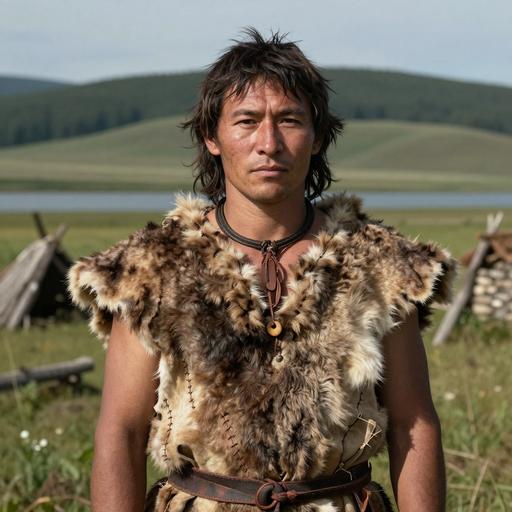
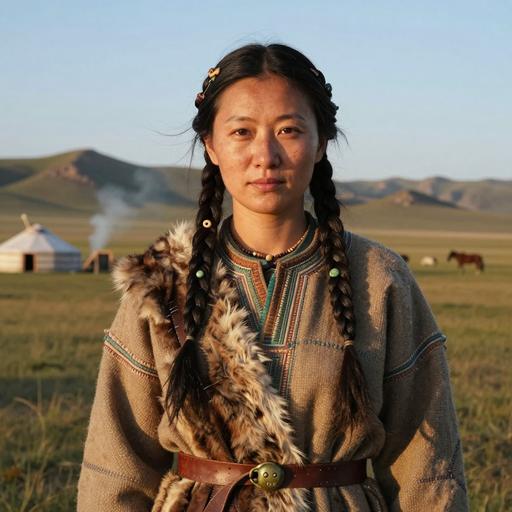
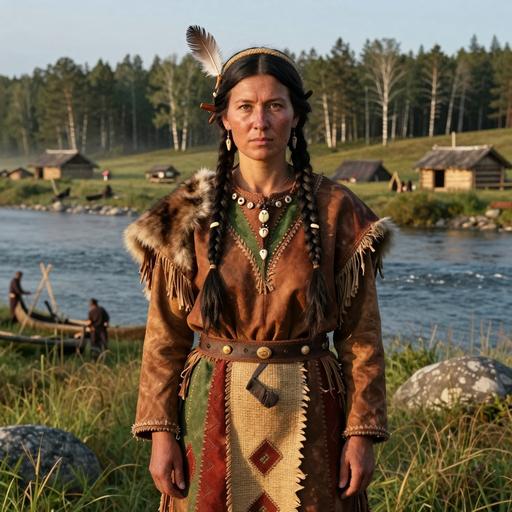
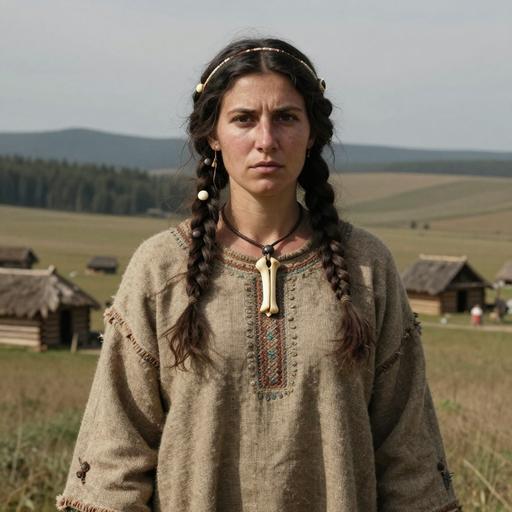
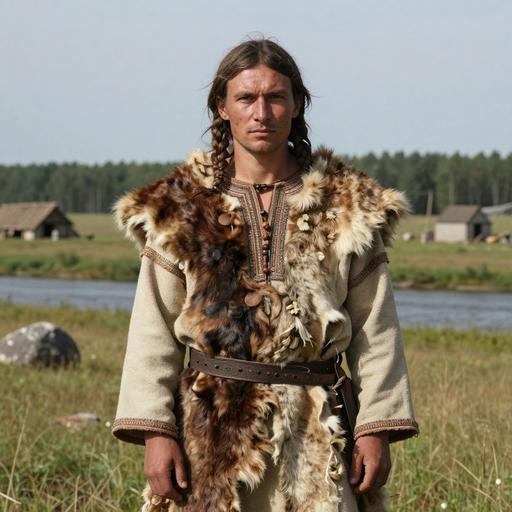
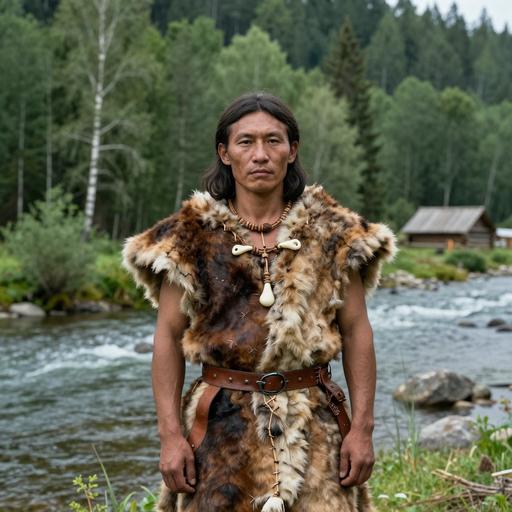
Profil de référence pour une branche de lignée. Des haplogroupes partagés n'établissent pas de lien familial ni d'identité culturelle.
Profil de référence
Contexte de la branche
Contexte historique de la branche de lignée mtDNA C4A1A
Origins and Evolution
mtDNA haplogroup C4A1A is a subclade of C4A1, itself nested within the broader C4 lineage that is characteristic of northern Eurasian maternal ancestry. Based on the phylogenetic position beneath C4A1 (which has been estimated to arise in the early Holocene ~12 kya) and the distribution of derived mutations, C4A1A most plausibly arose in northeastern Asia or Siberia during the early to mid-Holocene (roughly ~9 kya). The emergence of C4A1A reflects continued diversification of C4 lineages in high-latitude environments after the Last Glacial Maximum, likely in populations that persisted or expanded in Siberia and adjacent regions.
Subclades
C4A1A is itself a terminal or near-terminal branch in many published trees; where further internal structure exists it is generally shallow and regionally restricted. Substructure within C4A1A is typically seen as geographically localized variants in different Siberian and Mongolic/Tungusic groups. Because sampling of modern and ancient mtDNA in some parts of Siberia is still incomplete, additional subclades may be resolved as more full mitogenomes from the region are produced.
Geographical Distribution
Modern populations: C4A1A is most frequently observed among indigenous Siberian groups (Yakut, Evenk, Even, Nenets), Mongolic and Tungusic-speaking peoples (Buryat, Mongolian groups, Evens), and in some Central Asian northern highland populations (Tuvans, Altaians). It also appears at low frequencies in northern East Asian populations (northern Han, occasional Korean or Japanese samples) and in Arctic/Beringia-adjacent coastal groups (Koryak, Chukchi, some Aleut or Alaskan Native individuals) in isolated cases.
Ancient DNA: C4-lineage haplotypes, including C4A1 and derivatives, are reported from Holocene archaeological contexts in the Lake Baikal region and other parts of Siberia. These occurrences indicate that maternal lineages ancestral to or identical with C4A1A were present among Neolithic and post-Neolithic hunter-gatherer communities of interior and northeastern Asia.
Historical and Cultural Significance
C4A1A and related C4 lineages are informative markers of northern Eurasian maternal continuity and local population histories. Their presence in both contemporary northern Asian groups and Holocene ancient samples links modern populations to local hunter-gatherer and early Holocene communities around Lake Baikal, eastern Siberia, and adjacent regions. The haplogroup therefore contributes to reconstructions of postglacial recolonization, regional continuity versus replacement debates in Siberia, and patterns of gene flow between Siberia, northeastern Asia, and Beringia. C4A1A is not associated with a single expansive pan-continental migration event but rather with regional persistence and patchy dispersals across northern Eurasia.
Conclusion
C4A1A is a regionally important maternal lineage that documents northern Asian matrilineal continuity since the early Holocene. It is most common in Siberian, Mongolic, and Tungusic-speaking groups and appears sporadically in neighboring Central and Northeast Asian populations and in Arctic/Beringia-adjacent contexts. Continued mitogenome sequencing and ancient DNA sampling in underrepresented parts of Siberia will refine the substructure and chronology of C4A1A and clarify its role in Holocene population dynamics of northern Eurasia.
Points clés
Origins and Evolution
Subclades
Geographical Distribution
Historical and Cultural Significance
Conclusion
Profil de référence
Arbre et relations
Contexte phylogénétique et sous-clades
Voie évolutive
Suivez les branches parentes consignées jusqu'à C4A1A. Les dates sont des estimations et peuvent évoluer lorsque les données de référence sont révisées.
The populations where mtDNA haplogroup C4A1A is found include:
Siberian indigenous groups (e.g., Yakut, Evenk, Nenets, Even)
Mongolic and Tungusic-speaking populations (e.g., Buryats, Mongolians, Evens)
Central Asian highland groups (e.g., Tuvans, Altaians)
Northern East Asian populations at low frequency (e.g., northern Han Chinese, occasional Korean or Japanese samples)
Arctic and Beringia-adjacent peoples at low or occasional frequency (e.g., Koryak, Chukchi, some Aleut/Native communities)
Ancient Holocene archaeological populations of the Lake Baikal region and other Siberian sites
Contexte historique
Une branche dans le temps
Formation estimée sur une chronologie historique large. Les repères de période servent de contexte et n'impliquent pas de lien avec des cultures particulières.
Il y a ~10k ans
Révolution néolithique
Début de l'agriculture et émergence de communautés sédentaires
Il y a ~9k ans
Haplogroupe C4A1A
Formation estimée de cette branche mtDNA ; les dates et les lieux sont des estimations de référence.
Cette branche
Il y a ~5k ans
Âge du bronze
Travail des métaux, écriture et premières civilisations
Il y a ~3k ans
Âge du fer
Outils en fer, réseaux d'échanges élargis
Il y a ~2.5k ans
Antiquité classique
Floraison des civilisations grecque et romaine
Aujourd'hui
Aujourd'hui
Époque moderne
Profil de référence
Contexte archéologique
Associations archéologiques consignées pour la branche mtDNA C4A1A
Associations consignées
Ces libellés décrivent des contextes archéologiques consignés pour des échantillons de référence liés à C4A1A. Une association n'établit pas que tous les porteurs appartenaient à une culture ni qu'ils ont suivi une route migratoire précise.
Les attributions culturelles reposent sur le contexte archéologique des échantillons d'ADN ancien et peuvent refléter des associations régionales à certaines périodes.
Profil de référence
Catalogue d'échantillons
28 porteurs directs et 30 porteurs de sous-clade de l'haplogroupe C4A1A
10 affiché(s) · 50 échantillons correspondants
Aucun échantillon ne correspond à ces filtres. Essayez un autre libellé, lieu ou période.
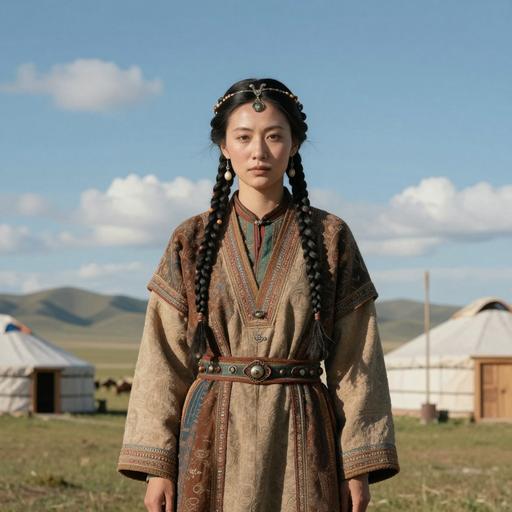
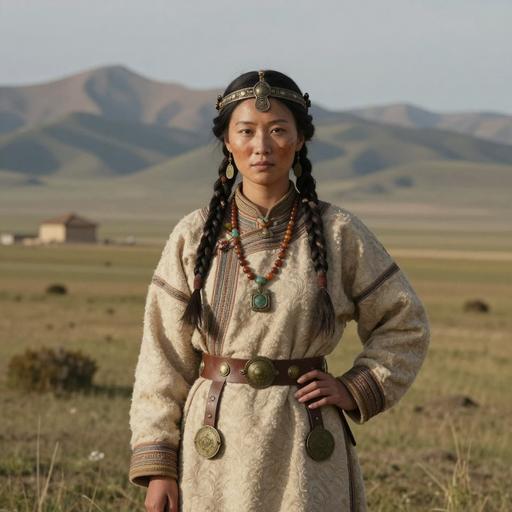
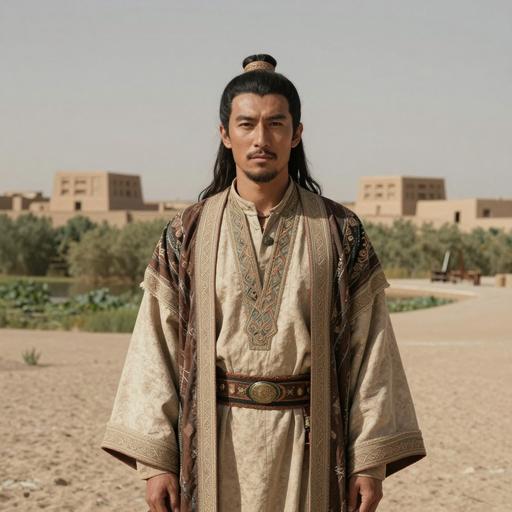
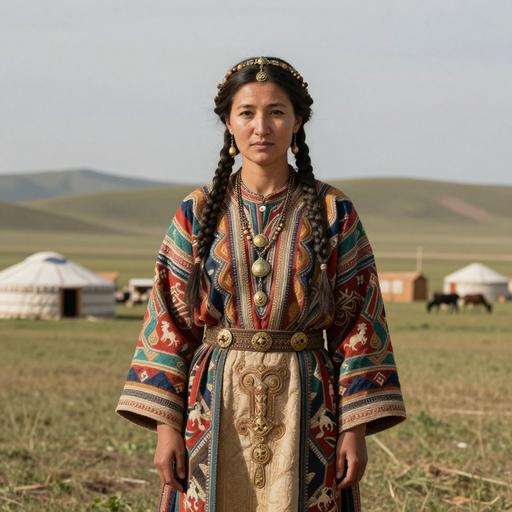
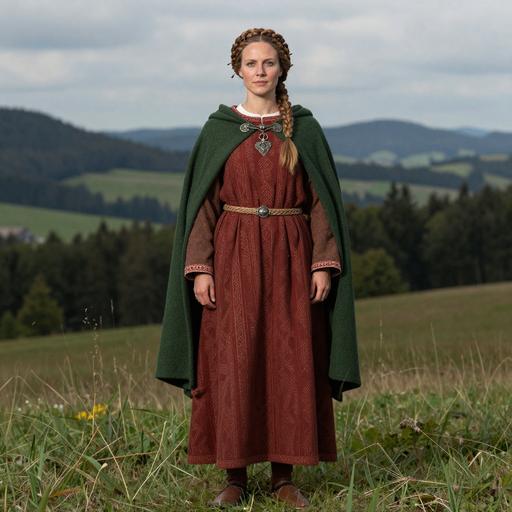
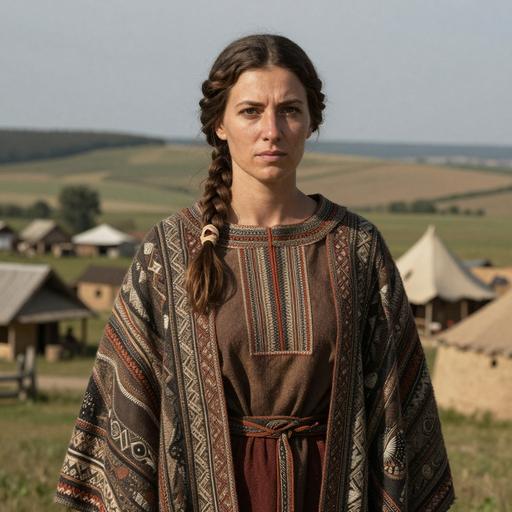
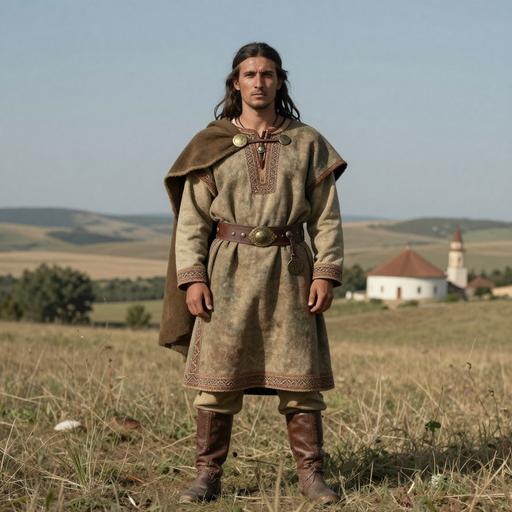
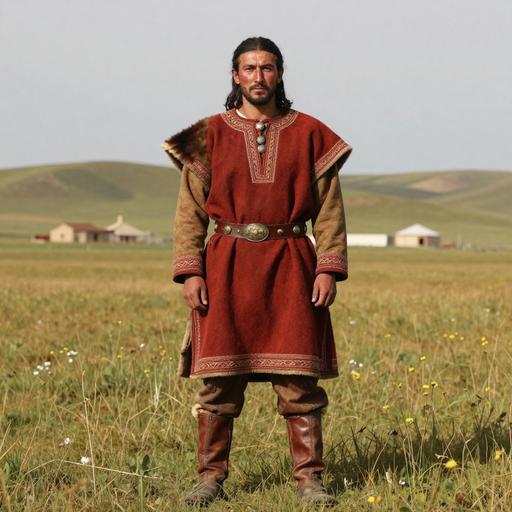
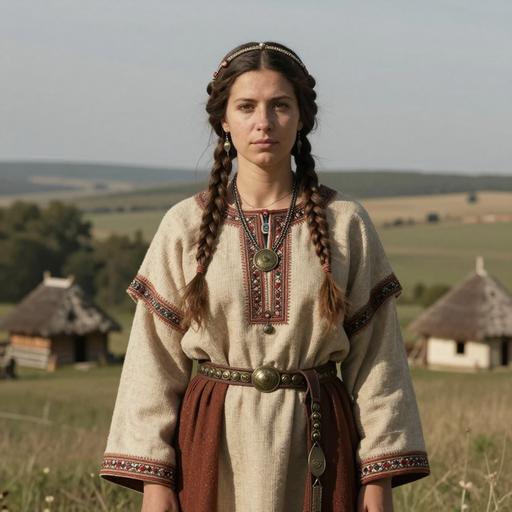
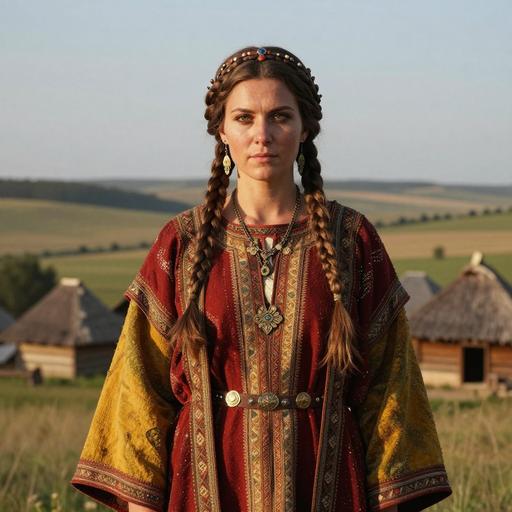
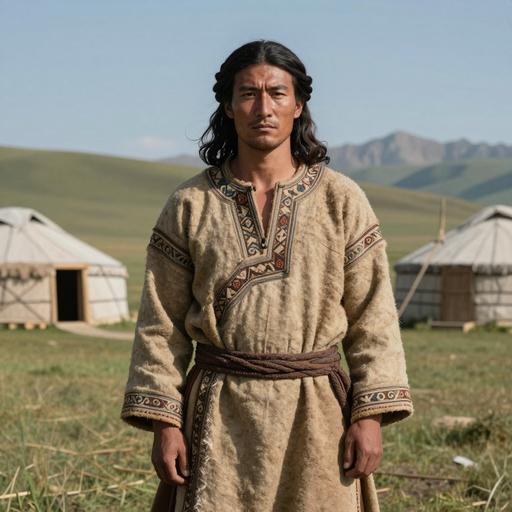
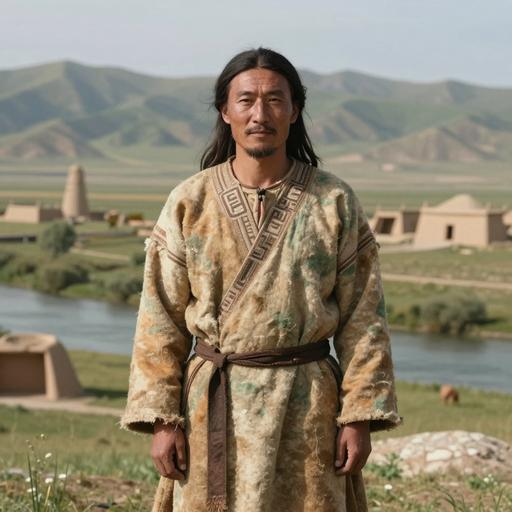
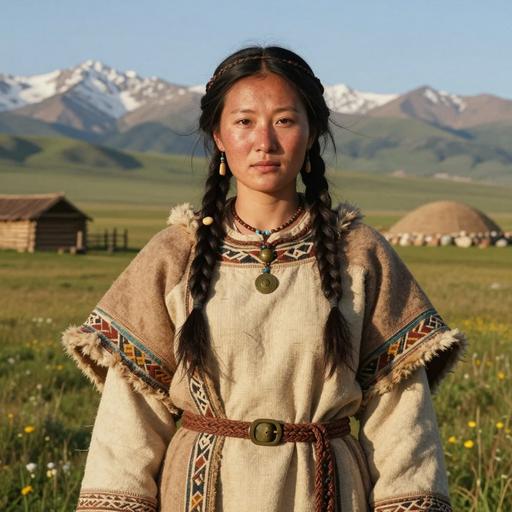
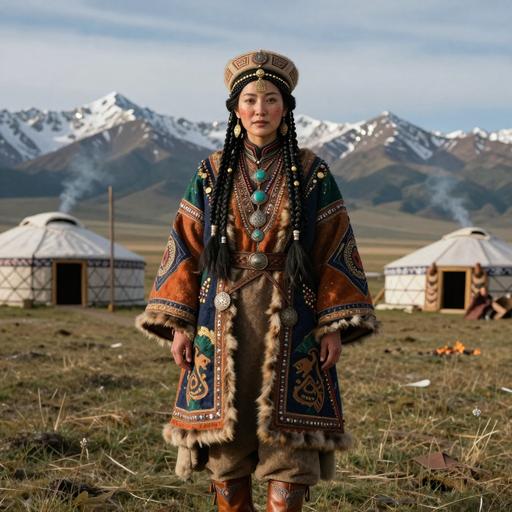
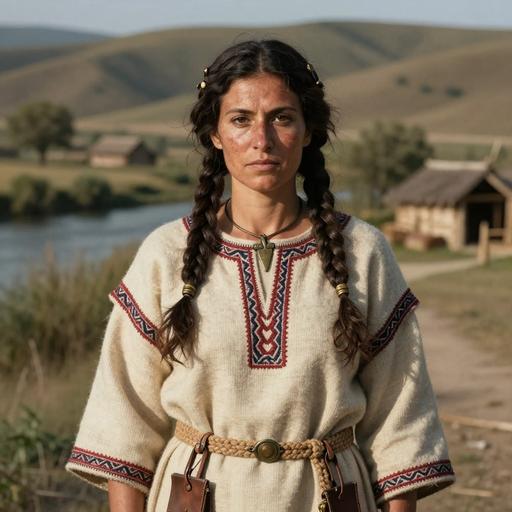
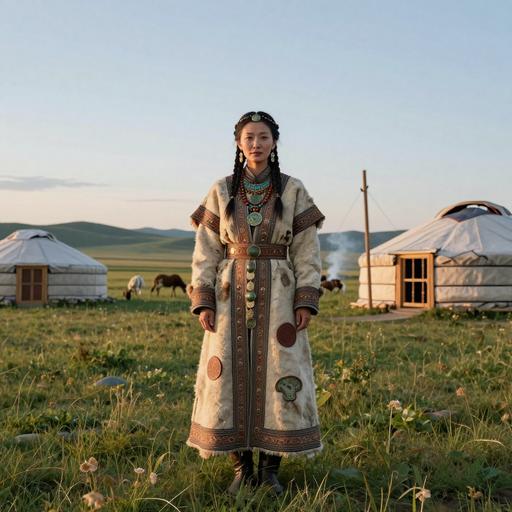
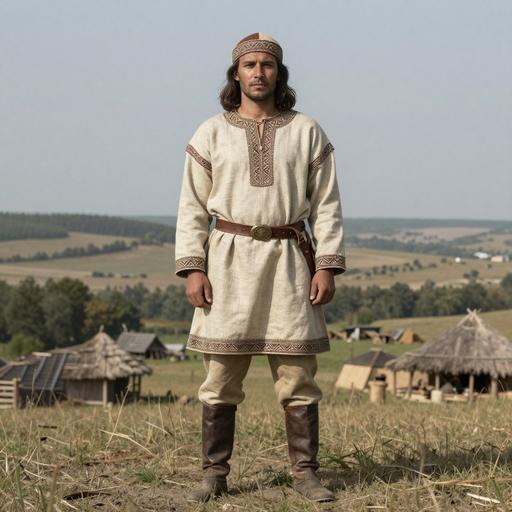
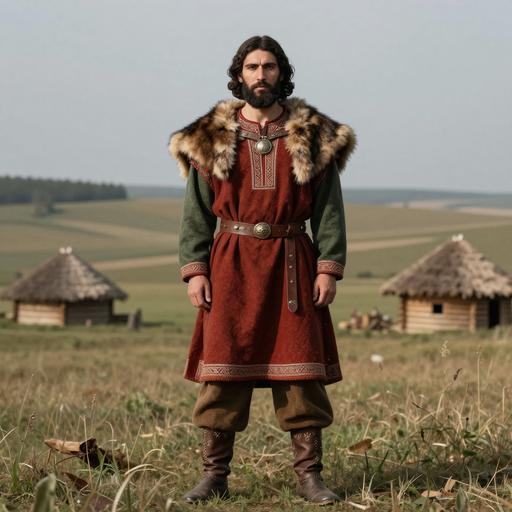
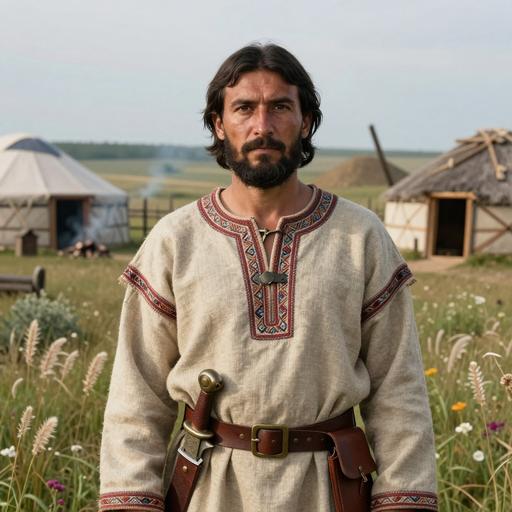
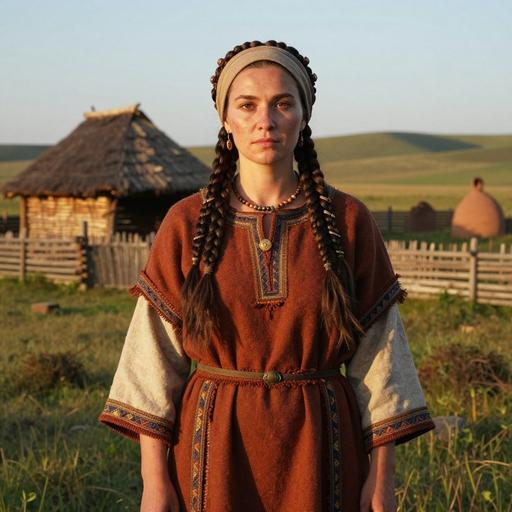
Les portraits sont des illustrations générées par IA. Les libellés d'échantillon et identifiants d'accès désignent les enregistrements de référence.
Portrait
Échantillon
Pays
Époque
Date
Culture
mtDNA
Correspondance
Identifiant d'échantillon : ATS001
Mongolia
Xiongnu Period Tuv, Mongolia
23-121 calCE (1954±15 BP, GrM-12988)
Xiongnu Tuv
C4a1a
Direct
Identifiant d'échantillon : C3356
China
China Xinjiang Tielieketesai IA 2
149-59 calBCE
Tielieketesai Culture
C4a1a
Direct
Identifiant d'échantillon : DOL001
Mongolia
Xiongnu Period Khentii, Mongolia
200 BCE - 100 CE
Xiongnu Culture
C4a1a
Direct
Identifiant d'échantillon : C402
China
Historical Period Hetian, Xinjiang, China
200-400 CE
Hetian Culture
C4a1a+195
Direct
Identifiant d'échantillon : C1652
China
China Xinjiang Junmachanyilian Historical
262-537 calCE
Junmachanyilian Culture
C4a1a
Direct
Identifiant d'échantillon : DA201
Kazakhstan
Late Saka Culture in Kazakhstan
344 calBCE - 5 calCE (2099±38 BP, UBA-33594)
Late Saka
C4a1a+195
Direct
Identifiant d'échantillon : AED125b
Germany
Early Medieval Germany
385 CE - 537 CE
Early Medieval German
C4a1a
Direct
Identifiant d'échantillon : AED125b
Germany
The Germanic Tribes
385 CE - 537 CE
C4a1a
Direct
Identifiant d'échantillon : NW54
Germany
Early Medieval Germany
409-537 calCE (1624±20 BP)
Early Medieval German
C4a1a
Direct
Identifiant d'échantillon : RKF061
Hungary
Hungary EarlyAvar
550-700 CE
Early Avar
C4a1a+195
Direct
Identifiant d'échantillon : RKF081
Hungary
Hungary EarlyAvar
550-700 CE
Early Avar
C4a1a
Direct
Identifiant d'échantillon : RKF145
Hungary
Hungary EarlyAvar
550-700 CE
Early Avar
C4a1a+195
Direct
Identifiant d'échantillon : KUP001
Hungary
Hungary Avar
550-850 CE
Avar
C4a1a
Direct
Identifiant d'échantillon : KKB002
Kazakhstan
Iron Age Sarmatian-Turkic, Kazakhstan
600-800 CE
Sarmatian-Turkic Culture
C4a1a
Direct
Identifiant d'échantillon : MM-83
Hungary
Hungary EarlyAvar
600-650 CE
Early Avar
C4a1a+195
Direct
Identifiant d'échantillon : KV-3456
Hungary
Middle to Late Avar Period Hungary
706-883 calCE (1220±20 BP, UGAMS-51298)
Avar Culture
C4a1a
Direct
Identifiant d'échantillon : C851
China
China Xinjiang Wuzan IA
750-350 BCE
Wuzan Culture
C4a1a
Direct
Identifiant d'échantillon : C1660
China
Iron Age Ayousaigoukou, Xinjiang, China
754 BCE - 412 BCE
Ayousaigoukou Culture
C4a1a+195
Direct
Identifiant d'échantillon : C2057
China
Iron Age Sandaohaizi, Xinjiang, China
800 BCE - 1 BCE
Sandaohaizi Culture
C4a1a+195
Direct
Identifiant d'échantillon : DA10
Kazakhstan
Central Saka Culture in Kazakhstan
800 BCE - 400 BCE
Central Saka
C4a1a
Direct
Identifiant d'échantillon : DA10
Kazakhstan
The Scythian and Saka Cultures
800 BCE - 400 BCE
C4a1a
Direct
Identifiant d'échantillon : I19488
Bulgaria
Early Iron Age Bulgaria
900-700 BCE
Bulgarian EIA
C4a1a+195
Direct
Identifiant d'échantillon : ULN003
Mongolia
Middle to Late Bronze Age to Xiongnu to Late Medieval Sukhbaatar, Mongolia
1416-1264 calBCE (3075±27 BP, OxA-36232)
Sukhbaatar Multi-Period
C4a1a
Direct
Identifiant d'échantillon : ULN009
Mongolia
Middle to Late Bronze Age to Xiongnu to Late Medieval Sukhbaatar, Mongolia
1550-1250 BCE
Sukhbaatar Multi-Period
C4a1a
Direct
Identifiant d'échantillon : KHU001
Mongolia
Middle to Late Bronze Age Zavkhan, Mongolia
2000-700 BCE
Zavkhan Culture
C4a1a
Direct
Identifiant d'échantillon : WQM4
China
Early Neolithic Amur River Region, China
5478 BCE - 5331 BCE
Amur Neolithic
C4a1a
Direct
Identifiant d'échantillon : WQM4
China
Early Neolithic China
5478 BCE - 5331 BCE
C4a1a
Direct
Identifiant d'échantillon : NEO117
Russia
Transbaikal Mesolithic Culture
6062-5802 calBCE (7064±63 BP, UBA-33758)
Transbaikal Culture
C4a1a+195
Direct
Identifiant d'échantillon : A1813
Hungary
Late Avar Period Danube-Tisza, Hungary
600-800 CE
Late Avar
C4a1a4
Sous-clade
Identifiant d'échantillon : I18223
Hungary
Middle to Late Avar Period Danube-Tisza, Hungary
650-750 CE
Middle-Late Avar
C4a1a4
Sous-clade
Identifiant d'échantillon : RKF047
Hungary
Hungary MiddleAvar
650-800 CE
Avar Culture
C4a1a4
Sous-clade
Identifiant d'échantillon : RKF042
Hungary
Hungary MiddleAvar
668-772 calCE
Avar Culture
C4a1a4
Sous-clade
Identifiant d'échantillon : A1815
Hungary
Late Avar Period Danube-Tisza, Hungary
700-800 CE
Late Avar
C4a1a4
Sous-clade
Identifiant d'échantillon : KFJ009
Hungary
Hungary LateAvar
700-850 CE
Avar Culture
C4a1a4
Sous-clade
Identifiant d'échantillon : KFJ017
Hungary
Hungary LateAvar
700-850 CE
Avar Culture
C4a1a4
Sous-clade
Identifiant d'échantillon : KFJ022
Hungary
Hungary LateAvar
700-850 CE
Avar Culture
C4a1a4
Sous-clade
Identifiant d'échantillon : KFJ040
Hungary
Hungary LateAvar
700-850 CE
Avar Culture
C4a1a4
Sous-clade
Identifiant d'échantillon : SP-2
Hungary
Conqueror Elite Hungary
950-1000 CE
Magyar Elite Culture
C4a1a3
Sous-clade
Identifiant d'échantillon : ARS024
Mongolia
Late Bronze Age Khovsgol 6, Mongolia
1385-1057 calBCE (2990±38 BP, A-)
Khovsgol Culture
C4a1a1
Sous-clade
Identifiant d'échantillon : JXNTM23
China
Late Bronze Age to Iron Age China
1504 BCE - 1262 BCE
Chinese Bronze-Iron
C4a1a2
Sous-clade
Identifiant d'échantillon : JXNTM23
China
Bronze Age China
1504 BCE - 1262 BCE
C4a1a2
Sous-clade
Identifiant d'échantillon : irk008
Russia
Bronze Age Lena River, Russia
1931 BCE - 1749 BCE
Lena River Culture
C4a1a3
Sous-clade
Identifiant d'échantillon : irk008
Russia
Bronze Age Cis-Baikal, Siberia
1931 BCE - 1749 BCE
C4a1a3
Sous-clade
Identifiant d'échantillon : DA361
Russia
Early Bronze Age Ust-Ida, Russia
2445 BCE - 1978 BCE
Ust-Ida Culture
C4a1a3
Sous-clade
Identifiant d'échantillon : DA361
Russia
Early Bronze Age Cis-Baikal, Siberia
2445 BCE - 1978 BCE
C4a1a3
Sous-clade
Identifiant d'échantillon : DA356
Russia
Early Bronze Age Ust-Ida, Russia
2456 BCE - 2206 BCE
Ust-Ida Culture
C4a1a3
Sous-clade
Identifiant d'échantillon : DA356
Russia
Early Bronze Age Cis-Baikal, Siberia
2456 BCE - 2206 BCE
C4a1a3
Sous-clade
Identifiant d'échantillon : DA337
Russia
Early Bronze Age Shamanka, Russia
2461 BCE - 2295 BCE
Shamanka Culture
C4a1a3
Sous-clade
Identifiant d'échantillon : DA337
Russia
Early Bronze Age Cis-Baikal, Siberia
2461 BCE - 2295 BCE
C4a1a3
Sous-clade
Identifiant d'échantillon : I7335
Russia
Ust-Belaya Angara Culture, Russia
2570-2460 calBCE (3995±20 BP, PSUAMS-5326)
Ust-Belaya Culture
C4a1a3
Sous-clade
Identifiant d'échantillon : ATS001
Xiongnu Period Tuv, Mongolia - Mongolia - Tuv. Atsyn Am
Mongolia Xiongnu Period Tuv, Mongolia 23-121 calCE (1954±15 BP, GrM-12988)
C4a1aDirect
Identifiant d'échantillon : C3356
Iron Age Tielieketesai 2, Xinjiang, China - China - Xinjiang. Yili Region. Xinyuan County. Tielieketesai
China China Xinjiang Tielieketesai IA 2 149-59 calBCE
C4a1aDirect
Identifiant d'échantillon : DOL001
Xiongnu Period Khentii, Mongolia - Mongolia - Khentii. Khanan Uul
Mongolia Xiongnu Period Khentii, Mongolia 200 BCE - 100 CE
C4a1aDirect
Identifiant d'échantillon : C402
Historical Period Hetian, Xinjiang, China - China - Xinjiang. Hetian Region. Luopu County. Hetian
China Historical Period Hetian, Xinjiang, China 200-400 CE
C4a1a+195Direct
Identifiant d'échantillon : C1652
Historical Period Junmachanyilian, Xinjiang, China - China - Xinjiang. Yili Region. Tekesi County. Junmachanyilian
China China Xinjiang Junmachanyilian Historical 262-537 calCE
C4a1aDirect
Identifiant d'échantillon : DA201
Late Saka Culture in Kazakhstan - Kazakhstan - Turgen-2 (Almaty Region, Enbekshikazakh District)
Kazakhstan Late Saka Culture in Kazakhstan 344 calBCE - 5 calCE (2099±38 BP, UBA-33594)
C4a1a+195Direct
Identifiant d'échantillon : AED125b
Early Medieval Germany - Germany - Bavaria. Altenerding- Klettham
Germany Early Medieval Germany 385 CE - 537 CE
C4a1aDirect
Identifiant d'échantillon : AED125b
Germany The Germanic Tribes 385 CE - 537 CE
C4a1aDirect
Identifiant d'échantillon : NW54
Early Medieval Germany - Germany - Burgweinting - Nord-West II (Bavaria)
Germany Early Medieval Germany 409-537 calCE (1624±20 BP)
C4a1aDirect
Identifiant d'échantillon : RKF061
Early Avar Period Hungary - Hungary - Rákóczifalva-Bagi-földek (Jász-Nagykun-Szolnok Coiunty, Szolnok)
Hungary Hungary EarlyAvar 550-700 CE
C4a1a+195Direct
Identifiant d'échantillon : RKF081
Early Avar Period Hungary - Hungary - Rákóczifalva-Bagi-földek (Jász-Nagykun-Szolnok Coiunty, Szolnok)
Hungary Hungary EarlyAvar 550-700 CE
C4a1aDirect
Identifiant d'échantillon : RKF145
Early Avar Period Hungary - Hungary - Rákóczifalva-Bagi-földek (Jász-Nagykun-Szolnok Coiunty, Szolnok)
Hungary Hungary EarlyAvar 550-700 CE
C4a1a+195Direct
Identifiant d'échantillon : KUP001
Avar Khaganate - Hungary - Kunpeszér-Felsőpeszéri út (Bács-Kiskun County)
Hungary Hungary Avar 550-850 CE
C4a1aDirect
Identifiant d'échantillon : KKB002
Iron Age Sarmatian-Turkic, Kazakhstan - Kazakhstan - East Kazakhstan. Karakaba River Valley. Karakaba. mound 11
Kazakhstan Iron Age Sarmatian-Turkic, Kazakhstan 600-800 CE
C4a1aDirect
Identifiant d'échantillon : MM-83
Early Avar Period Hungary - Hungary - Csongrád-Csanád County. Makó-Mikócsa-halom
Hungary Hungary EarlyAvar 600-650 CE
C4a1a+195Direct
Identifiant d'échantillon : KV-3456
Middle to Late Avar Period Hungary - Hungary - Bács-Kiskun County. Kiskőrös-Vágóhídidűlő
Hungary Middle to Late Avar Period Hungary 706-883 calCE (1220±20 BP, UGAMS-51298)
C4a1aDirect
Identifiant d'échantillon : C851
Iron Age Wuzan, Xinjiang, China - China - Xinjiang. Yili Region. Nileke County. Wuzan
China China Xinjiang Wuzan IA 750-350 BCE
C4a1aDirect
Identifiant d'échantillon : C1660
Iron Age Ayousaigoukou, Xinjiang, China - China - Xinjiang. Yili Region. Xinyuan County. Ayousaigoukou
China Iron Age Ayousaigoukou, Xinjiang, China 754 BCE - 412 BCE
C4a1a+195Direct
Identifiant d'échantillon : C2057
Iron Age Sandaohaizi, Xinjiang, China - China - Xinjiang. Aletai Region. Qinghe County. Sandaohaizi
China Iron Age Sandaohaizi, Xinjiang, China 800 BCE - 1 BCE
C4a1a+195Direct
Identifiant d'échantillon : DA10
Central Saka Culture in Kazakhstan - Kazakhstan - Tian Shan. Central Steppe
Kazakhstan Central Saka Culture in Kazakhstan 800 BCE - 400 BCE
C4a1aDirect
Identifiant d'échantillon : DA10
Kazakhstan The Scythian and Saka Cultures 800 BCE - 400 BCE
C4a1aDirect
Identifiant d'échantillon : I19488
Early Iron Age Bulgaria - Bulgaria - Svilengrad ( Haskovo)
Bulgaria Early Iron Age Bulgaria 900-700 BCE
C4a1a+195Direct
Identifiant d'échantillon : ULN003
Middle to Late Bronze Age to Xiongnu to Late Medieval Sukhbaatar, Mongolia - Mongolia - Sukhbaatar. Ulaanzuukh
Mongolia Middle to Late Bronze Age to Xiongnu to Late Medieval Sukhbaatar, Mongolia 1416-1264 calBCE (3075±27 BP, OxA-36232)
C4a1aDirect
Identifiant d'échantillon : ULN009
Middle to Late Bronze Age to Xiongnu to Late Medieval Sukhbaatar, Mongolia - Mongolia - Sukhbaatar. Ulaanzuukh
Mongolia Middle to Late Bronze Age to Xiongnu to Late Medieval Sukhbaatar, Mongolia 1550-1250 BCE
C4a1aDirect
Identifiant d'échantillon : KHU001
Middle to Late Bronze Age Zavkhan, Mongolia - Mongolia - Zavkhan. Khukh Khoshuunii Boom
Mongolia Middle to Late Bronze Age Zavkhan, Mongolia 2000-700 BCE
C4a1aDirect
Identifiant d'échantillon : WQM4
Early Neolithic Amur River Region, China - China - Inner Mongolia. Zhalainuoer district. Wuqi farm site
China Early Neolithic Amur River Region, China 5478 BCE - 5331 BCE
Late Bronze Age Khovsgol 6, Mongolia - Mongolia - Khovsgol aimag. Arbulag sorum
Mongolia Late Bronze Age Khovsgol 6, Mongolia 1385-1057 calBCE (2990±38 BP, A-)
C4a1a1Sous-clade
Identifiant d'échantillon : JXNTM23
Late Bronze Age to Iron Age China - China - Henan province. Jiazuo city. Jiaozuoniecun site
China Late Bronze Age to Iron Age China 1504 BCE - 1262 BCE
C4a1a2Sous-clade
Identifiant d'échantillon : JXNTM23
China Bronze Age China 1504 BCE - 1262 BCE
C4a1a2Sous-clade
Identifiant d'échantillon : irk008
Bronze Age Lena River, Russia - Russia - Siberian Federal District. Cis-Baikal. Lena River. Silinskij burial site
Russia Bronze Age Lena River, Russia 1931 BCE - 1749 BCE
C4a1a3Sous-clade
Identifiant d'échantillon : irk008
Russia Bronze Age Cis-Baikal, Siberia 1931 BCE - 1749 BCE
C4a1a3Sous-clade
Identifiant d'échantillon : DA361
Early Bronze Age Ust-Ida, Russia - Russia - Ust'-Ida
Russia Early Bronze Age Ust-Ida, Russia 2445 BCE - 1978 BCE
C4a1a3Sous-clade
Identifiant d'échantillon : DA361
Russia Early Bronze Age Cis-Baikal, Siberia 2445 BCE - 1978 BCE
C4a1a3Sous-clade
Identifiant d'échantillon : DA356
Early Bronze Age Ust-Ida, Russia - Russia - Ust'-Ida
Russia Early Bronze Age Ust-Ida, Russia 2456 BCE - 2206 BCE
C4a1a3Sous-clade
Identifiant d'échantillon : DA356
Russia Early Bronze Age Cis-Baikal, Siberia 2456 BCE - 2206 BCE
C4a1a3Sous-clade
Identifiant d'échantillon : DA337
Early Bronze Age Shamanka, Russia - Russia - Shamanka II
Russia Early Bronze Age Shamanka, Russia 2461 BCE - 2295 BCE
C4a1a3Sous-clade
Identifiant d'échantillon : DA337
Russia Early Bronze Age Cis-Baikal, Siberia 2461 BCE - 2295 BCE
C4a1a3Sous-clade
Identifiant d'échantillon : I7335
Ust-Belaya Angara Culture, Russia - Russia - Baikal Region. Angara river basin. Mouth of the Belaya River
Russia Ust-Belaya Angara Culture, Russia 2570-2460 calBCE (3995±20 BP, PSUAMS-5326)
C4a1a3Sous-clade
LIGNÉE MATERNELLE · ADN ANTIQUE
Carte des preuves de lignées antiques
Suivez les clades parents jusqu'à cette branche et explorez où des porteurs antiques ont été identifiés.
Chargement des observations antiques…
La réduction des animations est activée. Utilisez la chronologie ou Tout afficher pour explorer à votre rythme.
Lire les observations sous forme de tableau
Observations antiques affichées par branche, période et date médiane
Branche
Période
Plage de dates
Échantillon
Identifiant d'échantillon
Emplacement
Haplogroupe
Relation
Les marqueurs indiquent des lieux de découvertes archéologiques. Un trait pointillé représente une transition géographique proposée et incertaine entre branches consécutives, appuyée sur plusieurs observations datées ; ce n'est pas un itinéraire exact, un lieu de naissance ni une preuve de descendance directe. Des échantillons de clades parents peuvent appartenir à d'autres branches descendantes. Des lacunes subsistent lorsque les preuves sont insuffisantes. Les dates d'échantillon diffèrent des dates de formation des haplogroupes.
Le regroupement par période historique reflète quand chaque individu antique a vécu, en combinant toutes les branches de cette chaîne de lignée ; ce n'est pas une séquence migratoire ni une chronologie personnelle entre périodes.
Profil de référence
Carte de répartition des porteurs
Répartition géographique de 58 échantillons d'ADN ancien (porteurs directs et de sous-clade de C4A1A)
Porteur direct Porteur de sous-clade
Filtre de période
Toutes les périodes
Affichage de tous les échantillons
Profil de référence
Répartition temporelle
Répartition des porteurs selon les périodes archéologiques
Profil de référence
Répartition géographique
Effectifs par pays d'échantillon consigné. Ils reflètent la sélection de référence disponible, pas des fréquences de population.
Profil de référence
Répartition pays × époque
Comparez les effectifs d'échantillons consignés selon les pays et les périodes archéologiques. Sélectionnez une cellule renseignée pour examiner un échantillon.
Données
Données et provenance
Informations sur les sources et qualité des données
Dernière mise à jour2026-02-16
Score de confiance50/100
CouvertureLow
Source des données
La classification, les dates estimées et le contexte géographique reflètent les données de référence consignées et peuvent évoluer lorsque les éléments sont révisés. La couverture d'échantillons est inégale ; les lieux consignés et les associations archéologiques n'établissent pas une origine personnelle ni une identité culturelle.
Un haplogroupe suit une seule lignée maternelle ou paternelle. La branche que l’on peut prédire dépend des marqueurs présents dans le fichier ADN.
Nos méthodes d’analyse