Aller au contenu principal
mtDNA · lignée Maternelle

C4A1A4A

mtDNA Haplogroup C4A1A4A

Profil de référence pour une branche de lignée. Des haplogroupes partagés n'établissent pas de lien familial ni d'identité culturelle.

Profil de référence

Contexte de la branche

Contexte historique de la branche de lignée mtDNA C4A1A4A

Origins and Evolution

mtDNA haplogroup C4A1A4A is a derived subclade nested within C4A1A4, itself part of the broader C4 branch of macro-haplogroup C. Haplogroup C4 and its subclades are broadly characteristic of northern Eurasia and Beringia; many C4 lineages have deep Holocene and Late Pleistocene histories in Siberia. C4A1A4A most likely differentiated from its parent C4A1A4 in northeastern Asia or the Lake Baikal–Sayan region during the late Holocene (roughly the last 3,000 years), reflecting local diversification of maternal lineages after Bronze Age population movements and regional demographic processes.

Because it is a relatively deep but regionally restricted subclade, C4A1A4A shows the pattern typical of many northern Asian mtDNA lineages: persistence at low to moderate frequency in multiple neighboring ethnolinguistic groups, with occasional spillover into adjacent East Asian and Beringian populations through contact and migration.

Subclades (if applicable)

At present, C4A1A4A is known as a terminal or near-terminal subclade in published and curated datasets and appears to have limited internal branching in available sample sets. Where further downstream diversity exists, it has been detected at very low frequency and has not yet been widely represented in public phylogenies. Future sampling in under-studied Siberian and adjacent populations may reveal additional sublineages, but current evidence indicates a small, regionally focused clade rather than a widely diverse haplogroup.

Geographical Distribution

C4A1A4A is primarily a northeastern Asian/Siberian lineage in both modern and ancient DNA datasets. It is observed at low-to-moderate frequency among indigenous Siberian groups (Yakut, Evenk, Even, Nenets), in Mongolic and Tungusic-speaking populations (Buryat, Mongolian, Evens), and in some highland Central Asian groups (Tuvan, Altai). Occasional occurrences have been reported in northern East Asian samples (northern Han Chinese, rare Korean or Japanese samples) and among Beringia-adjacent peoples (Koryak, Chukchi, scattered Aleut or Alaskan Native samples). Archaeologically, related C4 lineages and some representatives of C4A1A4/C4A1A4A have been recovered from Late Holocene and Bronze–Iron Age contexts in the Lake Baikal region and other Siberian sites, supporting a multi-millennial presence in the region.

Historical and Cultural Significance

While mtDNA lineages alone cannot specify cultural identity, the distribution and timing of C4A1A4A are consistent with late Holocene regional continuity with episodes of contact and admixture. The clade's appearance and diversification coincides with periods of Bronze Age cultural change in southern Siberia (for example Okunevo and contemporaneous steppe interactions) and later Iron Age mobility (Xiongnu-era and later steppe expansions), suggesting that the lineage spread or persisted through a combination of local continuity and intergroup contact. In modern ethnolinguistic terms, C4A1A4A is most often found among populations with Tungusic, Mongolic, and Turkic affiliations, reflecting complex histories of marriage networks, female-mediated gene flow, and assimilation in northern and central Eurasia.

Co-occurrence patterns in population studies often show C4-derived maternal lineages pairing with paternal haplogroups common in northern Eurasia, such as Y-DNA N1c and C2 (C-M217), but these are population-level patterns rather than lineage-level dependencies.

Conclusion

C4A1A4A represents a regionally focused maternal lineage that arose in northeastern Asia / Siberia during the late Holocene and has persisted at low to moderate frequency among several Siberian, Mongolic, Tungusic, and adjacent populations. Its distribution in both modern and ancient samples highlights long-term maternal continuity in northern Asia combined with pulses of contact and migration during the Bronze and Iron Ages. Continued sampling of both modern populations and archaeological remains in under-sampled parts of Siberia and northeastern Asia will refine the phylogeny and clarify the substructure and demographic history of C4A1A4A.

Points clés

  • Origins and Evolution
  • Subclades (if applicable)
  • Geographical Distribution
  • Historical and Cultural Significance
  • Conclusion
Profil de référence

Arbre et relations

Contexte phylogénétique et sous-clades

Voie évolutive

Suivez les branches parentes consignées jusqu'à C4A1A4A. Les dates sont des estimations et peuvent évoluer lorsque les données de référence sont révisées.

Étapes Haplogroupe Âge estimé Époque archéologique Temps écoulé Descendants immédiats Descendants modernes testés Liens anciens
1 C4A1A4A Actuel ~2,000 years ago Classical Antiquity 2,500 ans 0 0 14
2 C4A1A4 ~4,000 years ago Bronze Age 3,500 ans 1 3 0
3 C4A1A ~9,000 years ago Neolithic 9,000 ans 4 3 58
4 C4A1 ~12,000 years ago Neolithic 12,000 ans 4 4 0
5 C4A2B - - - 1 4 0
6 C4A2 ~10,000 years ago Neolithic 10,000 ans 3 10 0
7 C4A ~15,000 years ago Mesolithic 15,000 ans 3 22 18
8 C4 ~20,000 years ago Mesolithic 20,000 ans 4 41 48
9 C ~35,000 years ago Paleolithic 35,000 ans 5 806 75
10 CZ ~40,000 years ago Paleolithic 40,000 ans 2 856 4
11 M8 ~42,000 years ago Paleolithic 42,000 ans 2 873 5
12 M ~60,000 years ago Paleolithic 60,000 ans 42 2,671 41
13 L3 ~70,000 years ago Paleolithic 70,000 ans 7 30,162 6
14 L3'4 - - - 2 30,212 0
15 L3'4'6 - - - 2 30,216 0
16 L2'3'4'6 - - - 2 31,333 0
17 L2'3'4'5'6'7 - - - 2 31,349 0
18 L1'2'3'4'5'6'7 - - - 2 31,852 0
19 L ~160,000 years ago Paleolithic 160,000 ans 2 32,236 5

Sous-clades (0)

Branche terminale, aucune sous-clade consignée

Profil de référence

Dans le monde

Distribution géographique et présence moderne

Origine consignée

Northeast Asia / Siberia

Distribution moderne

The populations where mtDNA haplogroup C4A1A4A is found include:

  1. Siberian indigenous groups (e.g., Yakut, Evenk, Nenets, Even)
  2. Mongolic and Tungusic-speaking populations (e.g., Buryats, Mongolians, Evens)
  3. Central Asian highland groups (e.g., Tuvans, Altaians)
  4. Northern East Asian populations at low frequency (e.g., northern Han Chinese, occasional Korean or Japanese samples)
  5. Arctic and Beringia-adjacent peoples at low or occasional frequency (e.g., Koryak, Chukchi, some Aleut/Native Alaskan samples)
  6. Ancient Holocene and Bronze–Iron Age archaeological populations from the Lake Baikal region and other Siberian sites
Contexte historique

Une branche dans le temps

Formation estimée sur une chronologie historique large. Les repères de période servent de contexte et n'impliquent pas de lien avec des cultures particulières.

  1. Il y a ~10k ans

    Révolution néolithique

    Début de l'agriculture et émergence de communautés sédentaires

  2. Il y a ~5k ans

    Âge du bronze

    Travail des métaux, écriture et premières civilisations

  3. Il y a ~3k ans

    Âge du fer

    Outils en fer, réseaux d'échanges élargis

  4. Il y a ~2.5k ans

    Antiquité classique

    Floraison des civilisations grecque et romaine

  5. Il y a ~2.5k ans

    Haplogroupe C4A1A4A

    Formation estimée de cette branche mtDNA ; les dates et les lieux sont des estimations de référence.

    Cette branche
  6. Aujourd'hui

    Aujourd'hui

    Époque moderne

Profil de référence

Contexte archéologique

Associations archéologiques consignées pour la branche mtDNA C4A1A4A

Associations consignées

Ces libellés décrivent des contextes archéologiques consignés pour des échantillons de référence liés à C4A1A4A. Une association n'établit pas que tous les porteurs appartenaient à une culture ni qu'ils ont suivi une route migratoire précise.

Avar Culture Early Kazakh Bronze Early Turkic Khuvsgul Transition Ottoman Imperial Tangbalesayi Culture Ukraine_LateMedieval_Nogai Xianbei Culture
Les attributions culturelles reposent sur le contexte archéologique des échantillons d'ADN ancien et peuvent refléter des associations régionales à certaines périodes.
Profil de référence

Catalogue d'échantillons

14 porteurs directs de l'haplogroupe C4A1A4A

10 affiché(s) · 14 échantillons correspondants

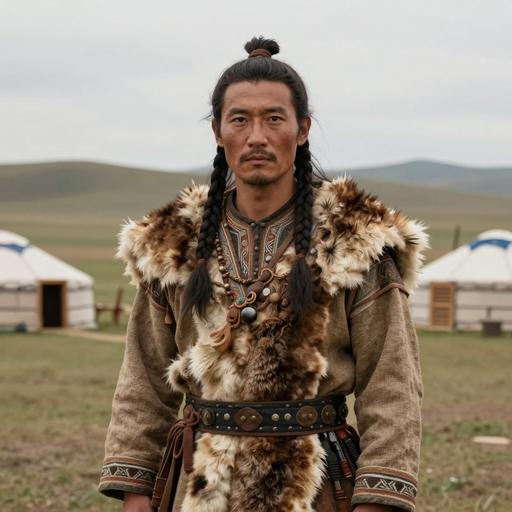
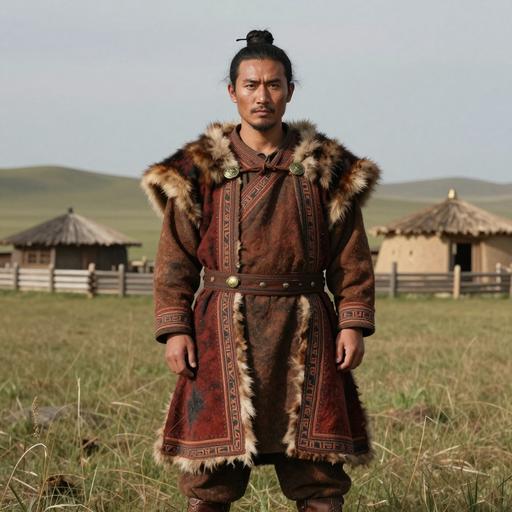
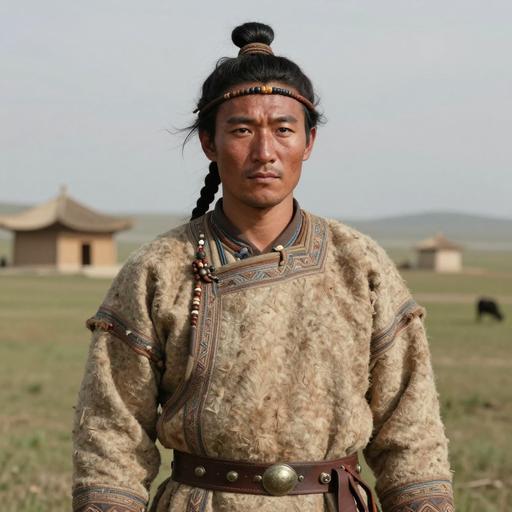
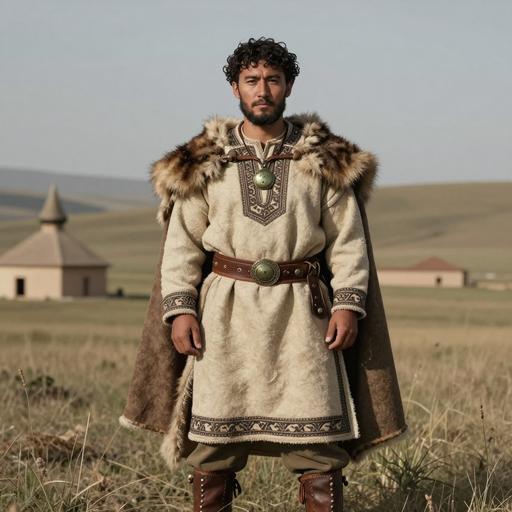
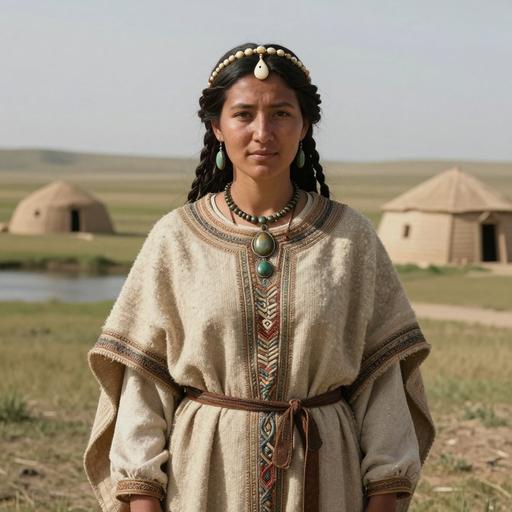
Les portraits sont des illustrations générées par IA. Les libellés d'échantillon et identifiants d'accès désignent les enregistrements de référence.

Portrait Échantillon Pays Époque Date Culture mtDNA Correspondance
Portrait illustratif généré par IA de Nomadic Steppe Cultures individual, Uguumur-Uul (Selenge Province, Sant District), Mongolia (41 BCE-106 CE)
Identifiant d'échantillon : UGU004
Mongolia Medieval Xiongnu 41 BCE - 106 CE Xiongnu C4a1a4a Direct
Portrait illustratif généré par IA de Nomadic Cultures of Northern China and Mongolia individual, Inner Mongolia. Hulunbuir. Mogushan Xianbei site, China (50-250 CE)
Identifiant d'échantillon : MGS-M7R
China Iron Age Xianbei Culture, Amur River Region, China 50 CE - 250 CE Xianbei Culture C4a1a4a Direct
Portrait illustratif généré par IA de China Xianbei individual, Inner Mongolia. Hulunbuir. Mogushan Xianbei site, China (50-250 CE)
Identifiant d'échantillon : MGS-M7R
China The Xianbei People 50 CE - 250 CE C4a1a4a Direct
Portrait illustratif généré par IA de Khovsgol Xiongnu Period-2 individual, Khuvsgul. Salkhityn Am, Mongolia (200-1 BCE)
Identifiant d'échantillon : SKT012
Mongolia Xiongnu to Late Medieval Khuvsgul, Mongolia 200-1 BCE Khuvsgul Transition C4a1a4a Direct
Portrait illustratif généré par IA de Transtisza Early Avar-o High East Asia individual, Transtisza region. Szarvas -Kovács-halom site 8/1, Hungary (600-700 CE)
Identifiant d'échantillon : A1807
Hungary Early Avar Period in Transtisza, Hungary 600-700 CE Avar Culture C4a1a4a Direct
Portrait illustratif généré par IA de Late Avar-o Low East Asia individual, Rákóczifalva-Bagi-földek (Jász-Nagykun-Szolnok Coiunty, Szolnok), Hungary (650-800 CE)
Identifiant d'échantillon : RKC035
Hungary Hungary LateAvar 650-800 CE Avar Culture C4a1a4a Direct
Portrait illustratif généré par IA de Late Avar-o Low East Asia individual, Rákóczifalva-Bagi-földek (Jász-Nagykun-Szolnok Coiunty, Szolnok), Hungary (689-826 CE)
Identifiant d'échantillon : RKC032
Hungary Hungary LateAvar 689-826 calCE Avar Culture C4a1a4a Direct
Portrait illustratif généré par IA de EIA Turkic possible individual, East Kazakhstan Region. Katonkaragai District. Mayemer Village. left bank of Narym River. Mayemer II. mound 1, Kazakhstan (700-400 BCE)
Identifiant d'échantillon : MMR001
Kazakhstan Early Iron Age Possible Turkic, Kazakhstan 700-400 BCE Early Turkic C4a1a4a Direct
Portrait illustratif généré par IA de Xinjiang Tangbalesayi Historical Nomad individual, Xinjiang. Yili Region. Nileke County. Tangbalesayi, China (1,050-950 BCE)
Identifiant d'échantillon : C629
China Historical Period Tangbalesayi, Xinjiang, China 950-1050 BCE Tangbalesayi Culture C4a1a4a Direct
Portrait illustratif généré par IA de Silk Road Civilizations individual, Xinjiang. Yili Region. Nileke County. Tangbalesayi, China (991-1,031 CE)
Identifiant d'échantillon : C789
China Historical Period Tangbalesayi, Xinjiang, China 991 CE - 1031 CE Tangbalesayi Culture C4a1a4a Direct
LIGNÉE MATERNELLE · ADN ANTIQUE

Carte des preuves de lignées antiques

Suivez les clades parents jusqu'à cette branche et explorez où des porteurs antiques ont été identifiés.

Chargement des observations antiques…

Les marqueurs indiquent des lieux de découvertes archéologiques. Un trait pointillé représente une transition géographique proposée et incertaine entre branches consécutives, appuyée sur plusieurs observations datées ; ce n'est pas un itinéraire exact, un lieu de naissance ni une preuve de descendance directe. Des échantillons de clades parents peuvent appartenir à d'autres branches descendantes. Des lacunes subsistent lorsque les preuves sont insuffisantes. Les dates d'échantillon diffèrent des dates de formation des haplogroupes.

Profil de référence

Carte de répartition des porteurs

Répartition géographique de 14 échantillons d'ADN ancien (porteurs directs et de sous-clade de C4A1A4A)

Porteur direct
Filtre de période
Toutes les périodes
Affichage de tous les échantillons
Profil de référence

Répartition temporelle

Répartition des porteurs selon les périodes archéologiques

Profil de référence

Répartition géographique

Effectifs par pays d'échantillon consigné. Ils reflètent la sélection de référence disponible, pas des fréquences de population.

Profil de référence

Répartition pays × époque

Comparez les effectifs d'échantillons consignés selon les pays et les périodes archéologiques. Sélectionnez une cellule renseignée pour examiner un échantillon.

Données

Données et provenance

Informations sur les sources et qualité des données

Dernière mise à jour 2026-02-16
Score de confiance 50/100
Couverture Low

Source des données

La classification, les dates estimées et le contexte géographique reflètent les données de référence consignées et peuvent évoluer lorsque les éléments sont révisés. La couverture d'échantillons est inégale ; les lieux consignés et les associations archéologiques n'établissent pas une origine personnelle ni une identité culturelle.

Un haplogroupe suit une seule lignée maternelle ou paternelle. La branche que l’on peut prédire dépend des marqueurs présents dans le fichier ADN. Nos méthodes d’analyse