Aller au contenu principal
mtDNA · lignée Maternelle

H5C

mtDNA Haplogroup H5C

Profil de référence pour une branche de lignée. Des haplogroupes partagés n'établissent pas de lien familial ni d'identité culturelle.

Profil de référence

Contexte de la branche

Contexte historique de la branche de lignée mtDNA H5C

Origins and Evolution

Haplogroup H5C is a downstream lineage of H5, itself a descendant of the broad European‑centered haplogroup H. Based on phylogenetic position within H5 and comparisons to age estimates for H5 and its subclades, H5C most likely arose in the early Holocene (roughly ~8 kya) in or near the Near East / West Asia and expanded into Europe with Neolithic farmer dispersals and subsequent local demographic processes. The lineage shows the pattern typical of many H subclades: an origin associated with post‑glacial and early agricultural movements from refugial or Near Eastern source areas, followed by regionally variable frequencies produced by founder effects and drift.

Genetic dating and molecular diversity in H5 and its subclades support an early Holocene origin for many daughter clades; H5C's coalescent time is younger than basal H5 (often modeled ~12 kya) but older than many very recent, geographically restricted subclades, consistent with a spread during the Neolithic and later archaeological periods.

Subclades

H5C itself may contain internal variation (for example, named sub‑lineages such as H5C1 in some phylogenies), but it is generally a less populous branch compared with the more widely expanded H5a. Where high‑resolution sequencing has been applied, H5C can be subdivided on the basis of coding‑region and control‑region mutations; however, many population datasets report H5C at modest frequencies without deep internal resolution. When more complete mitogenomes are available, those allow clearer resolution of any micro‑founder events (e.g., island or village‑level expansions).

Geographical Distribution

H5C is predominantly recorded in Mediterranean and adjacent European populations with lower frequencies farther east and in the Caucasus. Modern survey and ancient DNA contexts show occurrences in Southern Europe (Italy, Greece), parts of Western Europe (Iberia, southern France), the Balkans and eastern Europe at lower levels, and in Near Eastern / Anatolian and Caucasus samples at modest frequencies. H5C appears at low levels in North Africa and on Mediterranean islands (Sicily, Sardinia, Corsica) where founder events and island drift can increase local frequency.

The lineage has been observed in at least 15 ancient DNA samples in the referenced database, indicating its presence in archaeological contexts spanning Neolithic to later prehistoric periods. This ancient DNA evidence supports the interpretation of H5C as a lineage that accompanied farming communities into Europe and persisted through subsequent cultural transformations.

Historical and Cultural Significance

Because H5C likely spread with early farming populations and persisted through the Bronze Age and later periods, it serves as a marker for maternal continuity in several Mediterranean and southern European regions. In some localized populations H5C shows signs of founder effects, where a small number of female ancestors carrying H5C contributed disproportionately to modern maternal gene pools (for example on islands or in isolated inland communities).

H5C is not typically associated with a single archaeological culture exclusively; rather, it appears across multiple cultural horizons that reflect demographic continuity and admixture: Early Neolithic farmer assemblages, later Copper/Bronze Age contexts, and in some regions within the distribution of Bell Beaker and other pan‑European cultural phenomena. Its presence in both ancient and modern samples makes it useful for reconstructing maternal lineage continuity and migration trajectories in the Mediterranean and adjacent regions.

Conclusion

H5C is a regional daughter lineage of H5 with an early Holocene origin in the Near East / West Asia and a distribution focused on southern and western Europe, the Near East, and adjacent regions. It illustrates the pattern of Neolithic dispersal and subsequent local differentiation typical of many H subclades: moderate overall frequency, localized peaks due to founder effects, and presence in ancient DNA that links prehistoric demographic events to modern maternal lineages. Continued mitogenome sequencing and broader ancient DNA sampling will refine its internal structure and improve the resolution of its demographic history.

Points clés

  • Origins and Evolution
  • Subclades
  • Geographical Distribution
  • Historical and Cultural Significance
  • Conclusion
Profil de référence

Arbre et relations

Contexte phylogénétique et sous-clades

Voie évolutive

Suivez les branches parentes consignées jusqu'à H5C. Les dates sont des estimations et peuvent évoluer lorsque les données de référence sont révisées.

Étapes Haplogroupe Âge estimé Époque archéologique Temps écoulé Descendants immédiats Descendants modernes testés Liens anciens
1 H5C Actuel ~8,000 years ago Neolithic 8,000 ans 3 22 23
2 H5 ~12,000 years ago Mesolithic 12,500 ans 14 473 23
3 H5'36 - - - 2 482 0
4 H ~25,000 years ago Paleolithic 25,000 ans 78 9,404 991
5 HV ~30,000 years ago Paleolithic 30,000 ans 14 11,092 228
6 R0 ~15,000 years ago Mesolithic 15,000 ans 2 11,230 4
7 R ~55,000 years ago Paleolithic 55,000 ans 17 22,830 57
8 NA - - - 1 22,830 0
9 N ~60,000 years ago Paleolithic 60,000 ans 16 26,150 13
10 L3 ~70,000 years ago Paleolithic 70,000 ans 7 30,162 6
11 L3'4 - - - 2 30,212 0
12 L3'4'6 - - - 2 30,216 0
13 L2'3'4'6 - - - 2 31,333 0
14 L2'3'4'5'6'7 - - - 2 31,349 0
15 L1'2'3'4'5'6'7 - - - 2 31,852 0
16 L ~160,000 years ago Paleolithic 160,000 ans 2 32,236 5

Branches sœurs (13)

Autres branches issues du même haplogroupe parent

Profil de référence

Dans le monde

Distribution géographique et présence moderne

Origine consignée

Near East / West Asia

Distribution moderne

The populations where MTDNA haplogroup H5C is found include:

  1. Southern European populations (Italy, Greece)
  2. Western European populations (Iberia, southern France)
  3. Eastern European and Balkan populations (Balkans, Poland, Ukraine at lower to moderate levels)
  4. Near Eastern and Anatolian populations (Turkey, Levant)
  5. Caucasus populations (Armenia, Georgia, Azerbaijan)
  6. Jewish communities (notably some lineages within Mediterranean/Ashkenazi contexts at low frequency)
  7. North African populations (Maghreb, at low to moderate frequencies)
  8. Mediterranean island populations (Sicily, Sardinia, Corsica with local founder signals)
Contexte historique

Une branche dans le temps

Formation estimée sur une chronologie historique large. Les repères de période servent de contexte et n'impliquent pas de lien avec des cultures particulières.

  1. Il y a ~10k ans

    Révolution néolithique

    Début de l'agriculture et émergence de communautés sédentaires

  2. Il y a ~8k ans

    Haplogroupe H5C

    Formation estimée de cette branche mtDNA ; les dates et les lieux sont des estimations de référence.

    Cette branche
  3. Il y a ~5k ans

    Âge du bronze

    Travail des métaux, écriture et premières civilisations

  4. Il y a ~3k ans

    Âge du fer

    Outils en fer, réseaux d'échanges élargis

  5. Il y a ~2.5k ans

    Antiquité classique

    Floraison des civilisations grecque et romaine

  6. Aujourd'hui

    Aujourd'hui

    Époque moderne

Profil de référence

Contexte archéologique

Associations archéologiques consignées pour la branche mtDNA H5C

Associations consignées

Ces libellés décrivent des contextes archéologiques consignés pour des échantillons de référence liés à H5C. Une association n'établit pas que tous les porteurs appartenaient à une culture ni qu'ils ont suivi une route migratoire précise.

Anglo-Saxon British Chalcolithic Corded Ware Daunian Culture La Tène Culture Sampula Viking Viking Denmark Welsh Iron Age
Les attributions culturelles reposent sur le contexte archéologique des échantillons d'ADN ancien et peuvent refléter des associations régionales à certaines périodes.
Profil de référence

Catalogue d'échantillons

19 porteurs directs et 4 porteurs de sous-clade de l'haplogroupe H5C

10 affiché(s) · 23 échantillons correspondants

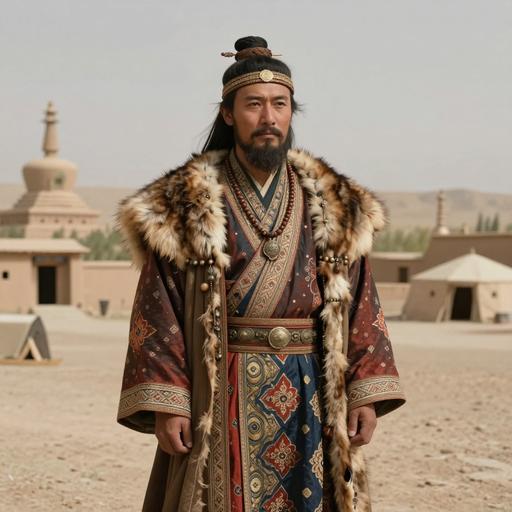
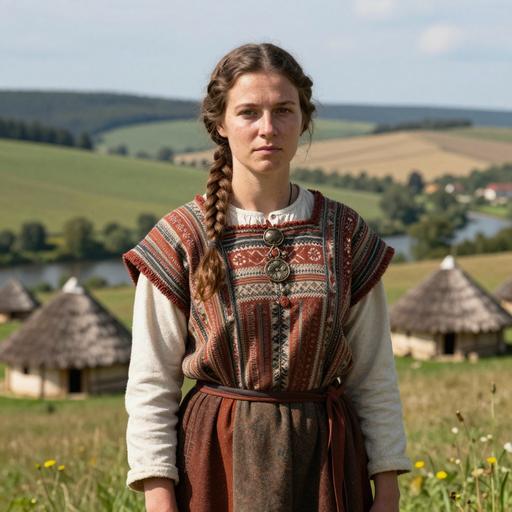
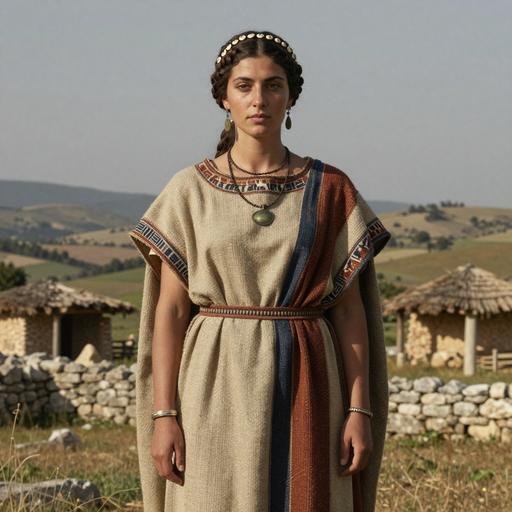
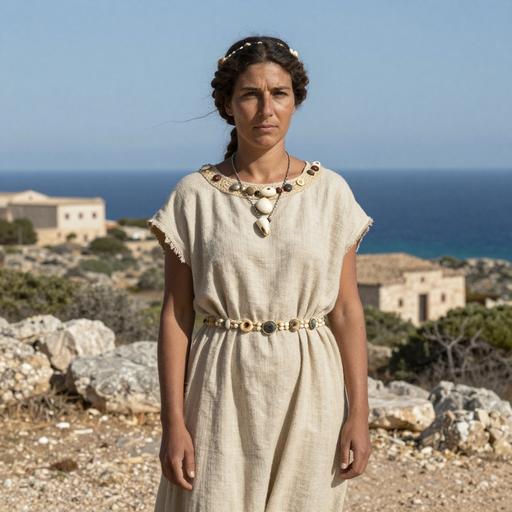
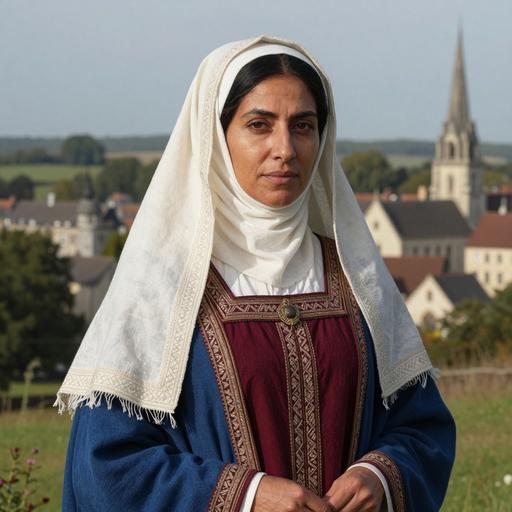
Les portraits sont des illustrations générées par IA. Les libellés d'échantillon et identifiants d'accès désignent les enregistrements de référence.

Portrait Échantillon Pays Époque Date Culture mtDNA Correspondance
Portrait illustratif généré par IA de Silk Road Civilizations individual, Xinjiang. Hetian Region. Luopu County. Shanpula, China (84-239 CE)
Identifiant d'échantillon : C3625
China Historical Sampula, China 84 CE - 239 CE Sampula H5c Direct
Portrait illustratif généré par IA de La Tène individual, NW Bohemia. Teplice. Radosevice (Cemetery I), Czech Republic (300-250 BCE)
Identifiant d'échantillon : I17139
Czech Republic Iron Age La Tène Culture, Czech Republic 300-250 BCE La Tène Culture H5c Direct
Portrait illustratif généré par IA de La Tène individual, NW Bohemia. Teplice. Radosevice (Cemetery I), Czech Republic (300-250 BCE)
Identifiant d'échantillon : I17143
Czech Republic Iron Age La Tène Culture, Czech Republic 300-250 BCE La Tène Culture H5c Direct
Portrait illustratif généré par IA de La Tène individual, NW Bohemia. Teplice. Radosevice (Cemetery I), Czech Republic (370-197 BCE)
Identifiant d'échantillon : I14985
Czech Republic Iron Age La Tène Culture, Czech Republic 370-197 calBCE (2210±20 BP, PSUAMS-10093) La Tène Culture H5c Direct
Portrait illustratif généré par IA de England Early Medieval individual, England. Dorset. Worth Matravers, United Kingdom (500-700 CE)
Identifiant d'échantillon : I11581
United Kingdom England EarlyMedieval 500-700 CE Anglo-Saxon H5c Direct
Portrait illustratif généré par IA de Norse individual, Saaremaa. Salme, Estonia (700-800 CE)
Identifiant d'échantillon : VK488
Estonia Early Viking Age Estonia 700 CE - 800 CE Viking H5c Direct
Portrait illustratif généré par IA de Viking individual, Saaremaa. Salme, Estonia (700-800 CE)
Identifiant d'échantillon : VK488
Estonia The Viking Age 700 CE - 800 CE H5c Direct
Portrait illustratif généré par IA de Apulia IA b Daunian individual, Apulia. Ordona. Herdonia, Italy (750-406 BCE)
Identifiant d'échantillon : ORD009
Italy Daunian Culture Ordona, Italy 750-406 calBCE (2433±27 BP, UBA-45175) Daunian Culture H5c Direct
Portrait illustratif généré par IA de Apulia IA b Daunian individual, Apulia. Ordona. Herdonia, Italy (781-544 BCE)
Identifiant d'échantillon : ORD001
Italy Daunian Culture Salapia, Italy 781-544 calBCE (2516±25 BP, UBA-45191) Daunian Culture H5c Direct
Portrait illustratif généré par IA de Wales IA individual, Wales. West Glamorgan. Culverhole Cave, United Kingdom (793-567 BCE)
Identifiant d'échantillon : I5364
United Kingdom Wales IA 793-567 calBCE (2540±20 BP, PSUAMS-8587) Welsh Iron Age H5c Direct
LIGNÉE MATERNELLE · ADN ANTIQUE

Carte des preuves de lignées antiques

Suivez les clades parents jusqu'à cette branche et explorez où des porteurs antiques ont été identifiés.

Chargement des observations antiques…

Les marqueurs indiquent des lieux de découvertes archéologiques. Un trait pointillé représente une transition géographique proposée et incertaine entre branches consécutives, appuyée sur plusieurs observations datées ; ce n'est pas un itinéraire exact, un lieu de naissance ni une preuve de descendance directe. Des échantillons de clades parents peuvent appartenir à d'autres branches descendantes. Des lacunes subsistent lorsque les preuves sont insuffisantes. Les dates d'échantillon diffèrent des dates de formation des haplogroupes.

Profil de référence

Carte de répartition des porteurs

Répartition géographique de 23 échantillons d'ADN ancien (porteurs directs et de sous-clade de H5C)

Porteur direct Porteur de sous-clade
Filtre de période
Toutes les périodes
Affichage de tous les échantillons
Profil de référence

Répartition temporelle

Répartition des porteurs selon les périodes archéologiques

Profil de référence

Répartition géographique

Effectifs par pays d'échantillon consigné. Ils reflètent la sélection de référence disponible, pas des fréquences de population.

Profil de référence

Répartition pays × époque

Comparez les effectifs d'échantillons consignés selon les pays et les périodes archéologiques. Sélectionnez une cellule renseignée pour examiner un échantillon.

Données

Données et provenance

Informations sur les sources et qualité des données

Dernière mise à jour 2026-02-16
Score de confiance 50/100
Couverture Low

Source des données

La classification, les dates estimées et le contexte géographique reflètent les données de référence consignées et peuvent évoluer lorsque les éléments sont révisés. La couverture d'échantillons est inégale ; les lieux consignés et les associations archéologiques n'établissent pas une origine personnelle ni une identité culturelle.

Un haplogroupe suit une seule lignée maternelle ou paternelle. La branche que l’on peut prédire dépend des marqueurs présents dans le fichier ADN. Nos méthodes d’analyse