Saltar para o conteúdo principal
mtDNA · Materno linaje

U6A

mtDNA Haplogroup U6A

Um perfil de referência de um ramo de linhagem. Compartilhar haplogrupos não demonstra uma relação familiar ou uma identidade cultural.

Perfil de Referência

Contexto do ramo

Contexto histórico de la rama de linaje mtDNA U6A

Origins and Evolution

mtDNA U6a is a principal subclade of haplogroup U6, itself part of the wider U haplogroup family that traces back to Eurasian maternal lineages. U6 is generally interpreted as a Eurasian-derived lineage that entered North Africa during the Upper Paleolithic or the Late Pleistocene; U6a represents an early diversification of U6 that most population-genetic studies place in Northwest Africa or the adjacent Near East roughly ~20–30 kya. The clade's emergence likely followed an initial back-migration event from western Eurasia into North Africa, after which U6a diversified locally and became relatively common among populations that persisted in the Maghreb.

Subclades

U6a itself is subdivided into multiple downstream lineages (often labelled U6a1, U6a2, etc., in mtDNA phylogenies). These subclades show varying geographic affinities: some are concentrated in the Maghreb and Canary Islands, others reach into southern Iberia and pockets of West Africa or the Near East. The internal branching of U6a is consistent with a combination of deep Paleolithic diversification and later localized expansions and founder events (for example, colonization of the Canary Islands by Amazigh-derived groups where distinct U6a sublineages reach high local frequencies).

Geographical Distribution

U6a is most frequent and diverse in Northwest Africa (Morocco, Algeria, Tunisia, Mauritania) and among Amazigh (Berber) populations, reflecting long-term regional continuity. Secondary concentrations appear in the Canary Islands (where indigenous Guanche samples show high U6a representation), the Iberian Peninsula (particularly southwestern Spain and Portugal) and at low-to-moderate frequencies in parts of the Sahel and the wider Mediterranean. Low-frequency occurrences in the Near East and southern Europe are attributed to prehistoric connections across the Mediterranean and to historical movements (Phoenician, Roman, Islamic-era exchanges, and modern migrations).

Historical and Cultural Significance

Because U6a dates to the Late Pleistocene and shows enrichment in Maghrebi populations, it is commonly invoked in studies addressing the prehistoric peopling of North Africa, the postglacial recolonization dynamics of the western Mediterranean, and the genetic imprint of ancient Eurasian "backflow" events. Archaeological associations often point to connections with Iberomaurusian and later Capsian/Epipaleolithic contexts in North Africa. In historic times, U6a lineages have been carried into Iberia and the Canary Islands by prehistoric contacts and later maritime interactions; they are also present among some North African Jewish communities, reflecting the region's complex demographic history.

Research Context and Inference

Phylogenetic analyses and ancient DNA studies have supported a model where U6 (and by extension U6a) represents a Paleolithic dispersal into North Africa from a western Eurasian source, with local diversification in the Maghreb and episodic gene flow across the Mediterranean. The time depth of U6a (estimated here at ~25 kya) is broadly compatible with coalescence estimates published for U6 subclades, though exact dates vary between studies depending on calibration methods. Modern distribution patterns reflect both deep continuity and later demographic events (Neolithic, Bronze Age, historical era movements).

Conclusion

U6a is a characteristic maternal lineage of Northwest Africa that preserves signals of Paleolithic Eurasian backflow and subsequent local diversification. Its presence in Iberia and the Canary Islands documents longstanding trans-Mediterranean connections, while its subclade structure provides useful markers for reconstructing the region's prehistoric and historic maternal genealogies. Continued sampling and ancient DNA data from North Africa and adjoining regions will refine the precise timing and migratory routes that produced the present-day U6a phylogeography.

Pontos- Chave

  • Origins and Evolution
  • Subclades
  • Geographical Distribution
  • Historical and Cultural Significance
  • Research Context and Inference
Perfil de Referência

Árvore e relações

Contexto filogenético e subclasse

Trajectória evolutiva

Sigue las ramas superiores registradas hasta U6A. Las fechas son estimaciones y pueden cambiar al revisarse los datos de referencia.

Passos Haplogrupo Antiguidade estimada Época arqueológica Tempo decorrido Subclasses imediatas Portadores modernos analisados Referências antigas
1 U6A Actual ~25,000 years ago Paleolithic 25,000 years 5 87 5
2 U6A'B'D - - - 2 127 0
3 U6 ~35,000 years ago Paleolithic 35,000 years 3 146 10
4 U ~46,000 years ago Paleolithic 46,000 years 5 5,557 110
5 R ~55,000 years ago Paleolithic 55,000 years 17 22,830 57
6 NA - - - 1 22,830 0
7 N ~60,000 years ago Paleolithic 60,000 years 16 26,150 13
8 L3 ~70,000 years ago Paleolithic 70,000 years 7 30,162 6
9 L3'4 - - - 2 30,212 0
10 L3'4'6 - - - 2 30,216 0
11 L2'3'4'6 - - - 2 31,333 0
12 L2'3'4'5'6'7 - - - 2 31,349 0
13 L1'2'3'4'5'6'7 - - - 2 31,852 0
14 L ~160,000 years ago Paleolithic 160,000 years 2 32,236 5

Ramas hermanas (1)

Outros ramos do mesmo haplogrupo superior

Perfil de Referência

No mundo

Distribuição geográfica e presença moderna

Origem registada

Northwest Africa / Near East

Distribuição moderna

The populations where mtDNA haplogroup U6A is found include:

  1. Amazigh (Berber) groups of Morocco, Algeria, Tunisia
  2. Indigenous populations of the Canary Islands (Guanche) and their modern descendants
  3. Southwestern Iberian populations (Andalusia, Portugal) and some Mediterranean Iberia
  4. North African Jewish communities (Sephardic/North African Jews)
  5. Sahelian and West African groups at low frequencies (e.g., Mauritania, Mali)
  6. Low-frequency occurrences in the Near East and parts of southern Europe due to prehistoric and historic gene flow
Contexto Histórico

Uma ramificação através do tempo

Formação estimada em uma cronologia histórica ampla. Os marcadores temporais contribuem contexto e não implicam relação com culturas concretas.

  1. ~25k años de antigüedad

    Haplogrupo U6A

    Formação estimada deste ramo mtDNA; as datas e localizações são estimativas de referência.

    Este ramo
  2. ~20k años de antigüedad

    Último máximo glacial

    Máxima extensão da última glaciação e isolamento de populações

  3. ~10k años de antigüedad

    Revolução neolítica

    Início da agricultura e formação de comunidades sedentárias

  4. ~5k años de antigüedad

    Idade do Bronze

    Metalurgia, escrita e primeiras civilizações

  5. ~3k años de antigüedad

    Idade do Ferro

    Ferramentas de ferro e ampliação de redes comerciais

  6. ~2.5k años de antigüedad

    Antiguidades clássicas

    Desenvolvimento das civilizações grega e romana

  7. Actualidad

    Actualidad

    Idade moderna

Perfil de Referência

Contexto arqueológico

Asociaciones arqueológicas registradas para la rama mtDNA U6A

Associações registradas

Esses rótulos descrevem os contextos arqueológicos registrados para as amostras de referência vinculadas a U6A. Uma associação não demonstra que todos os portadores pertenceram a uma cultura ou seguiram uma rota migratória específica.

1984 Ifri n'Amr Kaf Taht el-Ghar Medieval Norse Moroccan Transitional Nazari Culture Peștera Muierii Ptolemaic Roman Empire Tunisia_N
As atribuições culturais baseiam-se no contexto arqueológico das amostras de DNA antigo e podem representar associações regionais de períodos concretos.
Perfil de Referência

Catálogo de amostras

5 portadores de subclados del haplogrupo U6A (sin portadores directos en la selección de referencia actual)

5 mostradas 5 amostras correspondentes

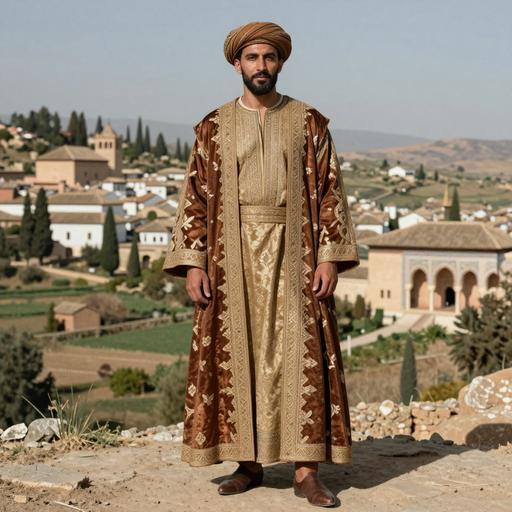
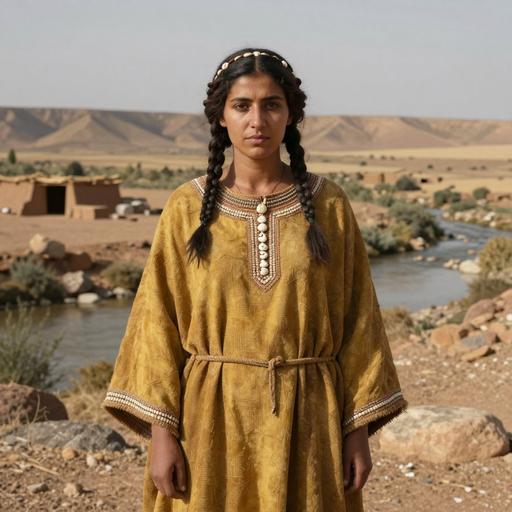
Os retratos são ilustrações geradas com IA. As etiquetas de amostra e os identificadores de acesso identificam os registros de referência.

Retrato Mostrar País Época Data Cultura mtDNA Corresponder
Retrato ilustrativo de Lazio Imperial Roman Roman-1 individual, Viale Rossini (Necropoli Salaria), Italy (27-206 CE) gerado com IA
Identificador de amostra: R80
Italy Imperial Rome 27-206 calCE (1925±25 BP, UCIAMS-213628) Roman Empire U6a5 Subclado
Retrato ilustrativo de Norse individual, Nor Mid. Trondheim, Norway (1,100-1,300 CE) gerado com IA
Identificador de amostra: VK116
Norway Norway Medieval 1100 CE - 1300 CE Medieval Norse U6a3 Subclado
Retrato ilustrativo de Nordic Ma individual, Nor Mid. Trondheim, Norway (1,100-1,300 CE) gerado com IA
Identificador de amostra: VK116
Norway Medieval Nordic Region 1100 CE - 1300 CE 1984 U6a3 Subclado
Retrato ilustrativo de Islamic Civilization individual, Andalusia. Granada. Mondújar (Lecrín). Nécropolis de Torna Alta, Spain (1,500-1,600 CE) gerado com IA
Identificador de amostra: I3807
Spain Spain NazariPeriod Muslim 1500 CE - 1600 CE Nazari Culture U6a2 Subclado
Retrato ilustrativo de Early Moroccan individual, Ifri n’Amr o’Moussa (Oued Beth Basin, Zemmour Plateau, near Khemisset), Morocco (4,937-4,786 BCE) gerado com IA
Identificador de amostra: iam004
Morocco Morocco Ifri n’Amr o’Moussa Early Neolithic 4937 BCE - 4786 BCE Ifri n'Amr U6a7 Subclado
MATERNAL LINHAGEM · DNA ANTIGO

Mapa de testes de linhagems antigos

Siga os clados superiores até este ramo e explora onde se encontraram portadores antigos.

A carregar as observações antigas...

Os marcadores são locais de achados arqueológicos. Uma linha de descontínua representa uma transição geográfica proposta e incerta entre ramos consecutivos, apoiada em várias observações fechadas; não é uma rota de viagem exata, um local de nascimento ou um teste de descendência direta. As amostras do clado parental podem pertencer a outros ramos descendentes. As datas das amostras são distintas das datas de formação dos haplogrupos são mantidas.

Perfil de Referência

Mapa de distribuição de portadores

Distribuição geográfica das amostras de DNA antigo (5), portadores directos ou de subclasses de U6A

Portador de um subclasse
Filtro de Período Temporária
Todos os períodos
Mostrar todas as amostras
Perfil de Referência

Distribuição temporária

Distribuição de portadores por períodos arqueológicos

Perfil de Referência

Distribuição geográfica

Recuentos por país registrado das amostras. Reflejam a seleção de referência disponível, não frequências de população.

Perfil de Referência

Distribuição por país e época

Compare as contagens de amostras registadas por países e períodos arqueológicos. Selecione uma célula com dados para examinar uma amostra.

Dados

Dados e proveniência

Informações sobre fontes e qualidade dos dados

Última actualização 2026-06-14
Pontuação de confiança 50/100
Cobertura Low

Fonte de Dados

A classificação, as datas estimadas e o contexto geográfico refletem os dados de referência registrados e podem mudar ao revisar os testes. A cobertura de amostras é desigual; os locais registrados e as associações arqueológicas não estabelecem a origem pessoal nem a identidade cultural.