mtDNA · Maternal lineage

U6A

mtDNA Haplogroup U6A

A reference profile for one lineage branch. Shared haplogroups do not establish a family relationship or cultural identity.

Reference profile

Branch background

Historical context for mtDNA lineage branch U6A

Origins and Evolution

mtDNA U6a is a principal subclade of haplogroup U6, itself part of the wider U haplogroup family that traces back to Eurasian maternal lineages. U6 is generally interpreted as a Eurasian-derived lineage that entered North Africa during the Upper Paleolithic or the Late Pleistocene; U6a represents an early diversification of U6 that most population-genetic studies place in Northwest Africa or the adjacent Near East roughly ~20–30 kya. The clade's emergence likely followed an initial back-migration event from western Eurasia into North Africa, after which U6a diversified locally and became relatively common among populations that persisted in the Maghreb.

Subclades

U6a itself is subdivided into multiple downstream lineages (often labelled U6a1, U6a2, etc., in mtDNA phylogenies). These subclades show varying geographic affinities: some are concentrated in the Maghreb and Canary Islands, others reach into southern Iberia and pockets of West Africa or the Near East. The internal branching of U6a is consistent with a combination of deep Paleolithic diversification and later localized expansions and founder events (for example, colonization of the Canary Islands by Amazigh-derived groups where distinct U6a sublineages reach high local frequencies).

Geographical Distribution

U6a is most frequent and diverse in Northwest Africa (Morocco, Algeria, Tunisia, Mauritania) and among Amazigh (Berber) populations, reflecting long-term regional continuity. Secondary concentrations appear in the Canary Islands (where indigenous Guanche samples show high U6a representation), the Iberian Peninsula (particularly southwestern Spain and Portugal) and at low-to-moderate frequencies in parts of the Sahel and the wider Mediterranean. Low-frequency occurrences in the Near East and southern Europe are attributed to prehistoric connections across the Mediterranean and to historical movements (Phoenician, Roman, Islamic-era exchanges, and modern migrations).

Historical and Cultural Significance

Because U6a dates to the Late Pleistocene and shows enrichment in Maghrebi populations, it is commonly invoked in studies addressing the prehistoric peopling of North Africa, the postglacial recolonization dynamics of the western Mediterranean, and the genetic imprint of ancient Eurasian "backflow" events. Archaeological associations often point to connections with Iberomaurusian and later Capsian/Epipaleolithic contexts in North Africa. In historic times, U6a lineages have been carried into Iberia and the Canary Islands by prehistoric contacts and later maritime interactions; they are also present among some North African Jewish communities, reflecting the region's complex demographic history.

Research Context and Inference

Phylogenetic analyses and ancient DNA studies have supported a model where U6 (and by extension U6a) represents a Paleolithic dispersal into North Africa from a western Eurasian source, with local diversification in the Maghreb and episodic gene flow across the Mediterranean. The time depth of U6a (estimated here at ~25 kya) is broadly compatible with coalescence estimates published for U6 subclades, though exact dates vary between studies depending on calibration methods. Modern distribution patterns reflect both deep continuity and later demographic events (Neolithic, Bronze Age, historical era movements).

Conclusion

U6a is a characteristic maternal lineage of Northwest Africa that preserves signals of Paleolithic Eurasian backflow and subsequent local diversification. Its presence in Iberia and the Canary Islands documents longstanding trans-Mediterranean connections, while its subclade structure provides useful markers for reconstructing the region's prehistoric and historic maternal genealogies. Continued sampling and ancient DNA data from North Africa and adjoining regions will refine the precise timing and migratory routes that produced the present-day U6a phylogeography.

Key Points

  • Origins and Evolution
  • Subclades
  • Geographical Distribution
  • Historical and Cultural Significance
  • Research Context and Inference
Reference profile

Tree & Relationships

Phylogenetic context and subclades

Evolution Path

Follow the recorded parent branches toward U6A. Dates are estimates and can change as reference data is revised.

Steps Haplogroup Age Estimate Archaeology Era Time Passed Immediate Descendants Tested Modern Descendants Ancient Connections
1 U6A Current ~25,000 years ago Paleolithic 25,000 years 5 87 5
2 U6A'B'D - - - 2 127 0
3 U6 ~35,000 years ago Paleolithic 35,000 years 3 146 10
4 U ~46,000 years ago Paleolithic 46,000 years 5 5,557 110
5 R ~55,000 years ago Paleolithic 55,000 years 17 22,830 57
6 NA - - - 1 22,830 0
7 N ~60,000 years ago Paleolithic 60,000 years 16 26,150 13
8 L3 ~70,000 years ago Paleolithic 70,000 years 7 30,162 6
9 L3'4 - - - 2 30,212 0
10 L3'4'6 - - - 2 30,216 0
11 L2'3'4'6 - - - 2 31,333 0
12 L2'3'4'5'6'7 - - - 2 31,349 0
13 L1'2'3'4'5'6'7 - - - 2 31,852 0
14 L ~160,000 years ago Paleolithic 160,000 years 2 32,236 5

Siblings (1)

Other branches from the same parent haplogroup

Reference profile

Where in the World

Geographic distribution and modern presence

Recorded origin

Northwest Africa / Near East

Modern Distribution

The populations where mtDNA haplogroup U6A is found include:

  1. Amazigh (Berber) groups of Morocco, Algeria, Tunisia
  2. Indigenous populations of the Canary Islands (Guanche) and their modern descendants
  3. Southwestern Iberian populations (Andalusia, Portugal) and some Mediterranean Iberia
  4. North African Jewish communities (Sephardic/North African Jews)
  5. Sahelian and West African groups at low frequencies (e.g., Mauritania, Mali)
  6. Low-frequency occurrences in the Near East and parts of southern Europe due to prehistoric and historic gene flow
Historical context

A branch through time

Estimated formation in a broad historical timeline. Period markers provide context and do not imply a connection with particular cultures.

  1. ~25k years ago

    Haplogroup U6A

    Estimated formation of this mtDNA branch; dates and locations are reference estimates.

    This branch
  2. ~20k years ago

    Last Glacial Maximum

    Peak of the last ice age, populations isolated

  3. ~10k years ago

    Neolithic Revolution

    Agriculture begins, settled communities form

  4. ~5k years ago

    Bronze Age

    Metalworking, writing, and early civilizations

  5. ~3k years ago

    Iron Age

    Iron tools, expanded trade networks

  6. ~2.5k years ago

    Classical Antiquity

    Greek and Roman civilizations flourish

  7. Present

    Present Day

    Modern era

Reference profile

Archaeological context

Recorded archaeological associations for mtDNA branch U6A

Recorded associations

These labels describe archaeological contexts recorded for reference samples linked to U6A. An association does not establish that all carriers belonged to a culture or followed a particular migration route.

1984 Ifri n'Amr Kaf Taht el-Ghar Medieval Norse Moroccan Transitional Nazari Culture Peștera Muierii Ptolemaic Roman Empire Tunisia_N
Culture assignments are based on archaeological context of ancient DNA samples and may represent regional associations during specific time periods.
Reference profile

Sample Catalog

5 subclade carriers of haplogroup U6A (no direct carriers in the current reference selection)

5 shown · 5 matching samples

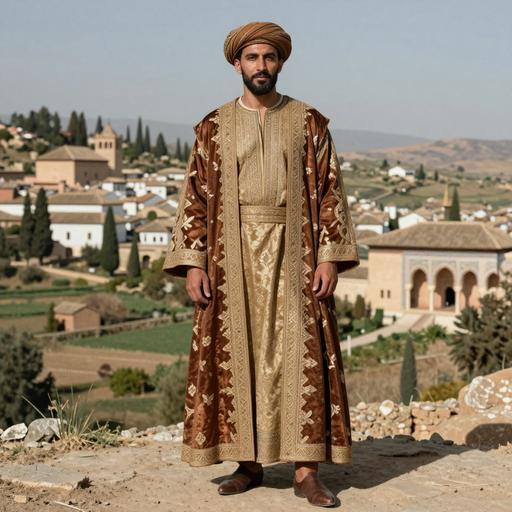
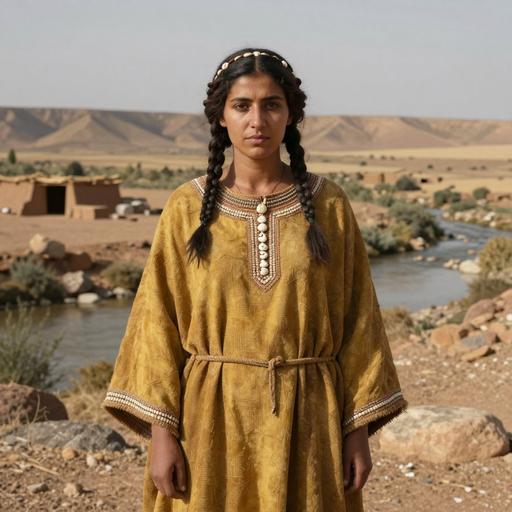
Portraits are AI-generated illustrations. Sample labels and accession IDs identify the reference records.

Portrait Sample Country Era Date Culture mtDNA Match
AI-generated illustrative portrait of Lazio Imperial Roman Roman-1 individual, Viale Rossini (Necropoli Salaria), Italy (27-206 CE)
Sample ID: R80
Italy Imperial Rome 27-206 calCE (1925±25 BP, UCIAMS-213628) Roman Empire U6a5 Subclade
AI-generated illustrative portrait of Norse individual, Nor Mid. Trondheim, Norway (1,100-1,300 CE)
Sample ID: VK116
Norway Norway Medieval 1100 CE - 1300 CE Medieval Norse U6a3 Subclade
AI-generated illustrative portrait of Nordic Ma individual, Nor Mid. Trondheim, Norway (1,100-1,300 CE)
Sample ID: VK116
Norway Medieval Nordic Region 1100 CE - 1300 CE 1984 U6a3 Subclade
AI-generated illustrative portrait of Islamic Civilization individual, Andalusia. Granada. Mondújar (Lecrín). Nécropolis de Torna Alta, Spain (1,500-1,600 CE)
Sample ID: I3807
Spain Spain NazariPeriod Muslim 1500 CE - 1600 CE Nazari Culture U6a2 Subclade
AI-generated illustrative portrait of Early Moroccan individual, Ifri n’Amr o’Moussa (Oued Beth Basin, Zemmour Plateau, near Khemisset), Morocco (4,937-4,786 BCE)
Sample ID: iam004
Morocco Morocco Ifri n’Amr o’Moussa Early Neolithic 4937 BCE - 4786 BCE Ifri n'Amr U6a7 Subclade
MATERNAL LINEAGE · ANCIENT DNA

Ancient lineage evidence map

Follow parent clades toward this branch and explore where ancient carriers were found.

Loading ancient observations…

Markers are archaeological find locations. A dashed connector is an uncertain, proposed geographic transition between consecutive branches supported by multiple dated observations; it is not an exact travel route, birthplace or proof of direct descent. Parent-clade samples may belong to other descendant branches. Gaps remain where evidence is insufficient. Sample dates differ from haplogroup formation dates.

Reference profile

Carrier Distribution Map

Geographic distribution of 5 ancient DNA samples (direct and subclade carriers of U6A)

Subclade carrier
Time Period Filter
All Time Periods
Showing all samples
Reference profile

Temporal Distribution

Distribution of carriers across archaeological periods

Reference profile

Geographic Distribution

Counts by recorded sample country. These reflect the available reference selection, not population frequencies.

Reference profile

Country × Era Distribution

Compare recorded sample counts across countries and archaeological periods. Select a populated cell to inspect a sample.

Data

Data & Provenance

Source information and data quality

Last Updated 2026-06-14
Confidence Score 50/100
Coverage Low

Data Source

Classification, estimated dates and geographic context reflect the recorded reference data and may change as evidence is revised. Sample coverage is uneven; recorded locations and archaeological associations do not establish personal origin or cultural identity.

A haplogroup follows one maternal or paternal line. The branch prediction depends on which markers the DNA file contains. How our analysis works