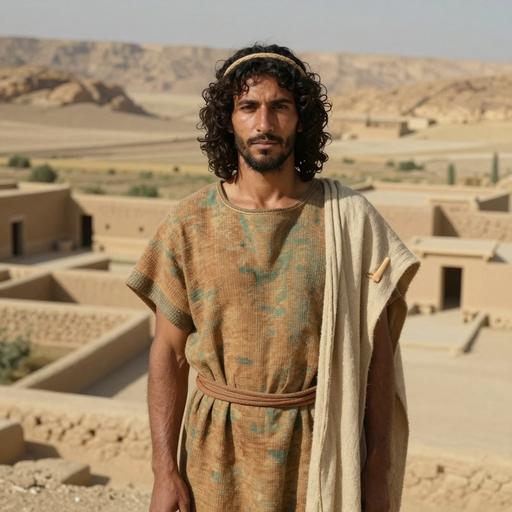
部门背景
mtDNA 谱系分支 R0A1A5 的历史背景
Origins and Evolution
R0A1A5 is a downstream subclade of R0A1A, itself part of the broader R0A branch of macro-haplogroup R. Given the placement of R0A1A in the phylogeny and published age estimates for R0A diversification in the Early Holocene, R0A1A5 most likely formed in the southern Arabian Peninsula during the mid-to-late Holocene. Its origin is consistent with regional demographic processes after the Last Glacial Maximum when population sizes and mobility increased across the southern Red Sea littoral.
The lineage likely emerged from an ancestral R0A1A population that had already undergone expansion across southern Arabia and into the Horn of Africa. Compared with the parental R0A1A clade (estimated ~9 kya), R0A1A5 appears younger and shows limited internal diversity in modern samples, suggesting either a more recent origin or subsequent drift and localized founder effects.
Subclades (if applicable)
At present R0A1A5 is reported as a terminal or near-terminal branch in available sequencing datasets, with few if any well-differentiated downstream subclades documented in public databases. The limited number of confirmed R0A1A5 mitogenomes suggests that the haplogroup has not undergone a major, wide-ranging radiation; instead its diversity is confined to a small number of localized lineages. Future high-resolution mitogenome sequencing in southern Arabia and the Horn of Africa could reveal additional internal structure.
Geographical Distribution
R0A1A5 is observed primarily in populations of the southern Arabian Peninsula and, through gene flow across the Red Sea, in the Horn of Africa. At lower and trace frequencies it has been detected in the southern Levant, parts of North Africa, and around the southern Mediterranean (southern Italy, Sicily, Greece) — consistent with historical and prehistoric maritime connections and episodic east–west movement across the Mediterranean and Red Sea corridors.
The clade is rare in large-sample surveys, and its geographic pattern is patchy: higher relative representation in localized southern Arabian communities, low-frequency presence in Ethiopian and Somali groups, and occasional detections in Levantine and North African samples. One ancient DNA occurrence in curated databases indicates that the lineage has been present in archaeological contexts, supporting its Holocene antiquity in the region.
Historical and Cultural Significance
Because R0A1A5 is a low-frequency, regionally restricted lineage, its primary value lies in illuminating micro-scale demographic events: Holocene postglacial expansions within southern Arabia, Red Sea maritime exchanges, and episodic gene flow into the Horn of Africa. Its presence is compatible with movements associated with Arabian Neolithic expansions, later Bronze–Iron Age South Arabian cultural networks, and continued historical interchange (trade, migration, and pastoralist contacts) across the Red Sea.
R0A1A5 is not tied to any single, widely distributed archaeological culture outside southern Arabia, but its distribution makes it a useful marker for studying south Arabian population continuity, Red Sea connectivity, and the genetic impact of small-scale founder events.
Conclusion
R0A1A5 is a rare, regionally informative mtDNA lineage derived from R0A1A that likely originated in the southern Arabian Peninsula in the mid-to-late Holocene. Its limited diversity and patchy distribution reflect localized demographic histories, Red Sea-mediated contacts with the Horn of Africa, and occasional long-distance dispersal into the Levant, North Africa, and the southern Mediterranean. Targeted mitogenome sequencing in southern Arabia and the Horn of Africa will improve resolution of its internal structure and timing.
关键点
- Origins and Evolution
- Subclades (if applicable)
- Geographical Distribution
- Historical and Cultural Significance
- Conclusion