部门背景
mtDNA 谱系分支 U2E3 的历史背景
Origins and Evolution
mtDNA haplogroup U2E3 sits as a downstream lineage of U2EA within the broader mtDNA U2 clade. The deeper haplogroup U2 is an ancient West Eurasian maternal lineage with substructure found both in Europe and South Asia. Based on its placement under U2EA and comparisons with the time depth of sibling U2 subclades, U2E3 most plausibly arose in West Eurasia during the late Paleolithic to early Holocene (roughly the Mesolithic to early Neolithic, on the order of ~10–15 kya), though this estimate is tentative because U2E3 remains sparsely sampled in published datasets.
The evolutionary significance of U2E3 is mainly phylogenetic: it helps resolve finer branches inside the U2E/U2EA complex and can identify localized maternal line continuity or micro-expansions that broader U2 labels might obscure.
Subclades
As an intermediate clade, U2E3 may include downstream lineages (private mutations and subhaplogroups) that are currently undersampled or not yet fully described in Phylotree and recent literature. At present, the principal utility of the U2E3 label is to mark samples that share diagnostic mutations within U2EA but that do not fall into better-characterized subclades. Continued high-resolution mitogenome sequencing and inclusion of regionally diverse samples are required to define stable named subclades beneath U2E3.
Geographical Distribution
Observed occurrences of U2E3 are rare in the public literature and in population surveys. Where detected, U2E3-like mitotypes tend to appear at low frequency in parts of Europe (particularly eastern and northeastern Europe) and occasionally in adjacent regions of West/Central Asia and South Asia. Because sample sizes are small, the apparent distribution could reflect either a genuinely low-frequency, regionally patchy maternal lineage or simply undersampling of populations where it is more common.
Geographically informative points:
- U2 as a whole shows a split distribution with both European and South Asian branches; U2E3 most likely belongs to the western cluster but may have pockets extending toward the Caucasus or South Asia.
- Ancient DNA studies showing U2-lineage continuity in Mesolithic/Neolithic Europe suggest that U2E-type lineages could represent long-term local maternal continuity in some regions.
Historical and Cultural Significance
There are no strong culture-specific associations securely attributable to U2E3 because of sparse sampling. Reasonable inferences based on related haplogroups and the proposed time depth include:
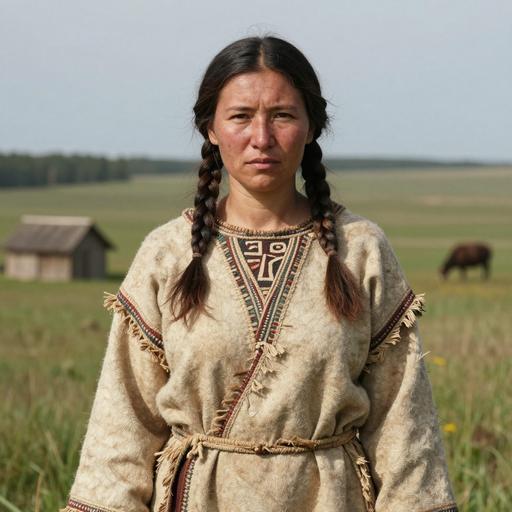
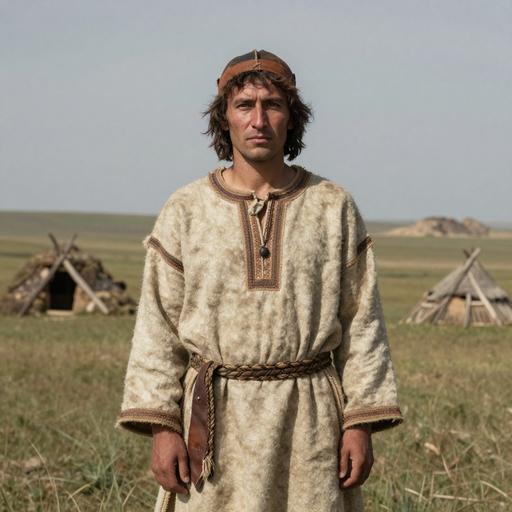
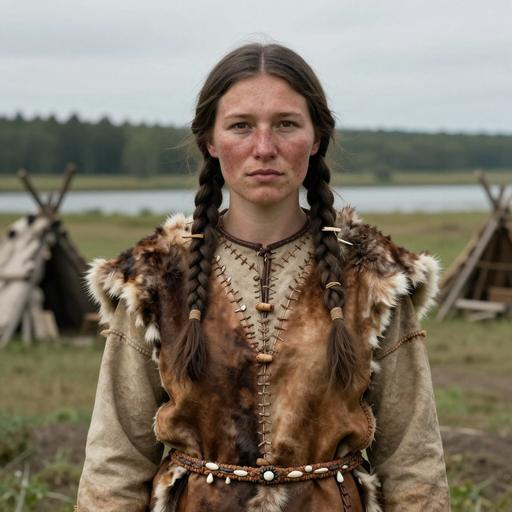
- Potential presence among Mesolithic hunter-gatherer groups in parts of Europe, representing continuity of pre-Neolithic maternal lines in some regions.
- Possible low-frequency survival into Neolithic and later archaeological cultures through admixture with incoming farmer groups or through local persistence.
Until matched ancient samples or larger modern population surveys specifically report U2E3, cultural attributions remain speculative. Targeted ancient DNA screening in Mesolithic and early Neolithic remains from eastern Europe and the Caucasus would be the most informative approach.
Conclusion
U2E3 is best treated as a low-frequency, regionally patchy subclade of the U2 system whose primary current value is phylogenetic: it refines the branching structure within U2EA and highlights the need for more mitogenome data from understudied regions. Estimates placing its origin in the late Paleolithic–early Holocene (around ~10–15 kya) are plausible but should be refined as additional full mitogenomes and ancient DNA samples become available. Researchers and genetic genealogy projects should prioritize full mitogenome sequencing and broader geographic sampling where U2EA/U2E signals are detected to resolve U2E3's internal structure and historical dynamics.
关键点
- Origins and Evolution
- Subclades
- Geographical Distribution
- Historical and Cultural Significance
- Conclusion