Menu
Store
Blog
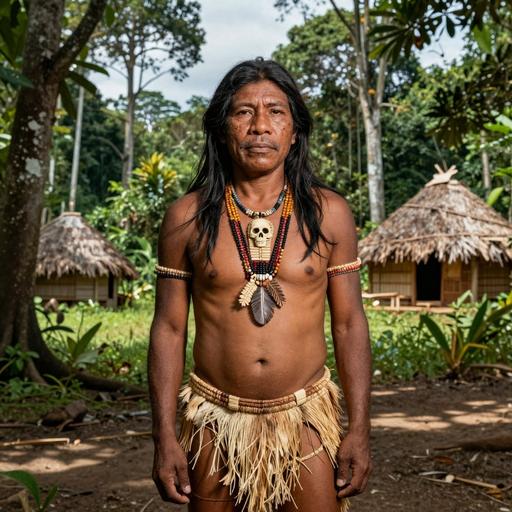
Portrait reconstruction of PLM001
Ancient Individual

A man buried in Brazil in the Shell Mound era

PLM001
1426 CE - 1485 CE
Male
Sambaqui Culture
Brazil
Scroll to begin
Chapter I

Identity

The biological and cultural markers that define this ancient individual

Sample ID

PLM001

Date Range

1426 CE - 1485 CE

Biological Sex

Male

mtDNA Haplogroup

B2b-N

Y-DNA Haplogroup

Q-L53

Cultural Period

Sambaqui Culture

Chapter II

Place

Where this individual was discovered

Country Brazil
Locality Palmeiras-Xingu (Southeast Amazonia)
Chapter III

Time

When this individual lived in the broader context of human history

PLM001 1426 CE - 1485 CE
Chapter IV

Story

The narrative of this ancient life

The Sambaqui culture refers to the prehistoric communities known for their distinctive shell-mound settlements along the coastal regions of what is now Brazil. This culture spanned a vast timeline, thriving from approximately 6500 BCE to around 1000 CE. Named after the Portuguese word \sambaqui," meaning shell mound, these communities left behind significant archaeological evidence that has provided insights into their way of life.

Geography and Environment

Sambaqui sites are predominantly found along the Atlantic coast of Brazil, from the states of Rio de Janeiro and São Paulo in the south to Santa Catarina and Rio Grande do Sul, stretching to modern-day Uruguay in the south. These locations were strategically chosen for their proximity to abundant marine resources. The environment during the era of the Sambaqui culture was a mosaic of rich ecosystems, including mangroves, estuaries, and coastal forests, with diverse flora and fauna that supported their subsistence lifestyle.

Shell Mounds

The most defining feature of the Sambaqui culture is their construction of large shell mounds. These structures could reach heights of over 30 meters and cover vast areas. Initially thought to be simple refuse piles of discarded shells, ongoing archaeological studies have revealed that these mounds served multiple purposes, including as platforms for dwellings, burial sites, and communal gathering spaces. The composition of the mounds was primarily oysters, mussels, and other shellfish, intermixed with fish bones, charcoal, pottery shards, and human remains.

Societal Structure and Lifestyle

The people of the Sambaqui culture were semi-nomadic hunter-gatherers with a strong reliance on coastal and riverine resources. Their diet consisted of fish, shellfish, terrestrial animals, and gathered plant materials. The evidence of burial practices, particularly the inclusion of grave goods such as stone tools and ornaments, suggests a level of social complexity and possible differentiation in status or roles within the community.

They utilized a wide array of tools and implements made from stone, bone, and shell, which facilitated hunting, fishing, and food processing activities. Their craftsmanship extended to personal adornment, with jewelry and other decorative items found in archaeological sites.

Art and Symbolism

Although the Sambaqui culture predated the introduction of metalworking and advanced ceramics, they expressed artistic creativity in their stone carvings and personal ornaments. Some sites have revealed petroglyphs and engravings that might have held cultural or spiritual significance. The motifs and patterns suggest a symbolic language possibly linked to their cosmology and mythology.

Interaction and Trade

Archaeological findings suggest that the Sambaqui people engaged in trade and interaction with other groups. The dispersion of similar cultural traits along the coast hints at a network where ideas, technologies, and goods were exchanged. The presence of non-local materials such as certain types of stone used for tools indicates that trade or travel extended beyond their immediate environments.

Decline and Legacy

The reasons behind the decline of the Sambaqui culture are not entirely understood. Theories suggest environmental changes, resource depletion, or interaction with other indigenous groups could have contributed to their transformation or assimilation. The arrival of more complex sociopolitical structures, such as those of the Tupi-Guarani tribes, likely played a role in their cultural evolution.

The legacy of the Sambaqui culture lies in its imprint on the landscape and its contribution to the understanding of prehistoric societies in South America. The extensive shell mounds are invaluable archaeological sites that continue to offer insights into the adaptation and resilience of human societies in coastal environments. Furthermore, these sites are crucial for understanding the cultural diversity and development of pre-Columbian populations in Brazil.

In summary, the Sambaqui culture represents a fascinating era of prehistoric innovation and adaptation. Their mastery of coastal resources, unique architectural practices, and evidence of sociocultural complexity make them a significant focus of study for archaeologists and historians interested in the early human occupation of South America."

Chapter V

Context

Other ancient individuals connected to this sample

Sources

References

Scientific publications and genetic data

Scientific Publication

Genomic history of coastal societies from eastern South America

Authors Ferraz T, Suarez Villagran X, Nägele K
Abstract

Sambaqui (shellmound) societies are among the most intriguing archaeological phenomena in pre-colonial South America, extending from approximately 8,000 to 1,000 years before present (yr BP) across 3,000 km on the Atlantic coast. However, little is known about their connection to early Holocene hunter-gatherers, how this may have contributed to different historical pathways and the processes through which late Holocene ceramists came to rule the coast shortly before European contact. To contribute to our understanding of the population history of indigenous societies on the eastern coast of South America, we produced genome-wide data from 34 ancient individuals as early as 10,000 yr BP from four different regions in Brazil. Early Holocene hunter-gatherers were found to lack shared genetic drift among themselves and with later populations from eastern South America, suggesting that they derived from a common radiation and did not contribute substantially to later coastal groups. Our analyses show genetic heterogeneity among contemporaneous Sambaqui groups from the southeastern and southern Brazilian coast, contrary to the similarity expressed in the archaeological record. The complex history of intercultural contact between inland horticulturists and coastal populations becomes genetically evident during the final horizon of Sambaqui societies, from around 2,200 yr BP, corroborating evidence of cultural change.

Use code for 40% off Expires Mar 01