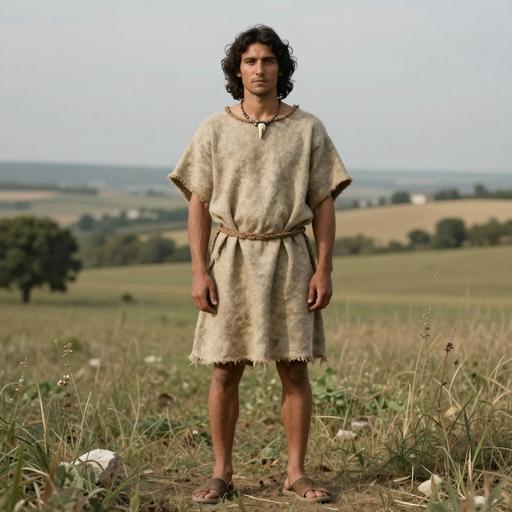
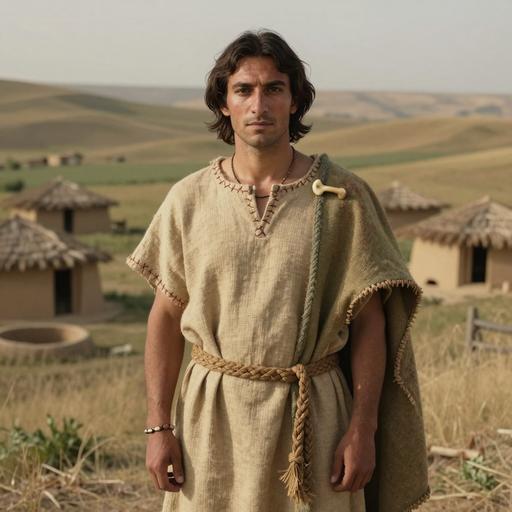
Profil de référence pour une branche de lignée. Des haplogroupes partagés n'établissent pas de lien familial ni d'identité culturelle.
Profil de référence
Contexte de la branche
Contexte historique de la branche de lignée mtDNA N1A1A
Origins and Evolution
mtDNA haplogroup N1A1A is a downstream branch of N1A1, itself a derivative of the broader N1A lineage. Based on the phylogenetic position of N1A1A below N1A1 and the known age of N1A1 (~11 kya in Near East/Anatolia), N1A1A most plausibly arose in the Near East or Anatolia in the early Holocene (roughly ~9 kya). Its emergence likely coincided with the demographic processes associated with the spread of food production and the early Neolithic transition, when regional population growth and mobility created opportunities for local mitochondrial lineages to diversify and spread.
Subclades (if applicable)
Downstream variation within N1A1A has been observed in both ancient and modern mtDNA datasets, though the subclade structure is less deeply sampled than for some more common lineages. Ancient DNA studies that recover N1A1-derived lineages sometimes resolve finer branches of N1A1A in early Neolithic assemblages; modern population sampling has identified rare, geographically scattered derivatives. Because sampling remains limited, researchers treat many downstream branches as moderately defined and subject to refinement as more complete mitogenomes are published.
Geographical Distribution
N1A1A shows a distribution pattern characteristic of a Near Eastern/Anatolian origin with diffusion into adjoining regions during the Neolithic expansion. Highest frequencies and diversity are observed historically in Anatolia and adjacent Near Eastern regions, while occurrences in Europe (both ancient and modern) are typically low-frequency but important for tracing Neolithic farmer ancestry. The haplogroup also appears sporadically in North Africa and the Horn of Africa, consistent with historical and prehistoric gene flow between the Near East and Africa. In modern populations N1A1A is uncommon and patchily distributed, often seen at low frequencies in southern Europe and coastal North Africa and represented by isolated lineages in parts of the Caucasus and Iran.
Historical and Cultural Significance
N1A1A is notable in population genetics because of its association with early agricultural communities. It (and closely related N1A1 sublineages) has been recovered from ancient Anatolian and early European Neolithic contexts — including Cardial and Linearbandkeramik (LBK)-associated assemblages — making it a useful marker for studying the maternal component of the Neolithic migration into Europe. The presence of N1A1A in ancient farmer genomes underlines the Near Eastern contribution to European Neolithic ancestry. Its later low frequency in many modern populations reflects both the initial Neolithic dispersal and substantial subsequent demographic events (population replacement, drift, and admixture) that reshaped maternal-lineage frequencies across Eurasia.
Conclusion
As a relatively rare but historically informative lineage, N1A1A functions as a molecular signature of early Near Eastern/Anatolian maternal ancestry that participated in the Neolithic spread of farming into Europe. Continued mitogenome sequencing of both modern and ancient samples will refine its internal branching, geographic patchiness, and the timing of its dispersals, but current evidence places its origin in the early Holocene Near East with notable representation among early farmers in archaeological contexts.
Points clés
Origins and Evolution
Subclades (if applicable)
Geographical Distribution
Historical and Cultural Significance
Conclusion
Profil de référence
Arbre et relations
Contexte phylogénétique et sous-clades
Voie évolutive
Suivez les branches parentes consignées jusqu'à N1A1A. Les dates sont des estimations et peuvent évoluer lorsque les données de référence sont révisées.
The populations where mtDNA haplogroup N1A1A is found include:
Anatolian and Levantine Near Eastern populations
Ancient Anatolian Neolithic assemblages
Early European Neolithic farmers (e.g., LBK, Cardial-related groups)
Modern Southern European populations (Italy, Greece, Iberian fringe) at low frequencies
Central and Northern European populations in ancient contexts (now rare)
North African coastal populations and the Maghreb at low frequencies
Horn of Africa populations (Ethiopia, Somalia) in specific sublineages
Caucasus and Iranian populations (moderate to low frequencies)
Sporadic occurrences in parts of Central Asia and steppe-adjacent groups
Ancient Cardial/Cardial-related and other early farmer assemblages in Europe
Contexte historique
Une branche dans le temps
Formation estimée sur une chronologie historique large. Les repères de période servent de contexte et n'impliquent pas de lien avec des cultures particulières.
Il y a ~10k ans
Révolution néolithique
Début de l'agriculture et émergence de communautés sédentaires
Il y a ~9k ans
Haplogroupe N1A1A
Formation estimée de cette branche mtDNA ; les dates et les lieux sont des estimations de référence.
Cette branche
Il y a ~5k ans
Âge du bronze
Travail des métaux, écriture et premières civilisations
Il y a ~3k ans
Âge du fer
Outils en fer, réseaux d'échanges élargis
Il y a ~2.5k ans
Antiquité classique
Floraison des civilisations grecque et romaine
Aujourd'hui
Aujourd'hui
Époque moderne
Profil de référence
Contexte archéologique
Associations archéologiques consignées pour la branche mtDNA N1A1A
Associations consignées
Ces libellés décrivent des contextes archéologiques consignés pour des échantillons de référence liés à N1A1A. Une association n'établit pas que tous les porteurs appartenaient à une culture ni qu'ils ont suivi une route migratoire précise.
Alföld Linear PotteryAnatolian NeolithicArmenian LBA-EIABaalberge CultureBaja PPNBCzech NeolithicEarly Bronze Age RussianHungary_C_BodrogkereszturLinear Pottery CultureStarčevo CultureTisza Culture
Les attributions culturelles reposent sur le contexte archéologique des échantillons d'ADN ancien et peuvent refléter des associations régionales à certaines périodes.
Profil de référence
Catalogue d'échantillons
8 porteurs directs et 56 porteurs de sous-clade de l'haplogroupe N1A1A
10 affiché(s) · 50 échantillons correspondants
Aucun échantillon ne correspond à ces filtres. Essayez un autre libellé, lieu ou période.
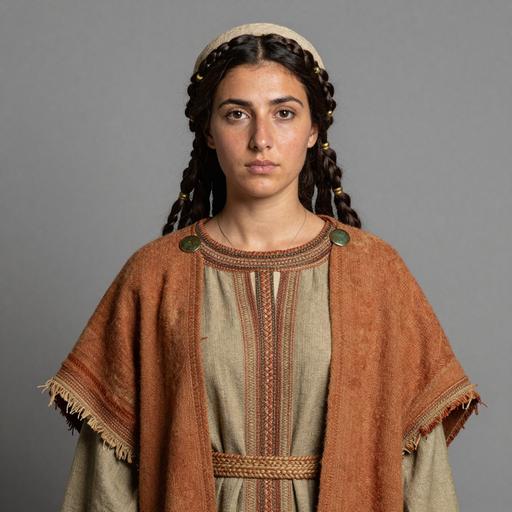
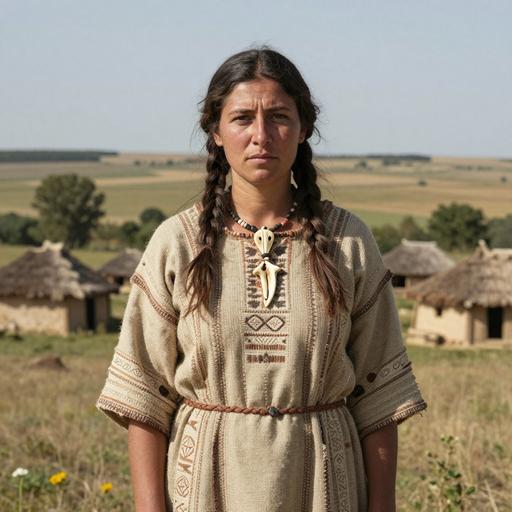
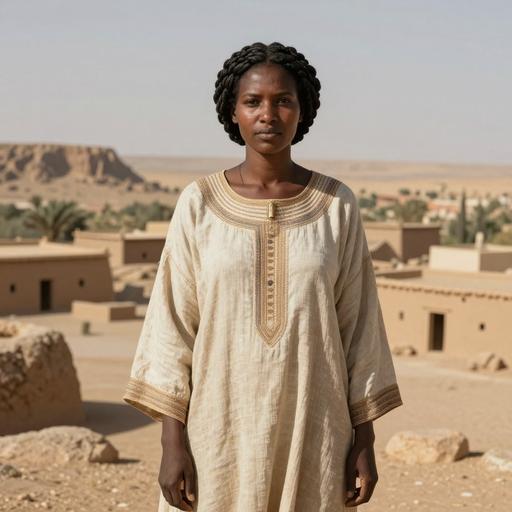
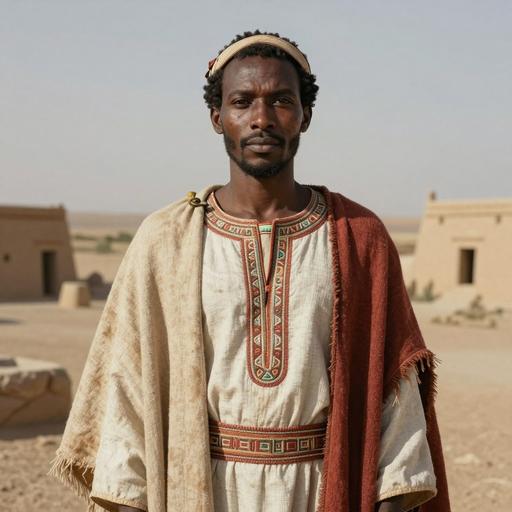
Les portraits sont des illustrations générées par IA. Les libellés d'échantillon et identifiants d'accès désignent les enregistrements de référence.
Portrait
Échantillon
Pays
Époque
Date
Culture
mtDNA
Correspondance
Identifiant d'échantillon : I19328
Armenia
Late Bronze Age to Early Iron Age Armenia
904-814 calBCE (2715±20 BP, PSUAMS-8888)
Armenian LBA-EIA
N1a1a
Direct
Identifiant d'échantillon : I18470
Armenia
Late Bronze Age to Early Iron Age Armenia
1550-1300 BCE
Armenian LBA-EIA
N1a1a
Direct
Identifiant d'échantillon : I7188
Czech Republic
Chalcolithic Baalberge Culture, Czech Republic
3705-3635 calBCE (4880±20 BP, PSUAMS-4232)
Baalberge Culture
N1a1a
Direct
Identifiant d'échantillon : I7893
Slovakia
Slovakia N LBK
5205-4847 calBCE (6075±35 BP, PSUAMS-15084)
Linear Pottery Culture
N1a1a
Direct
Identifiant d'échantillon : I10352
Hungary
Hungary MN AVK
5250-4750 BCE
Alföld Linear Pottery
N1a1a
Direct
Identifiant d'échantillon : I7952
Czech Republic
Neolithic Czech Republic
5500-5000 BCE
Czech Neolithic
N1a1a
Direct
Identifiant d'échantillon : I8105
Serbia
Serbia EN Starcevo
5800-5600 BCE
Starčevo Culture
N1a1a
Direct
Identifiant d'échantillon : BAJ022
Jordan
Pre-Pottery Neolithic B of Baja
7250-6800 BCE
Baja PPNB
N1a1a
Direct
Identifiant d'échantillon : CLR31
France
Iron Age Culture of Aude
400-300 BCE
Aude
N1a1a1
Sous-clade
Identifiant d'échantillon : I18536
Sudan
Early Christian Era in Sudan
650 CE - 1050 CE
Nubian Christian
N1a1a3
Sous-clade
Identifiant d'échantillon : I18524
Sudan
Early Christian Era in Sudan
650 CE - 1050 CE
Nubian Christian
N1a1a3
Sous-clade
Identifiant d'échantillon : SZRV-212
Hungary
Hungary LateAvar
700-800 CE
Avar Culture
N1a1a1
Sous-clade
Identifiant d'échantillon : SZRV-67
Hungary
Hungary LateAvar
700-800 CE
Avar Culture
N1a1a1
Sous-clade
Identifiant d'échantillon : VK232
Sweden
Sweden Viking
900 CE - 1050 CE
Viking
N1a1a1
Sous-clade
Identifiant d'échantillon : VK232
Sweden
The Viking Age
900 CE - 1050 CE
N1a1a1
Sous-clade
Identifiant d'échantillon : NEO806
Italy
Bronze Age Italy
1386-1129 calBCE (3014±26 BP, UBA-40109)
Italian Bronze Age
N1a1a1
Sous-clade
Identifiant d'échantillon : I5695
Slovenia
Middle Bronze Age Slovenia
1423 BCE - 1268 BCE
Slovenian Bronze Age
N1a1a1
Sous-clade
Identifiant d'échantillon : I18746
Croatia
Croatia MBA Cetina
1669-1511 calBCE (3320±25 BP, PSUAMS-14714)
Croatian Middle Bronze Age
N1a1a1
Sous-clade
Identifiant d'échantillon : I14792
Turkey
Turkey EBA
2454-2201 calBCE (3840±25 BP, PSUAMS-6844)
Early Bronze Anatolia
N1a1a3
Sous-clade
Identifiant d'échantillon : NEO828
Italy
Gaudo culture
3300-3000 BCE
Gaudo
N1a1a1
Sous-clade
Identifiant d'échantillon : N18
Poland
Poland TRB
3632 BCE - 3376 BCE
Funnel Beaker
N1a1a1
Sous-clade
Identifiant d'échantillon : N18
Poland
Middle Neolithic Central Europe
3632 BCE - 3376 BCE
N1a1a1
Sous-clade
Identifiant d'échantillon : I2790
Hungary
Hungary LateC Protoboleraz
3768 BCE - 3543 BCE
Proto-Boleráz Culture
N1a1a3
Sous-clade
Identifiant d'échantillon : I2790
Hungary
Late Chalcolithic Balkans
3768 BCE - 3543 BCE
N1a1a3
Sous-clade
Identifiant d'échantillon : lbk102
Poland
Eastern Linear Pottery Culture of Kruszyn
4350-3950 BCE
Linear Pottery Culture
N1a1a1
Sous-clade
Identifiant d'échantillon : I14159
Romania
Romania C Bodrogkeresztur
4400-3500 BCE
Bodrogkeresztur
N1a1a1
Sous-clade
Identifiant d'échantillon : I4168
Croatia
Croatia MN Sopot
4777 BCE - 4538 BCE
Sopot Culture
N1a1a1
Sous-clade
Identifiant d'échantillon : POP14
Croatia
Middle Neolithic Popova Culture
4777 BCE - 4538 BCE
Popova Culture
N1a1a1
Sous-clade
Identifiant d'échantillon : SCH004
Germany
Early Neolithic Linear Pottery Culture, Germany
5200-5000 BCE
Linear Pottery Culture
N1a1a1
Sous-clade
Identifiant d'échantillon : XN215
Germany
Early Neolithic Linear Pottery Culture, Germany
5208-4945 calBCE (6115±25 BP, MAMS-36727)
Linear Pottery Culture
N1a1a1
Sous-clade
Identifiant d'échantillon : I2379
Hungary
Middle Neolithic Alföld Linear Pottery Culture Tiszadob Group, Hungary
5209-4855 calBCE (6100±40 BP, Poz-88115)
Tiszadob Group
N1a1a1
Sous-clade
Identifiant d'échantillon : OBN006
France
France MN
5209-4954 calBCE (6124±25 BP, LTL-18527A)
Middle Neolithic French
N1a1a1
Sous-clade
Identifiant d'échantillon : I2008
Germany
Early Neolithic Linear Pottery Culture, Germany
5211 BCE - 4957 BCE
Linear Pottery Culture
N1a1a1
Sous-clade
Identifiant d'échantillon : I2008
Germany
The Linear Pottery Culture
5211 BCE - 4957 BCE
N1a1a1
Sous-clade
Identifiant d'échantillon : I0057
Germany
Early Neolithic Linear Pottery Culture, Germany
5215 BCE - 5011 BCE
Linear Pottery Culture
N1a1a1
Sous-clade
Identifiant d'échantillon : I0057
Germany
The Linear Pottery Culture
5215 BCE - 5011 BCE
N1a1a1
Sous-clade
Identifiant d'échantillon : XN165
Germany
Early Neolithic Linear Pottery Culture, Germany
5296-5056 calBCE (6213±24 BP, MAMS-36725)
Linear Pottery Culture
N1a1a1
Sous-clade
Identifiant d'échantillon : XN205
Germany
Early Neolithic Linear Pottery Culture, Germany
5300-5000 BCE
Linear Pottery Culture
N1a1a1
Sous-clade
Identifiant d'échantillon : I16245
Slovakia
Slovakia N LBK
5400-4900 BCE
Linear Pottery Culture
N1a1a1
Sous-clade
Identifiant d'échantillon : I17344
Slovakia
Slovakia N LBK
5400-4900 BCE
Linear Pottery Culture
N1a1a1
Sous-clade
Identifiant d'échantillon : I24894
Austria
Austria N LBK
5300-5000 BCE
Linear Pottery Culture
N1a1a1
Sous-clade
Identifiant d'échantillon : I17938
Hungary
Hungary MN AVK
5302-5047 calBCE (6215±35 BP, PSUAMS-15079)
Alföld Linear Pottery
N1a1a1
Sous-clade
Identifiant d'échantillon : UZZ074
Italy
Italy Sicily N Stentinello
5350-5200 BCE
Stentinello
N1a1a1
Sous-clade
Identifiant d'échantillon : DER007
Germany
Neolithic Linear Pottery Culture in Saxony, Germany
5400-4900 BCE
Linear Pottery Culture
N1a1a1
Sous-clade
Identifiant d'échantillon : I10942
Gibraltar
Gibraltar EN
5500-4500 BCE
Gibraltar Neolithic
N1a1a1
Sous-clade
Identifiant d'échantillon : I21771
Hungary
Hungary MN AVK
5500-4750 BCE
Alföld Linear Pottery
N1a1a1
Sous-clade
Identifiant d'échantillon : I0174
Hungary
Hungary EN Starcevo 1
5712-5531 calBCE (6695±40 BP, MAMS-11939)
Starčevo Culture
N1a1a1
Sous-clade
Identifiant d'échantillon : I3121
Turkey
Turkey N
6150-5800 BCE
Anatolian Neolithic
N1a1a1
Sous-clade
Identifiant d'échantillon : I15705
Albania
Albanian Early Neolithic
6223-6067 calBCE (7270±30 BP, PSUAMS-7927)
Albanian Neolithic
N1a1a1
Sous-clade
Identifiant d'échantillon : Tep006
Turkey
Neolithic Tepecik-Çiftlik, Turkey
6223 BCE - 6072 BCE
Tepecik-Çiftlik
N1a1a1
Sous-clade
Identifiant d'échantillon : I19328
Late Bronze Age to Early Iron Age Armenia - Armenia - Noratus
Armenia Late Bronze Age to Early Iron Age Armenia 904-814 calBCE (2715±20 BP, PSUAMS-8888)
N1a1aDirect
Identifiant d'échantillon : I18470
Late Bronze Age to Early Iron Age Armenia - Armenia - Noratus
Armenia Late Bronze Age to Early Iron Age Armenia 1550-1300 BCE
Suivez les clades parents jusqu'à cette branche et explorez où des porteurs antiques ont été identifiés.
Chargement des observations antiques…
La réduction des animations est activée. Utilisez la chronologie ou Tout afficher pour explorer à votre rythme.
Lire les observations sous forme de tableau
Observations antiques affichées par branche, période et date médiane
Branche
Période
Plage de dates
Échantillon
Identifiant d'échantillon
Emplacement
Haplogroupe
Relation
Les marqueurs indiquent des lieux de découvertes archéologiques. Un trait pointillé représente une transition géographique proposée et incertaine entre branches consécutives, appuyée sur plusieurs observations datées ; ce n'est pas un itinéraire exact, un lieu de naissance ni une preuve de descendance directe. Des échantillons de clades parents peuvent appartenir à d'autres branches descendantes. Des lacunes subsistent lorsque les preuves sont insuffisantes. Les dates d'échantillon diffèrent des dates de formation des haplogroupes.
Le regroupement par période historique reflète quand chaque individu antique a vécu, en combinant toutes les branches de cette chaîne de lignée ; ce n'est pas une séquence migratoire ni une chronologie personnelle entre périodes.
Profil de référence
Carte de répartition des porteurs
Répartition géographique de 64 échantillons d'ADN ancien (porteurs directs et de sous-clade de N1A1A)
Porteur direct Porteur de sous-clade
Filtre de période
Toutes les périodes
Affichage de tous les échantillons
Profil de référence
Répartition temporelle
Répartition des porteurs selon les périodes archéologiques
Profil de référence
Répartition géographique
Effectifs par pays d'échantillon consigné. Ils reflètent la sélection de référence disponible, pas des fréquences de population.
Profil de référence
Répartition pays × époque
Comparez les effectifs d'échantillons consignés selon les pays et les périodes archéologiques. Sélectionnez une cellule renseignée pour examiner un échantillon.
Données
Données et provenance
Informations sur les sources et qualité des données
Dernière mise à jour2026-02-16
Score de confiance50/100
CouvertureLow
Source des données
La classification, les dates estimées et le contexte géographique reflètent les données de référence consignées et peuvent évoluer lorsque les éléments sont révisés. La couverture d'échantillons est inégale ; les lieux consignés et les associations archéologiques n'établissent pas une origine personnelle ni une identité culturelle.