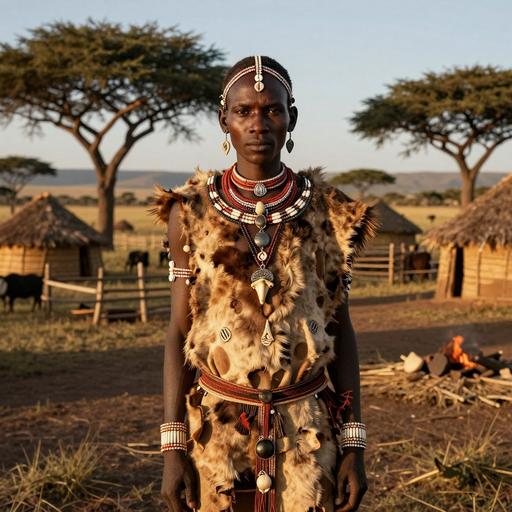
mtDNA · Maternal lineage

L3H1A2

mtDNA Haplogroup L3H1A2

A reference profile for one lineage branch. Shared haplogroups do not establish a family relationship or cultural identity.

Reference profile

Branch background

Historical context for mtDNA lineage branch L3H1A2

Origins and Evolution

mtDNA haplogroup L3H1A2 is a subclade nested within L3H1A, itself a branch of the broader African macro-haplogroup L3. The parent clade L3H1A is thought to have originated in the Horn/East Africa region in the early Holocene (~9 kya). L3H1A2 represents a slightly younger split (estimated here at ~6.5 kya) that likely formed in the same general region during the mid-Holocene. Its phylogenetic position as a downstream branch of L3H1A means it preserves a subset of the maternal diversity found in eastern Africa and often exhibits limited internal diversity consistent with a regional expansion and subsequent fragmentation.

Subclades (if applicable)

As an intermediate terminal clade within the L3H1A lineage, L3H1A2 may contain a few locally restricted sub-branches detectable with high-resolution full mtDNA sequencing. Published population surveys frequently show low to moderate diversity within these subclades, reflecting relatively recent coalescence times compared with deeper African lineages. In many sampling schemes L3H1A2 behaves as a relatively shallow, geographically structured clade rather than a large, deeply branching haplogroup.

Geographical Distribution

L3H1A2 is most common in the Horn of Africa and adjacent eastern African coastal populations, with lower frequencies spreading inland and along known historical contact routes. Typical distribution patterns include:

  • Elevated frequencies among Cushitic- and Semitic-speaking groups in Ethiopia and neighboring Horn populations.
  • Presence along the Swahili coast and other coastal East African groups, reflecting coastal gene flow and trade networks.
  • Low to moderate presence among some Central African hunter-gatherer groups and sporadic occurrences in southern African Khoe-San populations, consistent with ancient east–west and north–south movements within Africa.
  • Rare occurrences in West Africa, North Africa and the Middle East attributable to long-distance admixture, historic migrations and trade.
  • Occasional detection in African-descended populations in the Americas, attributable to trans-Atlantic slave trade origins in regions of Africa where L3H1A2 occurs.

Geographically, the pattern points to an origin in the Horn/East Africa with subsequent limited dispersal rather than a continent-wide expansion.

Historical and Cultural Significance

The timing and geography of L3H1A2 suggest links to demographic events in the Holocene that shaped modern eastern African populations. Possible cultural and demographic associations include:

  • Pastoral and early agricultural expansions in eastern Africa during the mid-Holocene, which redistributed maternal lineages within the Horn and along coastal corridors.
  • Maritime and overland trade networks in the Indian Ocean and along the East African coast, which facilitated gene flow between coastal communities and inland groups.
  • Later historical admixture (e.g., medieval coastal trade, trans-Saharan contacts, and the Atlantic slave trade) that exported low frequencies of the haplogroup beyond eastern Africa.

While L3H1A2 is not diagnostic of any single archaeological culture, its distribution aligns with populations influenced by Holocene pastoralist and coastal exchange systems in East Africa.

Conclusion

mtDNA L3H1A2 is a regionally informative maternal lineage that highlights Holocene maternal continuity in the Horn and eastern Africa with limited downstream dispersals into central, southern and peripheral African regions and into the African diaspora. Its restricted geographic concentration and relatively recent coalescence make it a useful marker for studies of eastern African maternal population history, local demographic expansions, and historic admixture events when combined with autosomal and Y-chromosome data.

Key Points

  • Origins and Evolution
  • Subclades (if applicable)
  • Geographical Distribution
  • Historical and Cultural Significance
  • Conclusion
Reference profile

Tree & Relationships

Phylogenetic context and subclades

Evolution Path

Follow the recorded parent branches toward L3H1A2. Dates are estimates and can change as reference data is revised.

Steps Haplogroup Age Estimate Archaeology Era Time Passed Immediate Descendants Tested Modern Descendants Ancient Connections
1 L3H1A2 Current ~6,000 years ago Chalcolithic 6,500 years 1 1 0
2 L3H1A ~9,000 years ago Neolithic 9,000 years 2 2 3
3 L3H1 ~25,000 years ago Paleolithic 25,000 years 1 6 0
4 L3H ~35,000 years ago Paleolithic 35,000 years 1 6 0
5 L3 ~70,000 years ago Paleolithic 70,000 years 7 30,162 6
6 L3'4 - - - 2 30,212 0
7 L3'4'6 - - - 2 30,216 0
8 L2'3'4'6 - - - 2 31,333 0
9 L2'3'4'5'6'7 - - - 2 31,349 0
10 L1'2'3'4'5'6'7 - - - 2 31,852 0
11 L ~160,000 years ago Paleolithic 160,000 years 2 32,236 5

Siblings (1)

Other branches from the same parent haplogroup

Reference profile

Where in the World

Geographic distribution and modern presence

Recorded origin

Horn / East Africa

Modern Distribution

The populations where mtDNA haplogroup L3H1A2 is found include:

  1. Oromo and Amhara (Horn of Africa / East Africa)
  2. Somali and other Horn populations (East Africa)
  3. Coastal East African groups (e.g., Swahili-adjacent populations)
  4. Mbuti and other Central African hunter-gatherer groups (low to moderate frequencies)
  5. Khoe-San groups in Southern Africa (low frequencies)
  6. Yoruba and other West African groups (sporadic/low frequencies)
  7. African-descended populations in the Americas (African American, Afro-Caribbean; low frequencies due to diaspora)
  8. North African and Middle Eastern populations (very low frequencies reflecting historical admixture)
Historical context

A branch through time

Estimated formation in a broad historical timeline. Period markers provide context and do not imply a connection with particular cultures.

  1. ~10k years ago

    Neolithic Revolution

    Agriculture begins, settled communities form

  2. ~6.5k years ago

    Haplogroup L3H1A2

    Estimated formation of this mtDNA branch; dates and locations are reference estimates.

    This branch
  3. ~5k years ago

    Bronze Age

    Metalworking, writing, and early civilizations

  4. ~3k years ago

    Iron Age

    Iron tools, expanded trade networks

  5. ~2.5k years ago

    Classical Antiquity

    Greek and Roman civilizations flourish

  6. Present

    Present Day

    Modern era

Reference profile

Archaeological context

Recorded archaeological associations for mtDNA branch L3H1A2

Recorded associations

These labels describe archaeological contexts recorded for reference samples linked to L3H1A2. An association does not establish that all carriers belonged to a culture or followed a particular migration route.

Austria_Avar Bungule Corded Ware Elmenteitan Culture Historic Era 2 Iron Age Pastoral Jordanow-Michelsberg Culture Molo Cave Culture Pastoral Neolithic Slab Grave Culture St. Helena Colonial Tanzanian Prehistoric Yemen_Medieval_Soqotri
Culture assignments are based on archaeological context of ancient DNA samples and may represent regional associations during specific time periods.
Reference profile

Sample Catalog

5 subclade carriers of haplogroup L3H1A2 (no direct carriers in the current reference selection)

5 shown · 5 matching samples

Portraits are AI-generated illustrations. Sample labels and accession IDs identify the reference records.

Portrait Sample Country Era Date Culture mtDNA Match
AI-generated illustrative portrait of African Stone Age individual, Gishimangeda Cave, Tanzania (50-60 BCE)
Sample ID: I13970
Tanzania Prehistoric in Tanzania 50 BCE - 60 BCE Tanzanian Prehistoric L3h1a2a1 Subclade
AI-generated illustrative portrait of Pastoral N Elmenteitan individual, Nakuru. Central Rift Valley. Njoro River Cave II, Kenya (91-24 BCE)
Sample ID: I10719
Kenya Kenya PastoralN Elmenteitan 91 calBCE - 24 calCE (2070±15 BP, PSUAMS-4758) Elmenteitan Culture L3h1a2a1 Subclade
AI-generated illustrative portrait of Pastoral N individual, Molo Cave. GoJi3, Kenya (437-600 BCE)
Sample ID: MOL001
Kenya Molo Cave Pastoral Neolithic in Kenya 541-637 calCE (1532±21 BP, OxA-37360) Molo Cave Culture L3h1a2a1 Subclade
AI-generated illustrative portrait of Nilotic individual, Kasiole 2. GvJh54, Kenya (892-992 BCE)
Sample ID: I12391
Kenya Kenya IA Pastoral 892 BCE - 992 BCE Iron Age Pastoral L3h1a2a1 Subclade
AI-generated illustrative portrait of Historic individual, Emurula Ole Polos Cairns. GvJh 122, Kenya (1,527-1,662 CE)
Sample ID: I12379
Kenya Historic Era 2 in Kenya 1639-1797 calCE (270±15 BP, PSUAMS-4938) Historic Era 2 L3h1a2a1 Subclade
MATERNAL LINEAGE · ANCIENT DNA

Ancient lineage evidence map

Follow parent clades toward this branch and explore where ancient carriers were found.

Loading ancient observations…

Markers are archaeological find locations. A dashed connector is an uncertain, proposed geographic transition between consecutive branches supported by multiple dated observations; it is not an exact travel route, birthplace or proof of direct descent. Parent-clade samples may belong to other descendant branches. Gaps remain where evidence is insufficient. Sample dates differ from haplogroup formation dates.

Reference profile

Carrier Distribution Map

Geographic distribution of 5 ancient DNA samples (direct and subclade carriers of L3H1A2)

Subclade carrier
Time Period Filter
All Time Periods
Showing all samples
Reference profile

Temporal Distribution

Distribution of carriers across archaeological periods

Reference profile

Geographic Distribution

Counts by recorded sample country. These reflect the available reference selection, not population frequencies.

Reference profile

Country × Era Distribution

Compare recorded sample counts across countries and archaeological periods. Select a populated cell to inspect a sample.

Data

Data & Provenance

Source information and data quality

Last Updated 2026-02-16
Confidence Score 50/100
Coverage Low

Data Source

Classification, estimated dates and geographic context reflect the recorded reference data and may change as evidence is revised. Sample coverage is uneven; recorded locations and archaeological associations do not establish personal origin or cultural identity.