mtDNA · Maternal lineage

M11B

mtDNA Haplogroup M11B

A reference profile for one lineage branch. Shared haplogroups do not establish a family relationship or cultural identity.

Reference profile

Branch background

Historical context for mtDNA lineage branch M11B

Origins and Evolution

mtDNA haplogroup M11B nests beneath the M11A'B node, itself a descendant of macro-haplogroup M, which is widespread across Asia and parts of Oceania. Based on phylogenetic position and coalescence estimates for related M11 lineages, M11B most plausibly arose in the Late Pleistocene to Early Holocene (roughly ~15 thousand years ago), during a period of regional population structure and local differentiation following the Last Glacial Maximum. The low apparent diversity within M11B in published datasets suggests either a relatively recent origin compared with deeper M subclades or limited sampling of populations that carry this lineage.

Subclades

As a named subclade of the M11A'B node, M11B may itself contain further internal branches identifiable only with dense full mitogenome sequencing. Currently available phylogenies place M11B as an intermediate clade linking the parent M11A'B node to more terminal daughter lineages. Because M11 and its subclades are not as extensively sampled as some other East Asian haplogroups, many potential downstream subclades remain under-characterized or absent in public databases.

Geographical Distribution

Published population surveys and mitogenome studies indicate that M11-type lineages are concentrated in East Asia and adjacent regions. Reasonable inferences for M11B based on related lineages and sparse sampling are:

  • Primary presence in East Asia, particularly among populations in China, Japan, and nearby coastal regions.
  • Detectable but rarer occurrences in parts of Southeast Asia and among some Northeast Asian or Siberian groups, consistent with maritime and inland population movements during the Holocene.

Because many mtDNA surveys historically used HVR or partial control-region data, and because M11B is relatively uncommon, the apparent distribution may be incomplete; targeted full mitogenome sequencing of under-sampled groups is necessary to resolve its true geographic spread.

Historical and Cultural Significance

Direct archaeological attribution for specific mtDNA subclades is inherently tentative, but the time depth and inferred geography of M11B allow cautious cultural associations:

  • It likely differentiated during the Late Paleolithic to Early Holocene, a time of post-glacial recolonization and regional adaptation in East Asia.
  • The lineage could have been carried by both coastal foragers and early Neolithic communities as agriculture expanded in China and maritime routes developed.
  • In Japan, an association with hunter-gatherer and early Holocene groups such as the Jomon is plausible for related M11 diversity, though direct links for M11B require ancient DNA confirmation.

Overall, M11B can contribute to reconstructions of maternal population continuity and local demographic events in East Asia and adjacent regions.

Conclusion

M11B is a regionally informative mtDNA subclade within the M11A'B node that appears to have originated in East Asia in the Late Pleistocene/Early Holocene. Its current characterization is limited by sparse sampling; expanding full mitogenome surveys across East and Southeast Asia and targeted ancient DNA studies would clarify its internal structure, geographic spread, and historical roles. Until then, inferences about M11B must remain cautious and framed within the broader behavior of M11 and related East Asian maternal lineages.

Key Points

  • Origins and Evolution
  • Subclades
  • Geographical Distribution
  • Historical and Cultural Significance
  • Conclusion
Reference profile

Tree & Relationships

Phylogenetic context and subclades

Evolution Path

Follow the recorded parent branches toward M11B. Dates are estimates and can change as reference data is revised.

Steps Haplogroup Age Estimate Archaeology Era Time Passed Immediate Descendants Tested Modern Descendants Ancient Connections
1 M11B Current ~15,000 years ago Mesolithic 15,000 years 0 2 3
2 M11A'B - - - 1 2 0
3 M11A ~9,000 years ago Neolithic 9,000 years 2 3 5
4 M11 ~22,000 years ago Mesolithic 22,000 years 1 4 0
5 M ~60,000 years ago Paleolithic 60,000 years 42 2,671 41
6 L3 ~70,000 years ago Paleolithic 70,000 years 7 30,162 6
7 L3'4 - - - 2 30,212 0
8 L3'4'6 - - - 2 30,216 0
9 L2'3'4'6 - - - 2 31,333 0
10 L2'3'4'5'6'7 - - - 2 31,349 0
11 L1'2'3'4'5'6'7 - - - 2 31,852 0
12 L ~160,000 years ago Paleolithic 160,000 years 2 32,236 5

Subclades (0)

Terminal branch - no recorded subclades

Reference profile

Where in the World

Geographic distribution and modern presence

Recorded origin

East Asia

Modern Distribution

The populations where mtDNA haplogroup M11B is found include:

  1. Han Chinese populations (coastal and inland sampling)
  2. Japanese populations (including possible presence in Ryukyu/Japanese archipelago groups)
  3. Tibeto-Burman and other highland East Asian groups (localized occurrences)
  4. Indigenous Northeast Asian or Siberian groups (sporadic reports)
  5. Coastal Southeast Asian populations and Austronesian-associated groups (low frequency occurrences)
Historical context

A branch through time

Estimated formation in a broad historical timeline. Period markers provide context and do not imply a connection with particular cultures.

  1. ~20k years ago

    Last Glacial Maximum

    Peak of the last ice age, populations isolated

  2. ~15k years ago

    Haplogroup M11B

    Estimated formation of this mtDNA branch; dates and locations are reference estimates.

    This branch
  3. ~10k years ago

    Neolithic Revolution

    Agriculture begins, settled communities form

  4. ~5k years ago

    Bronze Age

    Metalworking, writing, and early civilizations

  5. ~3k years ago

    Iron Age

    Iron tools, expanded trade networks

  6. ~2.5k years ago

    Classical Antiquity

    Greek and Roman civilizations flourish

  7. Present

    Present Day

    Modern era

Reference profile

Archaeological context

Recorded archaeological associations for mtDNA branch M11B

Recorded associations

These labels describe archaeological contexts recorded for reference samples linked to M11B. An association does not establish that all carriers belonged to a culture or followed a particular migration route.

Goyet Cave Gravettian Hunnic Period Iberomaurusian Indonesian Hunter-Gatherer Culture Ostuni Culture Spanish Gravettian Ulaanzukh Culture Wuzhuangguoliang Culture
Culture assignments are based on archaeological context of ancient DNA samples and may represent regional associations during specific time periods.
Reference profile

Sample Catalog

3 direct carriers of haplogroup M11B

3 shown · 3 matching samples

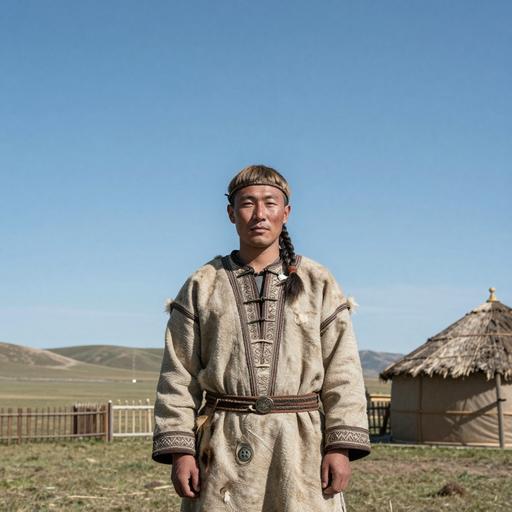
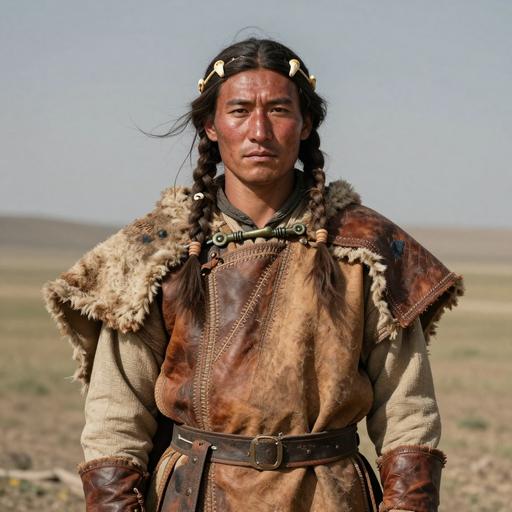
Portraits are AI-generated illustrations. Sample labels and accession IDs identify the reference records.

Portrait Sample Country Era Date Culture mtDNA Match
AI-generated illustrative portrait of Nomadic Steppe Cultures individual, Sükhbaatar aimag. Tuvshinshiree sum. Bulgiin ekh. Tomb 47, Mongolia (1,422-1,292 BCE)
Sample ID: I14037
Mongolia Late Bronze Age Ulaanzukh 2, Mongolia 1422 BCE - 1292 BCE Ulaanzukh Culture M11b Direct
AI-generated illustrative portrait of LBA Ulaanzuukh-2 individual, Bulgiin-ekh (Sükhbaatar Province, Tüvshinshiree District), Mongolia (1,422-1,292 BCE)
Sample ID: BUL001
Mongolia Late Bronze Age Ulaanzukh 2, Mongolia 1422-1292 calBCE (3095±20 BP, UCIAMS-226561, PSUG-5475) Ulaanzukh Culture M11b Direct
AI-generated illustrative portrait of Ulaanzukh individual, Sükhbaatar aimag. Tuvshinshiree sum. Bulgiin ekh. Tomb 47, Mongolia (1,422-1,292 BCE)
Sample ID: I14037
Mongolia The Ulaanzukh Culture 1422 BCE - 1292 BCE M11b Direct
MATERNAL LINEAGE · ANCIENT DNA

Ancient lineage evidence map

Follow parent clades toward this branch and explore where ancient carriers were found.

Loading ancient observations…

Markers are archaeological find locations. A dashed connector is an uncertain, proposed geographic transition between consecutive branches supported by multiple dated observations; it is not an exact travel route, birthplace or proof of direct descent. Parent-clade samples may belong to other descendant branches. Gaps remain where evidence is insufficient. Sample dates differ from haplogroup formation dates.

Reference profile

Carrier Distribution Map

Geographic distribution of 3 ancient DNA samples (direct and subclade carriers of M11B)

Direct carrier
Time Period Filter
All Time Periods
Showing all samples
Reference profile

Temporal Distribution

Distribution of carriers across archaeological periods

Reference profile

Geographic Distribution

Counts by recorded sample country. These reflect the available reference selection, not population frequencies.

Reference profile

Country × Era Distribution

Compare recorded sample counts across countries and archaeological periods. Select a populated cell to inspect a sample.

Data

Data & Provenance

Source information and data quality

Last Updated 2026-06-14
Confidence Score 50/100
Coverage Low

Data Source

Classification, estimated dates and geographic context reflect the recorded reference data and may change as evidence is revised. Sample coverage is uneven; recorded locations and archaeological associations do not establish personal origin or cultural identity.