דילוג לתוכן הראשי
תיקי DNA

Dashty-Kozy: Bronze Age Echoes

Three Bronze Age individuals (1650-1400 BCE) from Dashty-Kozy link archaeology and maternal DNA

1650 CE - 1400 BCE
Dashty-Kozy, Tajikistan

הסיפור

Ancient DNA from three Bronze Age individuals (1650-1400 BCE) at Dashty-Kozy, Tajikistan, reveals maternal haplogroups T and U. Archaeological data indicates regional Bronze Age networks; the tiny sample size makes genetic conclusions preliminary.

Time Period

1650-1400 BCE

Region

Dashty-Kozy, Tajikistan

Common Y-DNA

Undetermined (no reported Y-DNA)

Common mtDNA

T (2), U (1)

ציר הזמן

2500 BCE

Early Bronze Age regional networks expand

Emerging regional exchange networks in Central Asia connect oases, highlands, and steppe corridors, setting the stage for later Bronze Age interactions.

Origins & Emergence

The Dashty-Kozy assemblage sits in the heart of the highlands of what is now southern Tajikistan, dated to roughly 1650–1400 BCE. Archaeological data indicates occupation or funerary activity during this late Bronze Age window that connects local communities to wider Central Asian networks. Excavations at Dashty-Kozy have revealed stratified horizons consistent with Bronze Age settlement and burial practice, although detailed publication of material culture is limited.

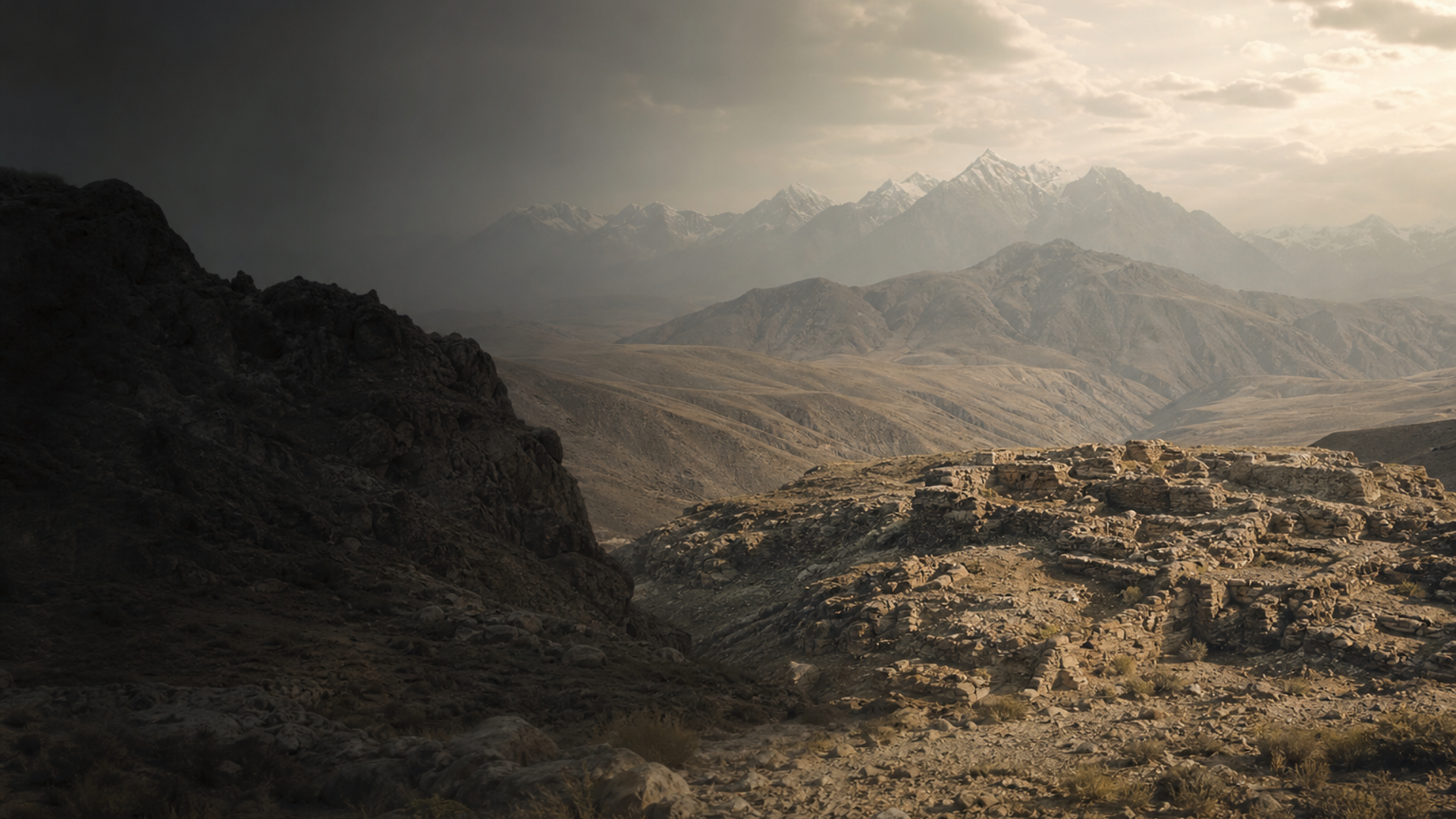
The cinematic sweep of this landscape — arid foothills, river corridors, and mountain passes — shaped mobility and contact. Limited evidence suggests that Dashty-Kozy participated in exchange routes that linked the oases and steppe margins. Material styles in the region often reflect hybrid influences from the Bactria–Margiana sphere to the south and steppe groups to the north, but precise cultural attribution for Dashty-Kozy remains cautious.

Crucially, only three individuals from Dashty-Kozy have yielded genome-wide data. Because N < 10, demographic inferences are provisional: these genomes provide tantalizing glimpses rather than comprehensive portraits. They do, however, anchor a point in time and place where archaeology and ancient DNA can be read together to explore the human stories of Bronze Age Central Asia.

  • Site: Dashty-Kozy, southern Tajikistan; dated 1650–1400 BCE
  • Context: Late Bronze Age occupation/funerary horizons linked to regional exchange
  • Sample size is small (3 individuals); conclusions remain preliminary

Daily Life & Society

Archaeological data indicates a community shaped by pastoralism, craft, and seasonal movement across mountain and riverine landscapes. While direct evidence from Dashty-Kozy is limited, broader Bronze Age patterns in the region suggest mixed economies: herding of sheep, goats, and cattle; cultivation in irrigated valleys; and the manufacture and exchange of metalwork and pottery.

Burial contexts in nearby sites often preserve ceramic assemblages, metal objects, and animal offerings that speak to social differentiation and ritual practice. Settlement traces imply households organized around kin groups with access to regional trade routes. The human remains from Dashty-Kozy allow us to glimpse individuals who lived at the crossroads of mobility and rooted settlement: their bodies carried the isotopic and genetic signatures of landscapes traversed.

Interpreting daily life from a trio of genomes requires restraint. Material culture and environmental evidence remain primary for reconstructing diet, craft, and social structure; genetics complements these lines by revealing ancestry and possible mobility patterns. Together, they evoke a society where local traditions and long-distance ties coexisted in the Bronze Age margins of Central Asia.

  • Economy likely mixed: herding, irrigated cultivation, craft and metal exchange
  • Burials and artifacts indicate ritual practice and regional connections

Genetic Profile

Genomic sampling at Dashty-Kozy is currently limited to three individuals. All three yielded mitochondrial haplogroups: two belong to haplogroup T and one to U. These maternal lineages are broadly distributed across West Eurasia in both Neolithic and Bronze Age contexts. Haplogroup T is commonly found in ancient populations from the Near East and parts of Europe, while sublineages of U are longstanding in Europe and the steppe; their presence here suggests maternal ancestry links that reach into the wider West Eurasian milieu.

No consistent Y-DNA signature is reported for these individuals, leaving paternal lineages undetermined and preventing firm statements about male-mediated migration or local patrilines. With only three genomes, population-level statistics (admixture proportions, continuity tests, or fine-scale clustering) are underpowered; any patterns must be regarded as preliminary.

Nevertheless, when combined with archaeology, these mtDNA results hint at a population with mixed ancestral threads — local Central Asian roots layered with connections to steppe and Near Eastern gene pools. Future sampling from Dashty-Kozy and neighboring sites, especially incorporating Y-chromosome and genome-wide autosomal data, will be essential to test hypotheses about mobility, admixture, and the demographic processes shaping Bronze Age Tajikistan.

  • mtDNA: T (2 individuals) and U (1 individual) — maternal ties to West Eurasia
  • No reported Y-DNA; small sample size (3) makes demographic conclusions tentative

Legacy & Modern Connections

Dashty-Kozy's small genetic snapshot contributes to a larger mosaic about human movement across Central Asia. The maternal haplogroups observed are not unique to the site; they are threads woven into the broader tapestry of Bronze Age populations that helped shape the genetic landscape of the region.

Caution is paramount: three ancient genomes cannot trace direct ancestry to modern Tajik populations. Instead, they offer moments in deep time that, when aggregated with more data, will reveal patterns of continuity, replacement, and admixture. The interplay of archaeological context and ancient DNA at Dashty-Kozy underscores how individuals embodied networks of exchange, marriage, and mobility that left enduring traces in the genetic heritage of Eurasia.

As researchers expand sampling across Tajikistan and adjacent regions, Dashty-Kozy will serve as an early, evocative waypoint — a place where artifacts, bones, and molecules converge to narrate Bronze Age human lives.

  • Provides a preliminary genetic snapshot of Bronze Age maternal lineages in southern Tajikistan
  • Suggests ancestral threads shared with wider West Eurasian and steppe populations; broader sampling needed

עוזר הבינה המלאכותית

עוזר הבינה המלאכותית מאת DNA Genics

פתיחת התכונה הזו
שאלו שאלות על תרבות Dashty-Kozy: Bronze Age Echoes. העוזר יכול להסביר ממצאים גנטיים, הקשר היסטורי, ראיות ארכאולוגיות וקשרים לעת המודרנית.
דוגמה לניתוח בבינה מלאכותית

מבט על תרבות Dashty-Kozy: Bronze Age Echoes

דגימות DNA קדום עוזרות לחוקרים לחקור דפוסי נדידה וקשרים גנטיים בין אוכלוסיות קדומות.

זו תצוגה מקדימה של הניתוח. העוזר המלא מאפשר לעיין בנושאים הבאים:

  • הרכב גנטי ודמיון גנטי
  • דפוסי נדידה ומקורות
  • חיי יומיום ומנהגים תרבותיים
  • קשרים גנטיים בני זמננו