דילוג לתוכן הראשי
תיקי DNA

Shkrel — Middle Bronze Age Albania

A lone mitochondrial voice from 1880–1695 BCE, illuminating Bronze Age uplands of northern Albania.

1880 CE - 1695 BCE
Shkrel, northern Albania

הסיפור

Archaeological and single-sample aDNA evidence from Shkrel, Albania (1880–1695 BCE) offers a tentative window into Middle Bronze Age lifeways and maternal lineages (mtDNA H). Limited sampling means conclusions are preliminary, but ties to broader Balkan Bronze Age genetic shifts are discussed.

Time Period

1880–1695 BCE (Middle Bronze Age)

Region

Shkrel, northern Albania

Common Y-DNA

Not reported / no data

Common mtDNA

H (1 sample)

ציר הזמן

1880 BCE

Start of dated interval for Shkrel sample

Archaeogenetic sample from Shkrel falls within 1880–1695 BCE, marking the site's Middle Bronze Age context.

Origins & Emergence

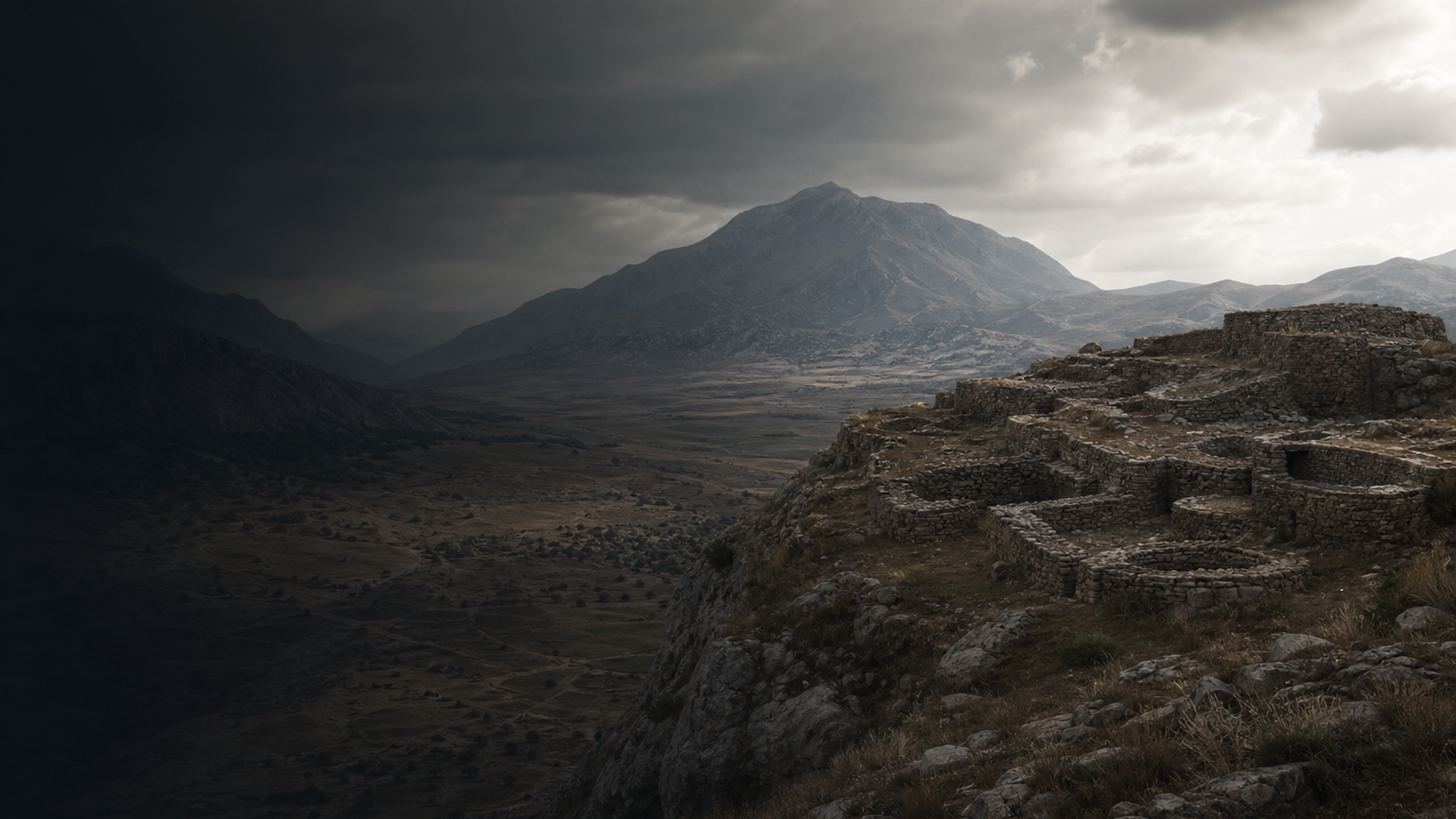
Shkrel occupies a highland corridor in northern Albania where rocky ridges and river valleys funnel human movement between the Adriatic coast and the Balkan interior. Archaeological data indicates occupation in the Middle Bronze Age (circa 1880–1695 BCE), a period marked across the region by increased mobility, metalworking, and exchanges of styles and goods.

Material traces in nearby areas suggest communities engaged with wider Balkan networks—sharing ceramic forms, bronze technologies, and burial customs—yet local adaptations are visible in settlement placement and resource use. Limited evidence from Shkrel itself constrains firm cultural attribution: the picture is of a community shaped both by long-standing local traditions and by contacts along trade and pastoral corridors.

From an archaeological standpoint, the Shkrel sequence fits within a mosaic of Middle Bronze Age lifeways in the western Balkans: small settlements, seasonal pasture use, and growing metallurgical skill. Genetic data from a single individual complements this view by offering a maternal lineage snapshot, but low sample size requires cautious interpretation. Together, archaeology and genetics illuminate a place where landscapes and human networks converged, even if the full story remains only partially written.

  • Located in Malësi e Madhe region, northern Albania (Shkrel)
  • Dates: Middle Bronze Age, 1880–1695 BCE
  • Evidence suggests local traditions interacting with wider Balkan exchanges

Daily Life & Society

Imagine a village perched on terraces overlooking a fast river: households clustered near pasture and arable plots, where barley and pulses supplemented flocks of sheep and goats. Archaeological parallels across the Balkans indicate mixed agro-pastoral economies in the Middle Bronze Age, and Shkrel likely followed this pattern—seasonal movement to upland pastures, with permanent or semi-permanent lowland fields for crops.

Craft production and exchange shaped daily rhythms. Bronze-working furnaces, smithing residues, and standardized pottery in contemporary sites point to local metal workshops and artisan households. Objects—tools, pins, and decorated vessels—bear the fingerprints of regional styles, implying the movement of ideas and objects along river valleys and mountain passes.

Social organization was probably kin-based and flexible: households cooperating for herding and harvest, communities gathering for seasonal rituals and trade. Burials from the broader region show variation from simple inhumations to richer interments; however, specific funerary details from Shkrel remain sparse. Limited excavated contexts mean reconstructions of status differentiation and ritual must remain provisional, drawn from broader regional analogies rather than extensive local evidence.

  • Mixed agro-pastoral economy with seasonal upland grazing
  • Local craft production (metalwork, pottery) connected to regional exchange

Genetic Profile

Genetic data from Shkrel currently rests on a single sequenced individual dated between 1880 and 1695 BCE. The recovered mitochondrial haplogroup is H—one of the most common maternal lineages in later European populations and present in Europe since the Neolithic and earlier phases. This single H lineage provides a maternal snapshot but cannot capture population diversity.

No Y-chromosome data are reported for this sample, so paternal lineages at Shkrel remain unknown. Because the sample count is one, any inference about population-level ancestry, sex-biased migration, or demographic change is highly tentative. Nevertheless, contextualizing this finding within broader ancient DNA research across the Balkans is informative: many Bronze Age Balkan individuals exhibit increasing proportions of Steppe-related ancestry relative to earlier Neolithic farmers, alongside persistent local lineages. If further sampling from Shkrel or nearby sites confirms similar patterns, it would suggest participation in the regional demographic processes of the Bronze Age.

In sum, the mtDNA H from Shkrel echoes widespread maternal continuity in parts of Europe, but the picture of genetic change (timing, source, and scale) in northern Albania requires additional samples. Any robust claims about population structure or continuity here must await larger, well-dated datasets.

  • mtDNA haplogroup H recovered (1 individual)
  • Single-sample evidence: conclusions are preliminary; more aDNA needed

Legacy & Modern Connections

The Shkrel individual offers a whisper from a Bronze Age world with cultural and genetic threads that can extend into later millennia. Modern populations in the western Balkans carry a mosaic of ancestry components—Neolithic farmer, Bronze Age Steppe-related, and local Mesolithic elements—so ancient samples like Shkrel help map when and how these threads combined.

However, because only one mitochondrial lineage is known from Shkrel, claims of direct continuity to modern Albanians are premature. Archaeological continuity of settlement in parts of northern Albania suggests long-term regional occupation, but genetic continuity is debated and likely complex, involving migrations, local persistence, and admixture over thousands of years. Future multidisciplinary work—combining more aDNA, isotopes, and detailed archaeological survey—will clarify how this Middle Bronze Age upland community contributed to the genetic and cultural tapestry of the Balkans.

  • Provides a maternal-line snapshot relevant to Balkan ancestry reconstructions
  • Direct links to modern populations remain uncertain without broader sampling

עוזר הבינה המלאכותית

עוזר הבינה המלאכותית מאת DNA Genics

פתיחת התכונה הזו
שאלו שאלות על תרבות Shkrel — Middle Bronze Age Albania. העוזר יכול להסביר ממצאים גנטיים, הקשר היסטורי, ראיות ארכאולוגיות וקשרים לעת המודרנית.
דוגמה לניתוח בבינה מלאכותית

מבט על תרבות Shkrel — Middle Bronze Age Albania

דגימות DNA קדום עוזרות לחוקרים לחקור דפוסי נדידה וקשרים גנטיים בין אוכלוסיות קדומות.

זו תצוגה מקדימה של הניתוח. העוזר המלא מאפשר לעיין בנושאים הבאים:

  • הרכב גנטי ודמיון גנטי
  • דפוסי נדידה ומקורות
  • חיי יומיום ומנהגים תרבותיים
  • קשרים גנטיים בני זמננו