Menu
Store
Blog
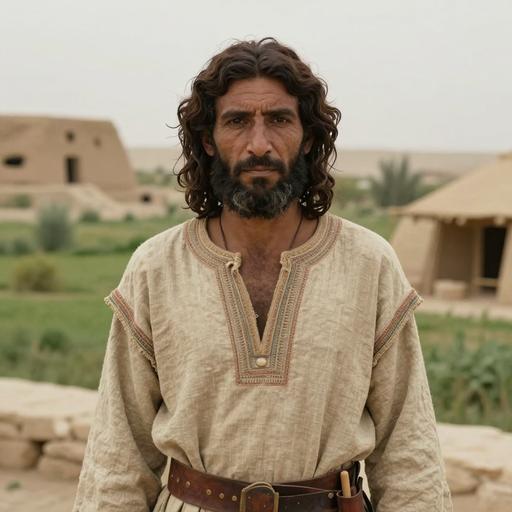
Portrait reconstruction of Darra.I.Kur
Ancient Individual

A man buried in Afghanistan in the Middle Bronze Age era

Darra.I.Kur
2581 BCE - 2411 BCE
Male
Middle Bronze Age Darral-Kur
Afghanistan
Scroll to begin
Chapter I

Identity

The biological and cultural markers that define this ancient individual

Sample ID

Darra.I.Kur

Date Range

2581 BCE - 2411 BCE

Biological Sex

Male

mtDNA Haplogroup

H2a

Y-DNA Haplogroup

R-M479

Cultural Period

Middle Bronze Age Darral-Kur

Chapter II

Place

Where this individual was discovered

Country Afghanistan
Locality Darra-i-Kur Cave
Coordinates 36.7833, 70.0000
Chapter III

Time

When this individual lived in the broader context of human history

Darra.I.Kur 2581 BCE - 2411 BCE
Chapter IV

Story

The narrative of this ancient life

Middle Bronze Age Darral-Kur, Afghanistan

Introduction

Darral-Kur is a cave site located in northern Afghanistan, occupied during the Middle Bronze Age (approximately 2000 to 1500 BCE). While it was never a major settlement or urban center, Darral-Kur holds archaeological significance as a seasonal shelter used by mobile pastoralist communities. These pastoralists occupied a crucial cultural and ecological crossroads, connecting the highlands of Afghanistan to the wealthier lowland civilizations of the Bactria-Margiana Archaeological Complex (BMAC) and the Indus Valley Civilization.


Geography and Environmental Context

Situated in the Hindu Kush foothills, Darral-Kur lies within a mountainous landscape, marked by steep terrain, narrow valleys, and seasonal water sources. This environment supported a transhumant lifestyle, where pastoralists moved their herds between high-altitude summer pastures and lower valleys during the winter.
Darral-Kur itself offered natural shelter along these migration routes, making it a practical seasonal camp rather than a year-round settlement.


Key Events and Cultural Context

Although no single historical event defines Darral-Kur, its significance lies in its relationship to broader Bronze Age developments across the region, including:

  • The expansion of regional trade networks that linked BMAC, the Indus Valley, and Central Asia.
  • The growing demand for copper, tin, and finished bronze goods, some of which passed through highland trade corridors.
  • The adaptation of mobile pastoralists to these changing economic landscapes, maintaining cultural contact with larger settled civilizations while preserving their highland-oriented economy.

At Darral-Kur, we do not see fortifications, public works, or planned settlements, but we do see evidence of a community adapted to mobility and exchange, able to navigate the cultural currents flowing through the region.


Society and Social Structure

The inhabitants of Darral-Kur were likely small, kin-based groups of herders and hunters, organized around family and clan ties. Leadership was probably informal and situational, led by experienced elders rather than powerful chiefs or kings.

This stands in stark contrast to the urban social hierarchies seen in BMAC or the Indus Valley, but these pastoralists were not isolated—they maintained seasonal economic and cultural connections with lowland settlements.


Economy and Subsistence

The economic foundation of Darral-Kur’s community rested on:

  • Herding sheep and goats, ideal for mountainous terrain.
  • Hunting wild game, including ibex and deer.
  • Foraging for plant resources, especially during seasonal migrations.
  • Engagement in exchange networks, trading animal products (furs, hides, meat) for metal tools, pottery, and other goods produced in lowland centers like those of BMAC.

Unlike the irrigated farming systems of nearby civilizations, agriculture played little to no role at Darral-Kur itself.


Material Culture and Technology

Archaeological evidence from Darral-Kur reveals a practical toolkit suited to mobile pastoral life:

  • Stone tools, including scrapers and knives for processing hides and meat.
  • Bone and antler tools, reflecting efficient use of available materials.
  • Basic ceramics, possibly obtained through trade rather than made on-site.
  • Bronze objects, likely traded in from lowland metalworking centers, rather than being produced at Darral-Kur itself.

Art and Symbolism

Artistic expression at Darral-Kur was modest compared to the rich visual cultures of the Indus Valley or BMAC. No evidence of writing or formal symbolic systems has been recovered from the site.
However, simple ornaments, decorated pottery (if found), and practical objects may have carried personal or spiritual meaning for the people who passed through the cave.
The cave itself may have had symbolic importance, with its sheltering role tied to spiritual beliefs about protection, ancestors, or natural spirits.


Key Technologies

Though not a technological innovator, Darral-Kur’s importance lies in its participation in regional technological flows:

  • Adoption of bronze tools from nearby lowland centers.
  • Knowledge of pastoral animal management, including strategies for highland survival.
  • Practical stone tool manufacturing, suited to mobile life.

Cultural and Trade Networks

Darral-Kur was part of a highland corridor linking:

  • The urban heartlands of Bactria-Margiana.
  • The distant Indus Valley trading system.
  • The northern Eurasian steppe zones.

Though it was a minor node in this network, its inhabitants benefited from the steady flow of goods, materials, and ideas, blending local highland traditions with influences from powerful lowland neighbors.


Achievements and Legacy

The legacy of Darral-Kur lies not in monumental architecture or famous rulers, but in its demonstration of adaptability:

  • The ability to survive and thrive in harsh highland environments.
  • Acting as a cultural and economic link between mobile pastoralists and settled civilizations.
  • Preserving flexible lifeways that allowed these small groups to remain culturally resilient in the face of larger regional changes.

Darral-Kur illustrates how highland peoples participated in the cultural and economic world of the Bronze Age, without adopting urban lifeways themselves.

Chapter V

Genetics

The genetic ancestry of this ancient individual

Ancient Genetic Admixture

This analysis compares the DNA profile of Darra.I.Kur with ancient reference populations, showing the genetic composition in terms of prehistoric ancestral groups.

Neolithic Farmers 49.2%
Western Steppe Pastoralists 16.0%
Ancient Asians 15.8%
European Hunter-Gatherers 13.7%
Ancient Native Americans 3.1%
Ancient Africans 2.3%

Modern Genetic Admixture

This analysis compares the DNA profile with present-day reference populations, showing what percentage of genetic makeup resembles modern populations from different regions.

Asia 98.0%
Northern West Asian 49.4%
Caucasian 36.2%
Mesopotamian 12.3%
Cypriot 0.9%
Central Asian, Northern Indian & Pakistani 48.6%
Pakistan 40.2%
Indian 8.4%
Africa 1.5%
Northern East African 1.5%
Ethiopian 1.5%

Closest Modern Populations

These are the modern populations showing the closest statistical alignment to A man buried in Afghanistan in the Middle Bronze Age era, ranked by genetic distance. Lower distance values indicate closer statistical similarity.

1
Pashtun Afghanistan
3.5340
2
Pashtun Afghanistan Paktia
3.7397
3
Pashtun Afghanistan North
3.8872
4
Pashtun Pakistan Bettani
4.0669
5
Pamiri Ishkashim
4.2508
6
Pamiri Badakhshan
4.4646
7
Pamiri Shugnan
4.5545
8
Pamiri Rushan
4.6566
9
Pashtun Pakistan Khattak Nowshera
4.6594
10
Pashtun Afghanistan Northeast
4.7510
Chapter VI

Context

Other ancient individuals connected to this sample

Sources

References

Scientific publications and genetic data

Scientific Publication

The formation of human populations in South and Central Asia

Authors Narasimhan VM, Patterson N, Moorjani P
Abstract

By sequencing 523 ancient humans, we show that the primary source of ancestry in modern South Asians is a prehistoric genetic gradient between people related to early hunter-gatherers of Iran and Southeast Asia. After the Indus Valley Civilization's decline, its people mixed with individuals in the southeast to form one of the two main ancestral populations of South Asia, whose direct descendants live in southern India. Simultaneously, they mixed with descendants of Steppe pastoralists who, starting around 4000 years ago, spread via Central Asia to form the other main ancestral population. The Steppe ancestry in South Asia has the same profile as that in Bronze Age Eastern Europe, tracking a movement of people that affected both regions and that likely spread the distinctive features shared between Indo-Iranian and Balto-Slavic languages.

G25 Coordinates

The G25 coordinates for sample Darra.I.Kur can be used for detailed admixture analysis in our G25 Studio tool.

Darra.I.Kur,0.0905496,0.05178292,-0.06193392,0.03999808,-0.0642596,0.02896116,0.00826776,0.00011184,-0.0372328,-0.02951208,-0.00583416,0.0029238,-0.00845512,-0.01115388,0.01316276,0.0043932,-0.00255408,-0.00409152,-0.003977,-0.00238732,-0.00545584,-0.0023608,0.00068376,0.00120408,-0.00543361
Analyze in G25 Studio
Use code for 40% off Expires Feb 26