Menu
Store
Blog
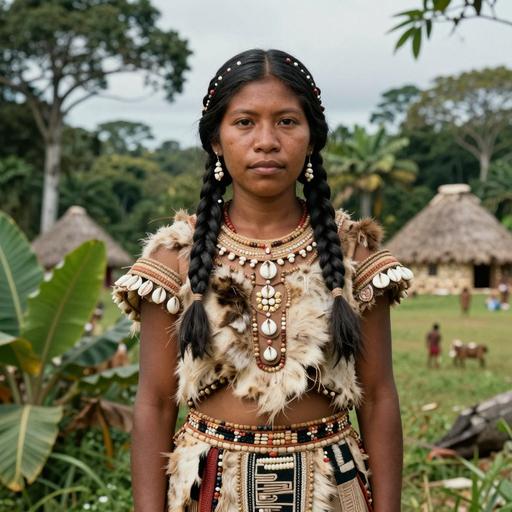
Portrait reconstruction of I13267
Ancient Individual

A woman buried in Belize in the Ancient Central America era

I13267
3630 BCE - 3379 BCE
Female
Belize 5,500 Years Ago
Belize
Scroll to begin
Chapter I

Identity

The biological and cultural markers that define this ancient individual

Sample ID

I13267

Date Range

3630 BCE - 3379 BCE

Biological Sex

Female

mtDNA Haplogroup

C1c

Cultural Period

Belize 5,500 Years Ago

Chapter II

Place

Where this individual was discovered

Country Belize
Locality Mayahak Cab Pek
Chapter III

Time

When this individual lived in the broader context of human history

I13267 3630 BCE - 3379 BCE
Chapter IV

Story

The narrative of this ancient life

The period of 5,500 years ago, or approximately 3500 BCE, in the region now known as Belize, predates the rise of the classical Maya civilization. This era falls into what archaeologists typically refer to as the Archaic period in Mesoamerican history. It is important to note that while the Maya civilization is renowned for its achievements during its Classic period (circa 250 to 900 CE), the cultural and environmental groundwork for such developments was laid much earlier.

Environmental and Geographic Context

During 3500 BCE, the area that is now Belize would have been rich in biodiversity, characterized by a tropical climate with lush rainforests, a network of rivers, and coastal mangroves. The fertile lands and ample water sources provided a hospitable environment for early human settlers who were primarily engaged in hunting, gathering, and rudimentary forms of agriculture.

Early Inhabitants and Subsistence

The communities living in Belize at this time were likely semi-nomadic, living in small, mobile groups that exploited the rich natural resources of the region. They relied on hunting animals such as deer, peccary, and various birds, while also fishing along the coast and in inland water bodies. Flora played a critical role in their diet and toolkit, with people gathering wild fruits, nuts, tubers, and herbs.

One of the hallmark developments of this period was the gradual domestication of plants, a crucial step toward more settled agricultural societies. By 3500 BCE, these early inhabitants may have started cultivating crops such as squash, beans, and chili peppers, although maize, a staple of later Maya civilization, was not yet a dominant crop.

Cultural and Technological Developments

Tools and technology during this era were relatively simple but effective. Stone tools were prevalent, including blades, scrapers, and points fashioned from local materials like chert or obsidian. These tools facilitated activities such as hunting, food processing, and crafting. Additionally, evidence suggests these communities might have engaged in some form of textile production or basket weaving, though such organic materials rarely survive in the archaeological record.

There is limited archaeological evidence about specific social structures from this time due to the scarcity of data. However, it is reasonable to assume that these early inhabitants organized themselves into kin-based groups with shared responsibilities and communal living arrangements.

Early Rituals and Beliefs

While detailed knowledge of spiritual beliefs from this period is scant, the foundations for later Mesoamerican mythologies and religious practices were likely being laid. Early belief systems would have been closely tied to the natural world, with an emphasis on animistic traditions—viewing animals, plants, and natural phenomena as possessing spiritual essence. Rituals associated with sowing and harvest cycles may have begun during this time, eventually evolving into the sophisticated calendrical rituals of the classic Maya.

Transition to Formative Developments

The Archaic period in Belize sets the stage for subsequent developments leading to the Preclassic or Formative period (2000 BCE to 250 CE), during which the foundations of Maya civilization were established. This era saw advancements in agriculture, permanent settlement of communities, and the early development of social stratification and trade networks.

Understanding life in Belize 5,500 years ago provides essential context for the complex societal structures, astronomical insights, and architectural achievements of the Maya civilization that followed. The gradual evolution of subsistence strategies and social organization during this time reflects humanity's adaptive relationship with a changing environment and the seeds of cultural progression that would culminate in the splendor of later Maya society.

Chapter V

Genetics

The genetic ancestry of this ancient individual

Modern Genetic Admixture

This analysis compares the DNA profile with present-day reference populations, showing what percentage of genetic makeup resembles modern populations from different regions.

America 91.2%
America 91.2%
Native American 91.2%
Asia 8.0%
Northern Asian 7.9%
Siberian 6.9%
Mongolian 1.0%
Africa 0.5%

Closest Modern Populations

These are the modern populations showing the closest statistical alignment to A woman buried in Belize in the Ancient Central America era, ranked by genetic distance. Lower distance values indicate closer statistical similarity.

1
Aymara
2.1799
2
Bolivian Lapaz
2.5470
3
Piapoco
2.5706
4
Yukpa
2.7461
5
Wichi
2.9526
6
Colla
3.0301
7
Cachi
3.2247
8
Mixe
3.3533
9
Mayan
4.0426
10
Huichol
4.2384
Chapter VI

Context

Other ancient individuals connected to this sample

Sources

References

Scientific publications and genetic data

Scientific Publication

South-to-north migration preceded the advent of intensive farming in the Maya region

Authors Kennett DJ, Lipson M, Prufer KM
Abstract

The genetic prehistory of human populations in Central America is largely unexplored leaving an important gap in our knowledge of the global expansion of humans. We report genome-wide ancient DNA data for a transect of twenty individuals from two Belize rock-shelters dating between 9,600-3,700 calibrated radiocarbon years before present (cal. BP). The oldest individuals (9,600-7,300 cal. BP) descend from an Early Holocene Native American lineage with only distant relatedness to present-day Mesoamericans, including Mayan-speaking populations. After ~5,600 cal. BP a previously unknown human dispersal from the south made a major demographic impact on the region, contributing more than 50% of the ancestry of all later individuals. This new ancestry derived from a source related to present-day Chibchan speakers living from Costa Rica to Colombia. Its arrival corresponds to the first clear evidence for forest clearing and maize horticulture in what later became the Maya region.

G25 Coordinates

The G25 coordinates for sample I13267 can be used for detailed admixture analysis in our G25 Studio tool.

I13267,0.0567788,-0.31450614,0.1120009,0.10067988,-0.11491856,-0.01397534,-0.29700434,-0.34899406,-0.01423272,-0.0166469,0.0026708,-0.00080406,-0.00108766,0.02416896,-0.00611816,-0.00061624,0.00591482,0.00349808,0.00136936,-0.00157566,-0.00043496,0.00730284,-0.00211256,-0.00497864,-0.00533052
Analyze in G25 Studio
Use code for 30% off Expires Apr 04