Menu
Store
Blog
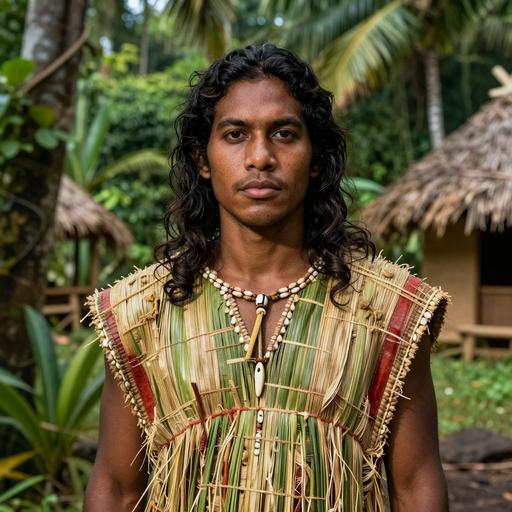
Portrait reconstruction of I13268
Ancient Individual

A man buried in Belize in the Ancient Central America era

I13268
7711 BCE - 7523 BCE
Male
Belize 9,400 Years Ago
Belize
Scroll to begin
Chapter I

Identity

The biological and cultural markers that define this ancient individual

Sample ID

I13268

Date Range

7711 BCE - 7523 BCE

Biological Sex

Male

mtDNA Haplogroup

C1b

Y-DNA Haplogroup

Not available

Cultural Period

Belize 9,400 Years Ago

Chapter II

Place

Where this individual was discovered

Country Belize
Locality Mayahak Cab Pek
Chapter III

Time

When this individual lived in the broader context of human history

I13268 7711 BCE - 7523 BCE
Chapter IV

Story

The narrative of this ancient life

Around 9,400 years ago, Belize was part of the broader region that is often referred to as pre-Columbian Mesoamerica. This era falls into the Paleoindian to the early Archaic period in the regional timeline, which is characterized by hunter-gatherer societies.

Environmental Context

During this time, the climate of Belize had evolved from being cooler and drier during the late Pleistocene era to a warmer, wetter climate in the Holocene epoch, which began approximately 11,700 years ago. The landscape was transforming as well, consisting of diverse ecosystems ranging from coastal plains, tropical forests, and savannas to the limestone lowlands. Rising sea levels following the last Ice Age were gradually shaping the coastlines and creating wetlands.

Human Inhabitants

The populations inhabiting Belize around this time were highly mobile hunter-gatherers. These small groups of people moved across the landscapes in pursuit of food resources, adapting to the changing environments. They often settled temporarily in locations that provided access to fresh water and abundant biodiversity, such as rivers, lakes, and coastal areas.

Subsistence Strategies

The people of this era were adept at exploiting the natural resources available to them. They relied on hunting a variety of animals, including deer, peccaries, tapirs, and smaller mammals, as well as birds and reptiles. Evidence suggests they also engaged in fishing and the gathering of shellfish along the coastlines.

In addition to hunting, these societies gathered extensive plant resources, including fruits, nuts, seeds, and roots. The beginnings of plant domestication were likely taking root in this era. Maize, which would become a staple crop in later Mesoamerican civilizations, had ancestral wild variants that were possibly being harvested.

Tools and Technology

The technological toolkit of these early inhabitants mainly included stone tools, which were essential for their survival. Lithic artifacts from this period reveal the use of flaked stone technology, including projectile points, scrapers, and other implements suited for hunting and processing animal hides and plant materials. The stone tools demonstrate a high level of skill in flint knapping, shaping materials like chert found in the region.

Cultural Aspects

Cultural practices and social structures are difficult to pinpoint due to limited archaeological evidence, but it's likely that these groups had complex social networks. These networks would have facilitated the exchange of goods, information, and perhaps even marriage partners, contributing to genetic diversity and cultural continuity.

The absence of written records means much of what we understand about this era comes from the study of archeological sites, including rock shelters and other temporary camps. These excavations provide insight into daily life, tool production, and subsistence patterns.

Spiritual and Artistic Life

Though direct evidence is scarce, it is plausible that early spiritual beliefs were developing during this period. Animistic views, where natural features and animals were seen as imbued with spirit, might have been prevalent, possibly influencing hunting rituals and site selection.

Artistic expression may have taken the form of body decoration, simple carvings, or ceremonial structures using available natural materials. Perishable materials used for art might not have survived, but forms of expression likely existed, contributing to group identity and cohesion.

Legacy and Transition

The period around 9,400 years ago in Belize set the stage for subsequent developments in the region. As the Holocene progressed, these early human groups slowly transitioned from mobile bands to more sedentary communities, leading to the foundation of complex societies. This era laid the groundwork for the later emergence of sophisticated Mesoamerican cultures, such as the Maya, millennia later.

Overall, this time in Belize 9,400 years ago was one of adaptation and gradual transformation, characterized by human ingenuity in negotiating a dynamic landscape and climate.

Chapter V

Genetics

The genetic ancestry of this ancient individual

Modern Genetic Admixture

This analysis compares the DNA profile with present-day reference populations, showing what percentage of genetic makeup resembles modern populations from different regions.

America 90.0%
America 90.0%
Native American 90.0%
Asia 8.2%
Chinese & Southeast Asian 6.8%
Chinese 6.0%
Tibetan 0.9%
Northern Asian 1.4%
Siberian 1.4%
Africa 1.5%
Congolese & Southern East African 1.5%
South East African 1.5%

Closest Modern Populations

These are the modern populations showing the closest statistical alignment to A man buried in Belize in the Ancient Central America era, ranked by genetic distance. Lower distance values indicate closer statistical similarity.

1
Mixe
2.3644
2
Huichol
2.9283
3
Pima
3.0443
4
Bolivian Lapaz
3.0954
5
Cachi
3.1868
6
Mayan
3.1917
7
Aymara
3.4322
8
Zapotec
3.5225
9
Colla
3.5675
10
Nahua
3.6161
Chapter VI

Context

Other ancient individuals connected to this sample

Sources

References

Scientific publications and genetic data

Scientific Publication

South-to-north migration preceded the advent of intensive farming in the Maya region

Authors Kennett DJ, Lipson M, Prufer KM
Abstract

The genetic prehistory of human populations in Central America is largely unexplored leaving an important gap in our knowledge of the global expansion of humans. We report genome-wide ancient DNA data for a transect of twenty individuals from two Belize rock-shelters dating between 9,600-3,700 calibrated radiocarbon years before present (cal. BP). The oldest individuals (9,600-7,300 cal. BP) descend from an Early Holocene Native American lineage with only distant relatedness to present-day Mesoamericans, including Mayan-speaking populations. After ~5,600 cal. BP a previously unknown human dispersal from the south made a major demographic impact on the region, contributing more than 50% of the ancestry of all later individuals. This new ancestry derived from a source related to present-day Chibchan speakers living from Costa Rica to Colombia. Its arrival corresponds to the first clear evidence for forest clearing and maize horticulture in what later became the Maya region.

G25 Coordinates

The G25 coordinates for sample I13268 can be used for detailed admixture analysis in our G25 Studio tool.

I13268,0.05531268,-0.31735786,0.1142855,0.09515272,-0.11658672,-0.01453492,-0.28516848,-0.33451144,-0.01184322,-0.01559196,0.00490404,-0.00074188,-0.00137232,0.02268896,-0.00665424,-0.00191006,0.00577356,0.0038845,0.00283602,-0.00076666,0.00186422,0.00493794,-0.00145148,-0.0045666,-0.00446521
Analyze in G25 Studio
Use code for 30% off Expires Apr 04