Menu
Store
Blog
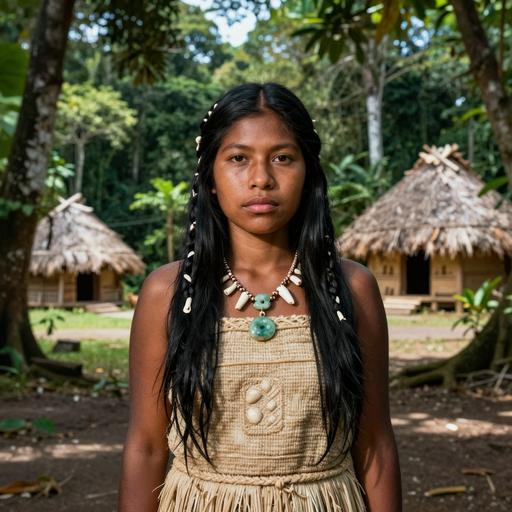
Portrait reconstruction of I24541
Ancient Individual

An individual buried in Belize in the Ancient Central America era

I24541
10100 BCE - 9400 BCE
Not known
Belize 11,700 Years Ago
Belize
Scroll to begin
Chapter I

Identity

The biological and cultural markers that define this ancient individual

Sample ID

I24541

Date Range

10100 BCE - 9400 BCE

Biological Sex

Not known

mtDNA Haplogroup

Not available

Cultural Period

Belize 11,700 Years Ago

Chapter II

Place

Where this individual was discovered

Country Belize
Locality Mayahak Cab Pek
Chapter III

Time

When this individual lived in the broader context of human history

I24541 10100 BCE - 9400 BCE
Chapter IV

Story

The narrative of this ancient life

Around 11,700 years ago, during what is commonly referred to as the Late Pleistocene to Early Holocene transition, the region we now know as Belize was experiencing significant environmental and cultural changes. This period marks the end of the Ice Age, a time characterized by significant global climatic shifts and the gradual warming of the planet.

Environment and Geography: Belize at this time was a mix of diverse ecosystems. As the Ice Age ended, rising temperatures led to the retreat of glaciers globally, causing sea levels to rise. The changing climate transformed the landscape from more open savannas to dense tropical forests, particularly in lowland areas. The geographic makeup included a mix of coastal plains, lowland jungles, and mountainous regions to the south, which were continually being shaped by tectonic activities and climatic conditions.

Flora and Fauna: With climate change came shifts in the natural flora and fauna of the region. The extinction of megafauna such as mastodons and giant ground sloths had recently occurred, likely due to a combination of overhunting by humans and changing environmental conditions. Surviving species adapted to the evolving habitats, and the abundance of plant life began to resemble what is seen in modern tropical rainforests. These forests provided a rich source of food and materials for the people inhabiting the region.

Human Presence and Activity: Human presence in Belize during this time was marked by small, mobile hunter-gatherer groups. These groups are believed to have been part of the Paleo-Indian tradition, characterized by their nomadic lifestyle, primarily reliant on hunting, gathering, and possibly early forms of agriculture. Evidence from nearby regions suggests that the people had begun experimenting with the domestication of plants, a precursor to the more extensive agricultural practices that would develop later in the Archaic period.

Tools and Technology: The tools used by these peoples were typically crafted from readily available materials like stone, bone, and wood. Stone tools such as spear points, scrapers, and knives were common and essential for hunting and processing animals. The lithic technology, while simple, was highly effective for their needs. These implements were often made from chert or flint, which were abundant in the region.

Cultural Aspects: While much of what we can infer about the cultural practices of these people comes from archaeological findings, it is believed that their society was communal, with shared responsibilities for foraging and hunting. Social structures were likely egalitarian, as is common among hunter-gatherer societies. Artifacts such as stone tools and possibly early forms of personal adornments, suggest a culture that, while primarily focused on survival, also engaged in social and possibly spiritual activities.

Settlement Patterns: Settlements during this period were temporary and dictated by the availability of resources. These groups would have moved frequently in response to the needs of their subsistence strategy, following animal migrations and the seasonal availability of plants. There may have been seasonal camps, particularly near water sources, which were crucial for survival in the tropical climate.

Interactions and Trade: The concept of trade, albeit rudimentary, likely existed even at this early time. Exchange networks for essential resources like obsidian—a valuable material for tool-making—began to form. These networks foreshadowed the complex trade systems that would develop in Mesoamerica millennia later. Interaction between groups would have been necessary for genetic diversity and knowledge exchange.

In summary, Belize 11,700 years ago was a land of dynamic change, with its inhabitants adapting ingeniously to new environments. Their legacy, while not as prominently documented as later Mesoamerican cultures, laid crucial groundwork for the rise of complex agrarian societies and the sophisticated civilizations that followed, such as the Maya. The transition from nomadic lifestyles to more settled ways of living marked the beginning of a long cultural evolution in the region.

Chapter V

Genetics

The genetic ancestry of this ancient individual

Modern Genetic Admixture

This analysis compares the DNA profile with present-day reference populations, showing what percentage of genetic makeup resembles modern populations from different regions.

America 93.1%
America 93.1%
Native American 93.1%
Asia 4.5%
Chinese & Southeast Asian 4.5%
Indonesian Khmer Thai Myanma 4.5%
Europe 2.3%
Northwestern European 2.3%
Finnish 2.3%

Closest Modern Populations

These are the modern populations showing the closest statistical alignment to An individual buried in Belize in the Ancient Central America era, ranked by genetic distance. Lower distance values indicate closer statistical similarity.

1
Mixtec
2.8350
2
Mayan
3.0567
3
Zapotec
3.1133
4
Nahua
3.6488
5
Bolivian Cochabamba
3.6952
6
Quechua
3.7154
7
Pima
3.9695
8
Cachi
4.1336
9
Bolivian Pando
4.1919
10
Huichol
4.3773
Chapter VI

Context

Other ancient individuals connected to this sample

Sources

References

Scientific publications and genetic data

Scientific Publication

South-to-north migration preceded the advent of intensive farming in the Maya region

Authors Kennett DJ, Lipson M, Prufer KM
Abstract

The genetic prehistory of human populations in Central America is largely unexplored leaving an important gap in our knowledge of the global expansion of humans. We report genome-wide ancient DNA data for a transect of twenty individuals from two Belize rock-shelters dating between 9,600-3,700 calibrated radiocarbon years before present (cal. BP). The oldest individuals (9,600-7,300 cal. BP) descend from an Early Holocene Native American lineage with only distant relatedness to present-day Mesoamericans, including Mayan-speaking populations. After ~5,600 cal. BP a previously unknown human dispersal from the south made a major demographic impact on the region, contributing more than 50% of the ancestry of all later individuals. This new ancestry derived from a source related to present-day Chibchan speakers living from Costa Rica to Colombia. Its arrival corresponds to the first clear evidence for forest clearing and maize horticulture in what later became the Maya region.

G25 Coordinates

The G25 coordinates for sample I24541 can be used for detailed admixture analysis in our G25 Studio tool.

I24541,0.05697462,-0.29316,0.09360346,0.09635548,-0.08789936,-0.01560014,-0.27053692,-0.31799848,-0.01507336,-0.01608174,0.00024096,-0.00037622,-0.00171758,0.02141028,-0.00323814,-0.00150966,0.00442592,0.00201558,0.00019002,-0.002392,0.000358,0.0077861,-0.00159616,-0.00406442,-0.0056795
Analyze in G25 Studio
Use code for 30% off Expires Apr 04