Menu
Store
Blog
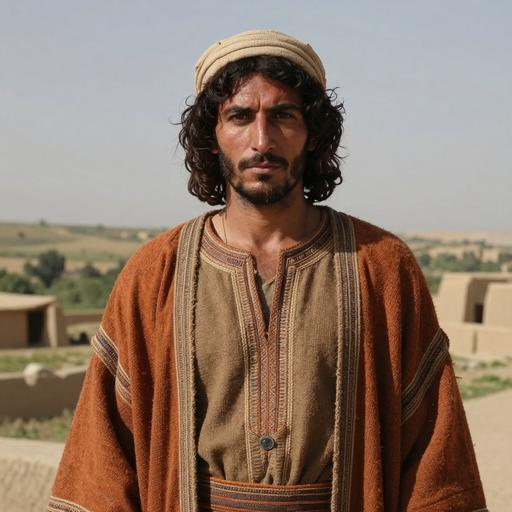
Portrait reconstruction of I2327
Ancient Individual

A man buried in Iran in the Iron Age era

I2327
1201 BCE - 1015 BCE
Male
Iron Age Hajji Firuz
Iran
Scroll to begin
Chapter I

Identity

The biological and cultural markers that define this ancient individual

Sample ID

I2327

Date Range

1201 BCE - 1015 BCE

Biological Sex

Male

mtDNA Haplogroup

K1a17a

Y-DNA Haplogroup

R-M12149

Cultural Period

Iron Age Hajji Firuz

Chapter II

Place

Where this individual was discovered

Country Iran
Locality Hajji Firuz
Coordinates 36.9944, 45.4744
Chapter III

Time

When this individual lived in the broader context of human history

I2327 1201 BCE - 1015 BCE
Chapter IV

Story

The narrative of this ancient life

The Iron Age Hajji Firuz culture, part of the broader early Persian civilization, is a fascinating chapter in the history of the ancient Near East, and it provides significant insights into the development of early societies in what is now modern-day Iran. This culture is particularly known to archaeologists and historians through discoveries at the Hajji Firuz Tepe site in northwestern Iran, specifically in the Solduz Valley, which falls within the geographical scope of ancient Media and later at the fringe of the powerful Persian empires.

Archaeological Context:

Hajji Firuz Tepe Site:

  • The Hajji Firuz Tepe site was extensively explored in the 1960s and 1970s, highlighting the transition from pre-ceramic Neolithic societies to the late Iron Age.
  • The site encompasses multiple levels of habitation, with clear evidence of the progression of material culture and technology over thousands of years.

Cultural and Technological Developments:

Iron Metallurgy:

  • The Iron Age, typically dated from around 1200 BCE onwards, marks a period of significant technological advancement with the introduction and refinement of iron smelting and working.
  • This development led to the production of stronger tools and weapons, which had widespread implications for both agriculture and warfare.

Ceramics and Pottery:

  • Pottery from the Hajji Firuz era is notable for its diversity and sophistication. The ceramics often featured intricate designs, suggesting a society with advanced artistic sensibilities and social stratification that included artisans and skilled craftspeople.
  • Excavations have unearthed a variety of pottery styles indicating both utilitarian and ceremonial uses.

Sociopolitical Structure:

Settlement Patterns:

  • The transition to Iron Age practices coincided with the growth of permanent and semi-permanent settlements, likely spurred by advancements in agriculture facilitated by iron tools.
  • These settlements suggest a move towards more complex social structures and possibly the early forms of governmental organization or tribal federations.

Trade and Interaction:

  • The Hajji Firuz culture was likely involved in early trade networks, as evidenced by the presence of non-local materials and influences in the archaeological record. This suggests interactions with neighboring cultures, such as the Urartians to the northwest and Elamites to the south.
  • Items such as lapis lazuli, possibly imported from Afghanistan, indicate long-distance trade connections and the beginning of cultural exchanges that would later characterize the Persian Empire.

Religion and Ritual:

Burial Practices:

  • Archaeological evidence points to diverse burial customs, ranging from simple interments to more elaborate tombs, possibly reflecting the social hierarchy.
  • Burial goods often included pottery, ornaments, and tools, suggesting beliefs in an afterlife where such items would be needed.

Ritual and Spirituality:

  • Limited evidence suggests ritualistic practices, potentially including early forms of worship that would evolve and be syncretized into later Zoroastrian beliefs.

Significance and Legacy:

Cultural Influence:

  • The Hajji Firuz culture contributes to our understanding of the early Persian Civilization as a dynamic entity characterized by increasing complexity and regional influence.
  • While the region would later be assimilated into larger empires such as the Median and Achaemenid (Persian) empires, the cultural practices and technological advancements from this era laid foundational stones for subsequent developments.

Continuity and Change:

  • The legacy of the Iron Age Hajji Firuz can be traced through continuity in burial customs, metallurgy, and pottery styles that evolved but retained certain indigenous characteristics even in later periods.
  • Insights into the everyday life, economic systems, and sociopolitical structures during the Iron Age play an essential role in constructing the broader narrative of ancient Persia's emergence as a major civilization.

The Iron Age Hajji Firuz era is a testament to the enduring complexity and rich cultural fabric of ancient Persia, offering a window into the technological innovations, social transformations, and cultural interactions that characterized the dawn of one of history's greatest civilizations.

Chapter V

Genetics

The genetic ancestry of this ancient individual

Ancient Genetic Admixture

This analysis compares the DNA profile of I2327 with ancient reference populations, showing the genetic composition in terms of prehistoric ancestral groups.

Neolithic Farmers 65.6%
European Hunter-Gatherers 19.0%
Ancient Asians 9.3%
Western Steppe Pastoralists 6.1%

Modern Genetic Admixture

This analysis compares the DNA profile with present-day reference populations, showing what percentage of genetic makeup resembles modern populations from different regions.

Asia 94.6%
Northern West Asian 62.4%
Caucasian 39.8%
Mesopotamian 18.1%
Cypriot 4.5%
Arab, Egyptian & Levantine 18.0%
Levantine 10.7%
Arabian 7.3%
Central Asian, Northern Indian & Pakistani 14.3%
Pakistan 9.4%
Indian 4.9%
Europe 5.4%
Southern European 4.9%
Italian 4.9%

Closest Modern Populations

These are the modern populations showing the closest statistical alignment to A man buried in Iran in the Iron Age era, ranked by genetic distance. Lower distance values indicate closer statistical similarity.

1
Iranian Mazandarani
2.5515
2
Iranian Zoroastrian
2.6336
3
Iranian Persian Fars
2.7025
4
Iranian Lor Bakhtiari
2.7845
5
Iranian Cosmopolitan Tehran
2.7971
6
Talysh Azerbaijan
2.8059
7
Irani Zoroastrian India
2.8667
8
Iranian Lor Khorramabad
2.8821
9
Iranian Persian Yazd
2.9360
10
Kurd USSR
3.0436
Chapter VI

Context

Other ancient individuals connected to this sample

Sources

References

Scientific publications and genetic data

Scientific Publication

The formation of human populations in South and Central Asia

Authors Narasimhan VM, Patterson N, Moorjani P
Abstract

By sequencing 523 ancient humans, we show that the primary source of ancestry in modern South Asians is a prehistoric genetic gradient between people related to early hunter-gatherers of Iran and Southeast Asia. After the Indus Valley Civilization's decline, its people mixed with individuals in the southeast to form one of the two main ancestral populations of South Asia, whose direct descendants live in southern India. Simultaneously, they mixed with descendants of Steppe pastoralists who, starting around 4000 years ago, spread via Central Asia to form the other main ancestral population. The Steppe ancestry in South Asia has the same profile as that in Bronze Age Eastern Europe, tracking a movement of people that affected both regions and that likely spread the distinctive features shared between Indo-Iranian and Balto-Slavic languages.

G25 Coordinates

The G25 coordinates for sample I2327 can be used for detailed admixture analysis in our G25 Studio tool.

I2327,0.09247314,0.11099208,-0.07004888,-0.02558304,-0.05225036,-0.00096346,0.00717876,-0.0038441,-0.03830974,-0.02404236,-0.00084966,0.00037362,-0.00535002,0.00284894,0.01087058,0.00510602,-0.00577686,-0.00428106,0.0013983,-0.00197022,0.0025316,-0.00252644,0.00036448,-0.00487238,0.00233134
Analyze in G25 Studio
Use code for 40% off Expires Feb 26