Menu
Store
Blog
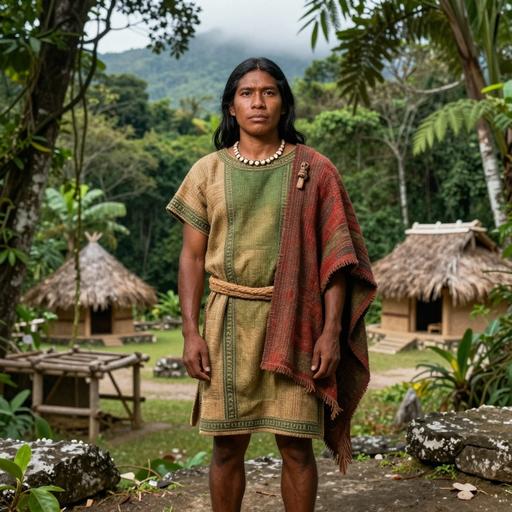
Portrait reconstruction of I7556
Ancient Individual

A man buried in Belize in the Archaic era

I7556
3761 BCE - 3637 BCE
Male
Archaic Period Belizean Culture
Belize
Scroll to begin
Chapter I

Identity

The biological and cultural markers that define this ancient individual

Sample ID

I7556

Date Range

3761 BCE - 3637 BCE

Biological Sex

Male

mtDNA Haplogroup

Not available

Y-DNA Haplogroup

Not available

Cultural Period

Archaic Period Belizean Culture

Chapter II

Place

Where this individual was discovered

Country Belize
Locality Mayahak Cab Pek (Toledo District, Maya Mountains, Bladen Nature Reserve)
Chapter III

Time

When this individual lived in the broader context of human history

I7556 3761 BCE - 3637 BCE
Chapter IV

Story

The narrative of this ancient life

The Archaic Period in Belize, often referred to as the Pre-Maya era, is a captivating and formative epoch that laid the groundwork for the rich and complex Mesoamerican civilization that followed. This period is generally dated from around 8000 BCE to 2000 BCE. It marks the transitional phase between the Paleo-Indian era, characterized by nomadic hunter-gatherers, and the rise of the Maya civilization. This era is crucial for understanding the sociocultural and technological evolution that eventually led to one of the most advanced civilizations of the ancient world.

Environment and Geography

During the Archaic Period, the geographical landscape of what is today Belize was vastly different due to climatic fluctuations following the last Ice Age. The region is characterized by diverse environments, including coastal areas, lowland jungles, river valleys, and upland regions. This varied geography provided multiple ecological niches that early inhabitants exploited for survival. The coastal areas were particularly significant for their resources, as they provided an abundant supply of marine life.

Society and Economy

The society during the Archaic Period was primarily composed of semi-nomadic groups that relied heavily on foraging, fishing, and hunting. Early inhabitants utilized a wide array of natural resources, and their subsistence strategies varied according to local environments. The evidence suggests that these groups had a diet that included small mammals, reptiles, birds, shellfish, and a variety of plant-based foods. Key plant species likely included wild tubers, fruits, seeds, and nuts.

As the period progressed, there is evidence of the gradual domestication of plants, marking the beginnings of agriculture. The introduction of staple crops such as maize, beans, and squash began to shift the economic practices of these groups towards a more sedentary lifestyle, laying the foundation for complex societies.

Technology and Innovation

The Archaic people of Belize were skilled artisans within their technological bounds, primarily using stone tools. They manufactured a variety of implements, including spear points, knives, and scrapers, made from chert and obsidian, abundant materials in the region. The transition from large Clovis-like spear points to smaller arrow points exemplifies the adaptation to smaller game and perhaps more advanced hunting techniques.

Additionally, evidence of early pottery and weaving begins to appear toward the latter part of the Archaic Period. These technologies indicate not only improvements in daily life but also the increasing specialization and complexity of social structures.

Cultural Practices and Social Organization

While there is limited direct evidence about the societal organization and cultural practices of the Archaic groups in Belize, inference can be made from archaeological findings and comparative studies. These communities were likely organized in small, kin-based groups with egalitarian structures. Social roles would have been largely based on age, sex, and skill, with experienced hunters, gatherers, and artisans holding respected positions within their communities.

Cultural expressions, such as rudimentary art or early forms of belief systems, remain elusive, although some archaeological sites indicate possible ritualistic activities. The presence of caves and other natural formations could have held spiritual significance for these people, a practice that is well-documented in later Maya culture.

Interaction and Trade

Evidence suggests that even during the Archaic Period, there was interaction between groups within the region, as well as with neighboring areas. These exchanges likely involved not only goods such as raw materials, food, and crafted items but also ideas, practices, and technologies. The movement of obsidian, in particular, points to the existence of trade networks.

Conclusion

The Archaic Period in Belize is a pivotal chapter in the prehistory of Mesoamerica, setting the stage for the rise of the Maya civilization. Understanding this era provides valuable insights into the adaptive strategies, technological innovations, and evolving social structures of early human societies. It highlights the complex interplay between humans and their environment and underscores the ingenuity and resilience of these ancient people. The archaeological study of this period continues to uncover new findings, offering a deeper appreciation for the roots of Belize's cultural heritage.

Chapter V

Context

Other ancient individuals connected to this sample

Sources

References

Scientific publications and genetic data

Scientific Publication

South-to-north migration preceded the advent of intensive farming in the Maya region

Authors Kennett DJ, Lipson M, Prufer KM
Abstract

The genetic prehistory of human populations in Central America is largely unexplored leaving an important gap in our knowledge of the global expansion of humans. We report genome-wide ancient DNA data for a transect of twenty individuals from two Belize rock-shelters dating between 9,600-3,700 calibrated radiocarbon years before present (cal. BP). The oldest individuals (9,600-7,300 cal. BP) descend from an Early Holocene Native American lineage with only distant relatedness to present-day Mesoamericans, including Mayan-speaking populations. After ~5,600 cal. BP a previously unknown human dispersal from the south made a major demographic impact on the region, contributing more than 50% of the ancestry of all later individuals. This new ancestry derived from a source related to present-day Chibchan speakers living from Costa Rica to Colombia. Its arrival corresponds to the first clear evidence for forest clearing and maize horticulture in what later became the Maya region.

Use code for 30% off Expires Apr 04