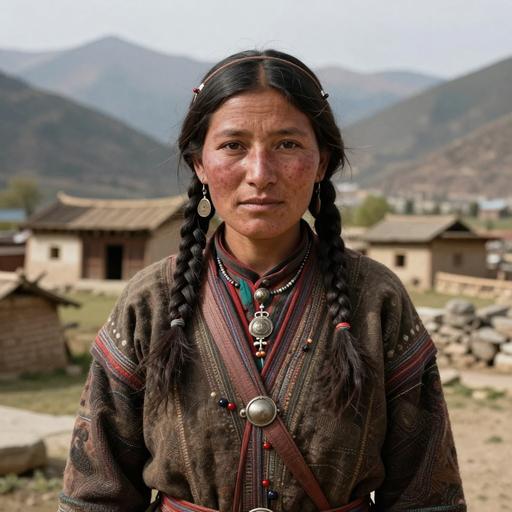
The Iron Age in Mustang, Nepal, particularly in the context of the Tibetan cultural influence, is a fascinating period that blends geographical isolation with rich cultural exchanges. Mustang, a remote region in the Himalayas, is often referred to as a \hidden kingdom" due to its secluded valleys and rugged terrain. This seclusion has allowed the preservation of unique cultural and historical practices, making the Iron Age in this area a significant point of interest for historians and archaeologists.
Geographical Context
Mustang is located in the north-central part of Nepal and extends to the Tibetan Plateau. Its geography features high-altitude deserts, dramatic cliffs, and cavernous valleys. The region's topography has historically served as a natural fortress, protecting it from invasions and keeping its culture relatively untouched by outside influences. The Kali Gandaki River, which runs through Mustang, has historically been a critical trade route connecting Tibet and Nepal, facilitating cultural and material exchanges between South Asia and the Tibetan Plateau.
Cultural Influences
During the Iron Age, Mustang was not just a secluded region; it was an integral part of the trans-Himalayan trade and cultural networks. The people of Mustang were likely influenced by both Tibetan and Indian civilizations due to their intermediary position. This era was marked by the exchange of ideas, practices, and technologies.
Tibetan influence is particularly notable in the region. Buddhism, which had begun to spread into Tibet, naturally extended into Mustang, influencing its spiritual and cultural life. Mustang became an important stop for Buddhist pilgrims and monks traveling between India and Tibet, which led to the establishment of monasteries and religious sites that still hold significance today.
Technology and Economy
The Iron Age brought significant technological advancements to the region of Mustang, especially in metallurgy. The inhabitants of Mustang utilized iron for various purposes: creating tools for agriculture, weapons for defense, and utilitarian household items. This period likely saw the refinement of blacksmithing skills and an increase in the production of intricate metalwork.
Economically, the people of Mustang were traders and herders. The trade routes that passed through Mustang facilitated the exchange of goods such as salt, wool, and grains. Salt, in particular, transported from the Tibetan Plateau, was a valuable commodity that significantly boosted the local economy. The barter system was prevalent, with goods being exchanged rather than currency.
Social Structure and Lifestyle
The social structure of Mustang during the Iron Age was likely organized around tribal or clan systems. The society was predominantly agro-pastoral, with agriculture and livestock rearing (specifically yaks and sheep) forming the backbone of daily life. The harsh climatic conditions meant that communities needed to be resourceful, often relying on communal support systems for survival.
Houses were typically constructed using locally sourced materials like stone and mud, reflecting an adaptation to the harsh climate and the necessity for insulation against the cold. Small fortified villages were common, providing both community living and protection.
Religion and Beliefs
The religious landscape of Mustang during the Iron Age was a mosaic of indigenous animistic beliefs and emerging Buddhist practices. Tibetan shamanism played a significant role, with local deities and spirits being worshiped through traditional rituals and ceremonies. As Buddhism gradually took hold, it began to synthesize with existing beliefs, leading to the development of a unique religious culture that continues in the region even today.
Art and Aesthetic
Iron Age Mustang was vibrant in terms of artistic expression, with influences seen in the construction of religious monuments and the creation of intricate metal and stone works. Art was not only an aesthetic pursuit but also a spiritual one, with sculptures and carvings often having religious significance. Murals and paintings in caves and monasteries provide insights into the early Buddhist influence in Mustang.
Archaeological Significance
The Iron Age in Mustang has left a rich archaeological record. Excavations have revealed complex cave systems that were used for both habitation and burial purposes. These caves often contain murals, artifacts, and skeletal remains, providing invaluable insights into the lifestyle, beliefs, and practices of the people during this era.
In conclusion, the Iron Age of Mustang, Nepal, represents a period of significant cultural blending, technological advancement, and religious development. The Tibetan influence, combined with local practices, helped forge a unique cultural identity that endured through centuries, captivating historians and visitors fascinated by this mystical region."